TL;DR
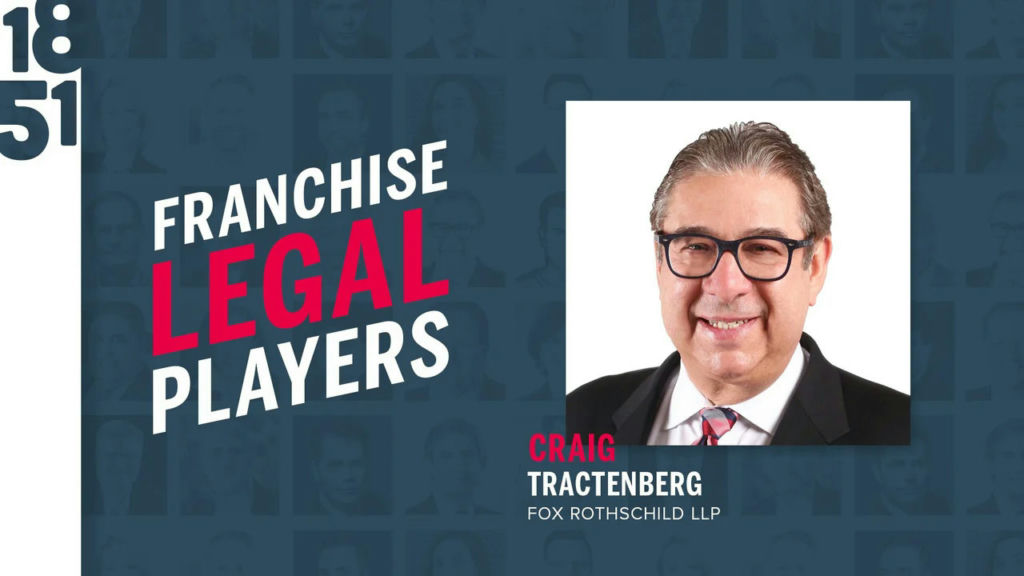
Craig Tractenberg, a partner at Fox Rothschild LLP, discusses his background and experience as a franchise lawyer, representing Fortune 50 franchisors. He shares his most memorable cases, including underreporting of revenues by franchisees and a bankruptcy case involving the Ground Round franchisor.
Tractenberg: My firm is an 1100-lawyer firm with 28 offices in the US. I am the co-chair of the franchise practice group here. I came to Fox Rothschild in part for the franchise practice group, which is now over 20 lawyers in 2016.
Before that, I was chair of the Franchise team at Nixon Peabody LLP based in NY, and during my four-year tenure, received Law Firm of the Year from Best Lawyers for three of the four years. I have been fortunate to have been recognized by Best Lawyers for Franchise Lawyer of the Year in NY (2012) and in Philadelphia (2017). I also have been recognized by Chambers and Partners as a franchise lawyer since 2012.
I publish articles, speak frequently on franchise subjects and have taught law school as an adjunct professor of franchise law. I have contributed to three chapters in books involving franchising or bankruptcy published by the ABA. I currently acting as an arbitrator in two franchise disputes, one for JAMS in Dallas and another through appointment by the Court in Philadelphia.
As a franchise lawyer, I primarily represent in enforcement and insolvency cases [involving] Fortune 50 franchisors. I also have started many franchise programs for entrepreneurs in the NY and Philadelphia markets, and was the first real franchise counsel for many successful systems such as Rita’s Water Ice, Saladworks and PrimoHoagies. I am also involved in international cases involving power plants and real estate developments (representing the Republic of Turkey) and capital projects in Central (Panama Canal and a hydroelectric plant) and South America (two hydroelectric plants).
Tractenberg: In vetting potential franchise attorneys, the question should be, “Have you ever seen a case like this and how would you approach it?” As lawyers, we can learn by studying prior cases. For experienced lawyers, sometimes we have seen these cases and have dealt with them. Legal scholarship can also make a difference because you constantly learn through prior cases and write about the future. Both exercises can help the client for lawyers who have “been there and done that.”
Tractenberg: The cases that I have done which stand out are those involving the underreporting of revenues by franchisees or violations of the covenant not to compete. When representing the franchisor, the jury has a bias in favor of the franchisee because the conduct is not like a “bet-the-company case” to the established franchisor, but is a “bet-the-business case” for the franchisee. You must overcome the bias in favor of the small business operator and show the pernicious effect on the franchise system if a rogue franchisee were to continue this conduct.
In the underreporting/fraud type cases, my most memorable jury trial was a case where judgments were entered in Federal Court in Iowa against three defendants, each owing separately for their businesses, more than $1 million each. In that case, we needed to prove fraud clear and convincingly.
The case that stands out as an industry learning experience was not really a litigation, but a bankruptcy case involving the Ground Round franchisor. The franchisor shut its doors when the private equity investors lost confidence and the franchisees were stranded without the ability to buy food. We overnight established a buying consortium for the 40 franchisees in 13 states. We then threatened the Board with RICO claims for abandoning the franchisees and taking the advertising funds. This caused the franchisor to file emergency bankruptcy petitions for the eight related entities.
In the bankruptcy, the franchise agreements, leases and assets were auctioned and the highest bidder offered $12 million for all the assets. The franchisees offered $4 million, and a release of $40 million of claims they had against the franchisor. The franchisees were found by the court to have the highest effective bid, and now own the chain, which continues to grow.
The case won the Small Case of the Year Award from the Turnaround Management Association in 2006. The paradigm established in that case has been used successfully in other cases as well and has avoided bankruptcy and litigation for several other franchisors.
Tractenberg: The most rewarding aspect of my work is helping to create brands which become household names and protecting those brands. The entrepreneurs that I have represented did not even dream of their ultimate success and I am proud to have helped them achieve their dreams for themselves, and the people they enable to participate in the American Dream of owning their own franchised business.
Tractenberg: My top concern for the franchise industry is having a voice and influence with lawmakers and courts in order to sustain tax benefits, trademark protections and avoid vicarious liability for employment issues. These issues have the ability to erode the growth of franchised businesses without providing tangible benefits to those advocating for changes.
Tractenberg: I am most optimistic for the franchise industry about the increasingly available capital for investment and expansion, and the new methods of engaging veterans in the franchise industry. Both will fuel the continued growth of franchising, already the largest private sector employer, providing job training for millions of people each year and enabling small business ownership.
In this story
This story was originally published in 1851 Franchise on April 1, 2019. Burnaze summarizes and links to the original reporting.
Read the full story at 1851 FranchiseLiked this? Get the week's franchise news, explained
- Sunday 8 AM ET weekly + a monthly deep dive
- Sections picked for the industries you follow
- Every claim linked to its source. Free.