TL;DR
Aks Sethi is scaling Thai Chili 2Go, a fast-casual spinoff of his sit-down restaurant Thai Chili, with 18 units and plans to expand beyond Arizona. The brand is focused on making Thai cuisine more approachable and has developed a vertical integration strategy through its supply chain and commissary, Amaya Trading.
Aks Sethi remembers the moment that changed the trajectory of his business. In 2014, the entrepreneur—then four years into running Thai Chili, a sit-down restaurant in Gilbert, Arizona—walked into a Chipotle and saw the future.
At the time, Thai Chili offered a sprawling menu of items rooted in the street food traditions of Thailand. But the visit to the fast-casual giant revealed a different path forward. Sethi already had the data showing which dishes guests ordered most often. Working from that insight, he and his team cut more than 90 items down to a focused lineup of about 15 core dishes built around curries, noodles, rice, stir-fries, and a handful of appetizers.
The result was Thai Chili 2Go, a fast-casual spinoff that debuted in Queen Creek, Arizona, in 2015.
Fast forward a decade, and the concept closed out its first 10 years with 18 units and another four openings slated for the year ahead. For now, the system remains concentrated in Arizona, where Sethi says the company will continue expanding as it identifies the right sites and communities.
Expansion plans
But the brand is also beginning to explore its first move beyond state lines. Nevada and Utah are high on the list, in part because supply chain logistics play a major role in expansion decisions. Any initial move into a new state will likely be corporate-led, with the company aiming to open about five units in the market before considering broader growth through operating partners or franchising.
Supply chain control has been central to Thai Chili 2Go’s ability to scale. After running into the tight margins common across the industry, Sethi launched Amaya Trading in 2013. Operating out of a 25,000-square-foot warehouse, the company imports key ingredients from Thailand—including coconut milk, palm sugar, and other staples—while also serving as a commissary where sauces, curry pastes, and other core components are produced before entering the distribution chain.
That vertical integration has helped stabilize costs and create operational consistency across the system.
“The whole supply chain and commissary piece we have developed is definitely a big competitive advantage,” Sethi says. “It’s given us the scalability that we have today. I feel really confident going into a newer market knowing that’s in our back pocket.”
Another priority for the coming year is strengthening training and human capital. Thai cuisine can be operationally complex, and Sethi says the brand has been focused on simplifying execution without sacrificing authenticity. One internal breakthrough involved reducing the number of steps required to prepare dishes—for example, finding ways to turn a five-step pad thai process into four while maintaining the same culinary standards.
That philosophy extends beyond the kitchen. Sethi believes Thai food has become significantly more mainstream in the U.S. since the company’s early days, pointing to the growing presence of Thai flavors in everyday places—from airline menus to other restaurant chains experimenting with Southeast Asian ingredients.
He also points to the everyday dining habits of American consumers as evidence of underlying demand.
Almost everywhere, he says, people have a go-to “Chinese takeout place” or “my Thai takeout place.” For Sethi, that familiarity signals an appetite that has historically been served largely by mom-and-pop spots.
Thai Chili 2Go has focused on lowering the barrier to entry for those guests. When customers walk into a restaurant, the goal is to create a familiar fast-casual environment where the ordering process feels intuitive: pick an entrée, choose a protein, select a spice level, and watch the dish come together fresh in a wok-driven kitchen.
“Our number one goal has always been to make this cuisine more approachable,” he says.
The next phase will test whether that model travels beyond its home turf. Sethi describes the coming two years as an opportunity to effectively “copy and paste” the concept into new markets and validate that Thai fast casual can scale into a multi-market brand.
Asian fast casual market
Across the country, a growing group of Asian fast-casual brands share that same ambition. Operators representing cuisines from Thailand to Korea to Japan are racing to fill a long-standing gap in the quick-service landscape—bringing flavors that have long thrived in independent restaurants into scalable, modern fast-casual formats with national aspirations.
That’s the mission behind Bonchon, which also traces its roots to a full-service restaurant model.
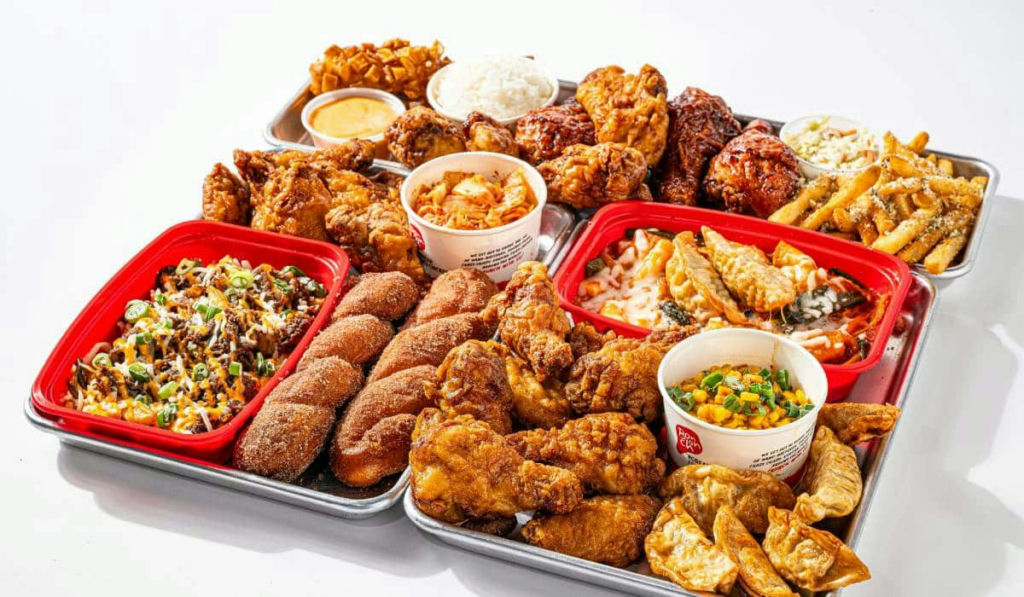
The South Korea-born fried chicken chain was founded in 2002 and arrived in the U.S. in 2010. Like Thai Chili 2Go, it began with a traditional sit-down format but has since evolved into a two-format system that blends its full-service roots with a newer fast-casual model built for smaller footprints, faster buildouts, and greater operational efficiency. While most Bonchon locations today remain full-service restaurants, the fast-casual concept has increasingly become the growth engine behind its national ambitions.
Regardless of format, the food is prepared the same way. Bonchon has streamlined its kitchens to support dine-in, takeout, and delivery simultaneously, ensuring speed and convenience without sacrificing quality. Technology has also improved kitchen line builds and operational efficiency for franchisees while preserving the brand’s scratch-made preparation and its signature hand-battered double-fried chicken.
The company’s commitment to its Korean identity has also been central to its evolution. In 2024, Suzie Tsai stepped into the CEO role and quickly signaled that protecting the brand’s heritage would remain a priority. One of her first moves was restoring the Korean letters in Bonchon’s logo—characters that translate to “my hometown”—as a visible reaffirmation of the brand’s cultural roots.
That identity has continued to resonate as the brand expands. Bonchon surpassed 150 U.S. locations last year and now operates across more than two dozen states. As the footprint grows, Tsai says she has noticed a shift in how American consumers engage with Korean cuisine.
“Even though Bonchon has been in the U.S. for 15 years, we’re still perceived as fresh and exciting in many of these emerging markets,” she says. “What stands out is the level of curiosity and engagement. Guests aren’t just trying our Korean fried chicken for the first time, they’re exploring our broader Korean menu, experimenting with new sauces, and asking us to bring back their favorite limited-time offerings.”
One way the brand has leaned into that curiosity is by showcasing the breadth of Korean cuisine beyond its flagship fried chicken. Bulgogi—thinly sliced marinated beef—has long been on the menu but recently expanded into new offerings like tteokbokki and udon dishes. Limited-time menu items have also bridged Korean flavors with familiar ingredients, including a lineup of bacon kimchi dishes such as Bacon Kimchi Fries and Bacon Kimchi Stir Fry Udon.
Even as Bonchon experiments with new items, Tsai says authenticity remains non-negotiable.
“For us, it’s not a choice between authenticity and broad appeal,” she says, adding that Bonchon won’t sacrifice the integrity of food in order to scale. “Ethnic food concepts should not have to water down their recipes to succeed in new markets. Guests today want the real thing.”
That appetite for authenticity reflects how quickly consumer familiarity with Korean food has evolved.
“A few years ago, Korean food felt new to many guests,” Tsai says. “Today, diners walk in already knowing what gochujang is or asking for specific flavor profiles.”
Korean cuisine in particular appears to be benefiting from a broader cultural surge, adds Dok Kwon, president and COO of Cupbop, a chain originating from Utah that serves customizable Korean barbecue in a cup.
From music to television to food, Korean culture has exploded into the global mainstream. “K-Pop Demon Hunters” became Netflix’s most-watched animated film in 2025, “Squid Game” remains the platform’s most-viewed original series, and Korean food exports have continued to climb year-over-year.
Kwon says those cultural tailwinds lower psychological barriers for consumers encountering Korean food for the first time.
“The beautiful thing is that the demand profile for food is extremely sticky—meaning once it lands, it lands,” he says. “Most Americans don’t know anything about Thailand except Thai food. They know nothing about Vietnam other than pho and the Vietnam War. Yet without any kind of big cultural impact or influence, the food still strikes a chord with American consumers, and it’s here to stay. With Korean, you have this wave of cultural influence on top of that. You couldn’t buy that type of marketing with a trillion dollars.”
Cupbop knows something about marketing momentum itself after its appearance on Shark Tank helped introduce the brand to a national audience. The concept began in 2013 as a food truck before expanding into brick-and-mortar locations, with its 2022 television appearance dramatically boosting brand awareness.
Today the chain still reflects its food truck roots: small storefronts, simple operations, and a build-your-own format where guests start with a base of rice, cabbage, and noodles before choosing proteins and sauces with heat levels ranging from one to 10.
Last year the brand simplified its menu even further. Historically, bowl combinations carried playful names like Bebop or Rockbop, which Kwon says were memorable for fans but confusing for first-time guests. The new structure instead guides customers through a more intuitive process: choose a base bowl, select proteins, and customize flavor with sauces and spice levels. The underlying food remains the same, but the streamlined format speeds ordering and makes the concept easier for new guests to understand.
Cupbop has also broadened the platform with additions like Korean-style corn dogs and Korean wings, expanding the menu without complicating the kitchen. Kwon says the goal is always to increase variety for guests while preserving the operational simplicity of the concept’s food truck days.
The brand’s growth strategy has followed a similarly measured approach. After Shark Tank, Cupbop received a surge of inbound interest from prospective franchisees. But rather than immediately launching a franchise program, leadership spent several years strengthening supply chain infrastructure and corporate operations.
Only after key proprietary ingredients were integrated into national distribution did the company quietly begin franchising last year—relying largely on operators who had already expressed interest rather than running formal recruitment campaigns. The strategy prioritizes experienced multi-unit operators and smaller initial commitments, allowing both sides to test the partnership before expanding territories.
For Kwon, the bigger goal lies further down the road. He recalls a conversation with a major Wingstop franchisee about why the brand broke out despite being a relatively simple concept. The real inflection point, they said, came around 200 locations when it finally had the scale to invest in national marketing. From there, awareness and demand accelerated, and growth took on a different trajectory.
“Hearing that, I realized there’s a flywheel effect you only unlock at scale,” Kwon says. “Up to now, we’ve basically had no marketing budget. We’re bootstrapped, so it’s been organic social and trying to go viral on TikTok. But that Wingstop story made me think: once we get to that 200-unit range, we’ll be able to do real national marketing, and the flywheel will start to look very different.”
Scaling for growth
That milestone—approaching or surpassing the 200-unit range—is a phase that Teriyaki Madness has been navigating for a while.
The fast-casual Japanese concept, known for its Seattle-style teriyaki bowls layered with marinated proteins, fresh vegetables, rice or noodles, and signature sauces, was founded in 2003. When CEO Michael Haith acquired the brand in 2016, he relocated its headquarters to Denver and began expanding aggressively through franchising while upgrading systems and support infrastructure across the organization.
Today the chain operates just over 200 units nationwide, with another 125 already in real estate or construction. System growth has accelerated from roughly 20 percent annually to around 25–30 percent, and the company expects to finish the year with about 250 locations.
“Franchisees are scrambling to serve the needs of the customers,” Haith says. “They’re really expanding their footprint, going from one to five to 10 units pretty quickly.”
For him, the 200-unit stage forces brands to clarify their identity and ensure they can deliver consistency at scale.
“Any brand at 100–200 units, you really hit an inflection point,” he says. “Who are you? What are the customers’ expectations? How do you maintain consistency? How do you fulfill expectations? We’re there.”
Much of Teriyaki Madness’s recent investment has gone toward strengthening the infrastructure needed to support the next stage. The company has focused on improving systems and analytics that help franchisees make better day-to-day decisions.
“We want the franchisees to be able to take the weather and historical events and recent consumer sentiment and be able to help them order correctly, or be able to have labor savings,” Haith says. “We need to have the ability to get all of our questions answered really quickly, and in the smartest way possible.”
Operationally, the brand is heavily oriented toward its off-premises business. Roughly 82 percent of sales now come through takeout, curbside, and delivery channels—a mix that has influenced everything from real estate strategy to store design.
Haith says the off-premises focus matches how consumers interact with quick-service brands today and positions Teriyaki Madness as an easy fit for the rhythms of everyday life. At the same time, he sees the concept as a “better Asian” analogue to the better-burger movement because it is centered on made-to-order meals and higher-quality ingredients rather than an expansive menu.
“We don’t offer a huge menu, but what we do have is fresh cut vegetables, fresh chicken, the best rice and noodles we can find, and our own sauces that we make,” he says. “That’s what people look for, and that’ll always be what we do.”
Across the fast-casual landscape, Asian cuisine still represents one of the most fragmented categories. While independent operators have long introduced American diners to flavors from across the continent, only a handful of national chains have emerged so far—leaving significant room for more brands to scale.
Tsai believes the category is still in its early innings. Asian fast casual spans an enormous range of cuisines—from Chinese and Japanese to Thai, Vietnamese, Indian, and emerging Southeast Asian flavors—and much of that diversity has yet to be translated into scalable fast-casual formats. Long-term winners, she adds, will be the brands that pair authenticity with operational discipline and a deep understanding of their guests.
“Brands that protect the integrity of their food, execute consistently, and adapt to evolving consumer expectations will rise above the noise,” Tsai says.
Kwon believes the brands that break out nationally will be the ones that build a deeper emotional connection with customers. He points to breakout chains like Crumbl, Dave’s Hot Chicken, Raising Cane’s, and Chick-fil-A as examples of brands that have moved beyond simply selling food to building passionate followings with customers who feel a genuine connection to the brand.
“People can copy your menu, and you can’t patent food,” he says. “The real moat is brand love—how people feel when they think about you. Once you become somebody’s favorite brand, that relationship is incredibly hard to dislodge. You can have all the capital and all the systems in the world, but if you don’t have that, it’s very hard to build something that lasts.”
In this story
This story was originally published by Ben Coley in QSR Magazine on May 19, 2026. Burnaze summarizes and links to the original reporting.
Read the full story at QSR MagazineLiked this? Get the week's franchise news, explained
- Sunday 8 AM ET weekly + a monthly deep dive
- Sections picked for the industries you follow
- Every claim linked to its source. Free.