TL;DR
The article discusses summer pet safety tips, including understanding the causes and signs of heatstroke in dogs and providing proper care and hydration. Dog owners should be vigilant and take precautions to ensure their dog's safety in the heat, such as adjusting their schedule and incorporating new training sessions.
Summer brings plenty of opportunities for families to enjoy time together, often outdoors. And in many cases, this involves the family dogs, too. Many dogs enjoy being a part of the fun, but safety should always come first. For dogs, who are only able to regulate their body temperature through panting and with the few sweat glands, located primarily on their paw pads, management in the heat is especially important and often requires human oversight.
For dog owners, understanding the causes and signs of heatstroke is crucial. The American Kennel Club says a dog is considered to have a fever — or hyperthermia — when its internal temperature rises above the normal 101.5 degrees Fahrenheit. If that temperature climbs past 105 degrees, it could be a sign of heatstroke.
Heatstroke can occur in just a few minutes in hot weather, and a specific dog’s sensitivity can be impacted by things like breed (short-nosed dogs are especially prone), age (both very young and very old dogs are more at risk), lack of physical fitness, other medical disorders, lack of access to water and other environmental factors, like a lack of access to shade when outdoors or confinement in a closed space, like a vehicle.
Signs of heatstroke include excessive panting or drooling, especially when the drool is thick or sticky; vomiting or diarrhea; lethargy, confusion or unresponsiveness, sometimes accompanied by glazed eyes; and red gums, which are a sign of increased blood flow as the body works to regulate its heat through vasodilation.
Pet parents should be vigilant and keep an eye out for these symptoms and behaviors, especially after physical exertion like walks or outdoor play.
In some cases, it is just too hot to proceed with your dog’s normal activities. Consider adjusting your schedule or incorporating new training sessions and enrichment activities to keep your dog engaged while keeping them safe in the heat.
Long walks in the heat of the day can be dangerous. Walk dogs early in the morning, before it heats up outside, or after sunset, once it is cooling down for the night. If you must walk with your dog somewhere midday, be sure to bring water, pace yourself and keep watch for signs of heatstroke.
When walking in paved areas, specifically, it is also important to consider the heat of the ground. Concrete and asphalt can burn paws, causing serious damage to a dog’s pads, in a very short amount of time. Use the “5-Second Rule,” meaning that, if you cannot hold the back of your hand to the pavement comfortably for at least five seconds, it’s too hot for paws.
In the warmer months, be sure to check the pavement any time your dog may need to stand or walk on it, and carry your dog across parking lots or other paved areas if the ground is too hot. In extreme heat, dog boots can protect your dog’s paws from the hot pavement.
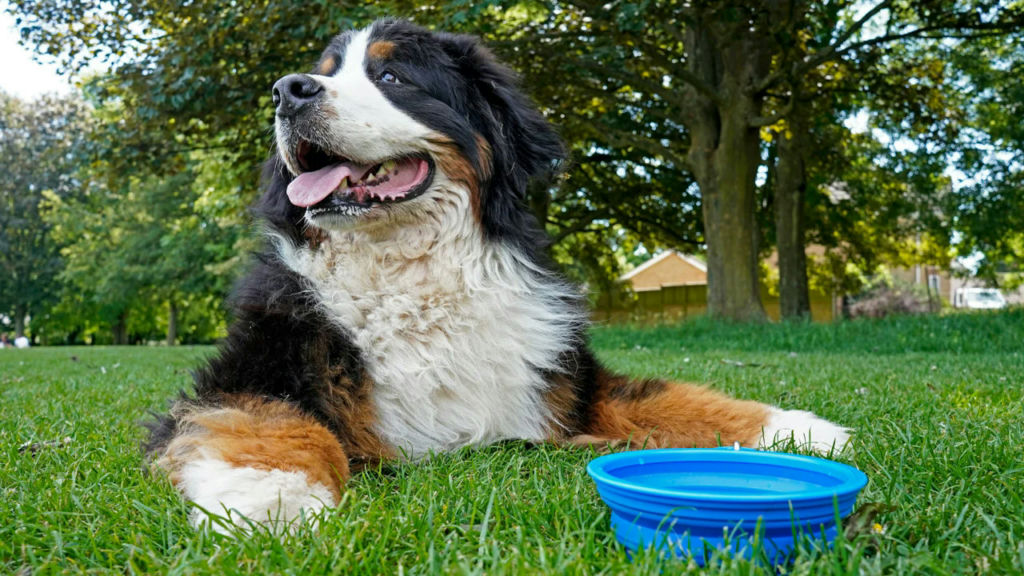
Hydration is non-negotiable. Carry water on all walks to ensure your dog always has access when they need it. Keeping things like a collapsible dog bowl or dog-specific water bottle with a bowl built into the lid makes this convenient and prevents any issues should your dog be uncertain of doggy water fountains or drinking out of traditional bottles.
When at home, adding a few ice cubes to a water bowl can be another way to keep your dog cool and refreshed.
Even if the windows are cracked, you should never leave your dog in a parked car. On a 75-degree day, the inside of a car can reach 100 degrees in just a few minutes, quickly becoming dangerous for your pet.
Keeping dog-safe frozen treats — like broth, plain Greek yogurt, and dog-safe fruit such as seedless watermelon — ensures you always have a quick, easy way to cool your dog off. Store-bought frozen treats are especially convenient for a quick, refreshing option.
Cooling accessories — like cooling vests and bandanas that draw heat away from the body as the cool water evaporates from the fabric — can help regulate your dog’s temperature. Elevated mesh beds allow for greater air flow during resting periods, helping to keep your dog’s body temperature down.
Taking precautions to ensure your dog’s safety in the heat does not have to disrupt their overall wellness or any training progress they are making. Mental stimulation can be just as valuable as physical activities on hot days, and stimulating tasks like enrichment games, scentwork and obedience sessions can be completed from the comfort of an air-conditioned home.
Smart training and dog care happens across all seasons, and there are always adjustments that can be made to ensure your dog’s needs are met, regardless of weather restrictions. By putting safety first, dog owners can ensure their dogs remain happy, healthy and engaged.
In this story
This story was originally published in 1851 Franchise on August 19, 2025. Burnaze summarizes and links to the original reporting.
Read the full story at 1851 FranchiseLiked this? Get the week's franchise news, explained
- Sunday 8 AM ET weekly + a monthly deep dive
- Sections picked for the industries you follow
- Every claim linked to its source. Free.