TL;DR
The US economic power has been unable to prevent conflict in the Middle East, with aid to Gaza not reaching the region as hoped. American diplomats have been trying to prevent further conflict in the Middle East, but progress has been slow due to economic challenges in the region.
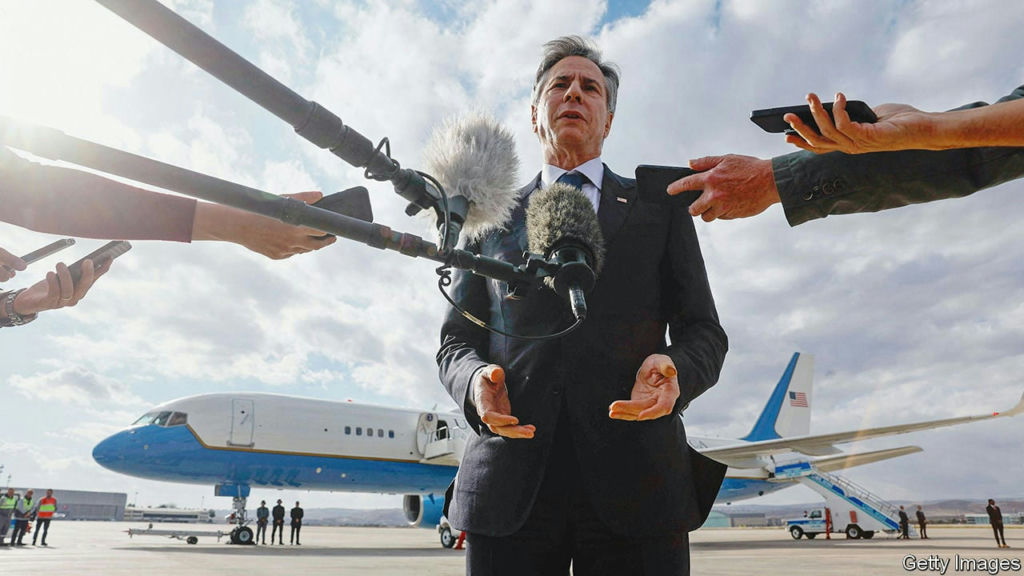
American diplomats have been busily trying to prevent further conflict in the Middle East. After recent attacks between Hamas and Israel, they have been working to aid Gaza, while also seeking support from Arab leaders and neighbouring countries. Antony Blinken, America’s secretary of state, has been working tirelessly to address the situation.
However, progress has been slow. Despite earnest efforts, aid has not reached Gaza as hoped, and the region remains reluctant to discuss potential solutions to the conflict. The economic power of the United States has historically played a major role in its diplomatic efforts in the Middle East. The hope was that financial incentives could encourage neighbouring countries to assist refugees and bolster cooperation. Unfortunately, the current financial situation in the region has made this approach challenging.
Over the years, American diplomacy in the Middle East has evolved, shifting from a more hard-nosed approach to a focus on aid and poverty reduction. However, despite these efforts, the region continues to face economic challenges. Lebanon, in particular, has faced significant financial instability, with inflation raging at over 100%. Jordan and Egypt are also struggling with unemployment and financial crises.
The economic difficulties in the region present a significant challenge for American diplomacy. The traditional approach of offering financial aid in exchange for political favors is no longer viable. The few American investors and firms remaining in Egypt and Lebanon have left due to the financial turmoil, further limiting options for influence.
As a result, the United States must explore alternative approaches. While some have suggested offering massive financial aid in exchange for cooperation, this option faces political obstacles in Washington. Additionally, threats to withdraw aid to Egypt and Jordan are not seen as credible, as these funds are viewed as essential for maintaining peace and stability in the region.
Amidst these challenges, American financial diplomats have increasingly turned to sanctions as a tool for influencing behavior. However, this approach has its limitations, especially in addressing the urgent humanitarian needs of Gaza.
Overall, the evolving economic landscape in the Middle East poses significant challenges for American diplomacy. As the region continues to grapple with economic instability, finding effective diplomatic solutions becomes increasingly complex. As America navigates these challenges, a reevaluation of its diplomatic approach in the region may be necessary.
In this story
This story was originally published in Franchise Magazine USA on January 23, 2024. Burnaze summarizes and links to the original reporting.
Read the full story at Franchise Magazine USALiked this? Get the week's franchise news, explained
- Sunday 8 AM ET weekly + a monthly deep dive
- Sections picked for the industries you follow
- Every claim linked to its source. Free.