TL;DR
TCBY franchisee Steve Walsh is growing his business through catering and community involvement in Peachtree City, Georgia. Walsh uses his store as a home base for a wider off-premises business, including mobile catering, school partnerships, and private events.
For Steve Walsh, the next stage of growth for his TCBY story lies in catering. Instead of looking into areas for a second or third unit, Walsh wants to reintroduce the brand to Peachtree City, Georgia.
“Believe it or not, not a lot of people realize TCBY is still around,” Walsh says. “So, we’ve really capitalized on the opportunity to bring TCBY into the community.”
Through mobile catering, school partnerships, festival appearances, and private events, the franchisee uses his store as the home base for a wider off-premises business.
Community involvement
The location had been part of the community since 2010 and was opened by a former colleague of Walsh’s. He had taken his own kids there when they were younger and knew what the store meant locally. He also had his own childhood memories of TCBY, giving the brand both a personal and professional appeal.
“With my experience with the previous owner and just knowing what this TCBY has meant to the community, it just felt like a really good fit,” Walsh says.
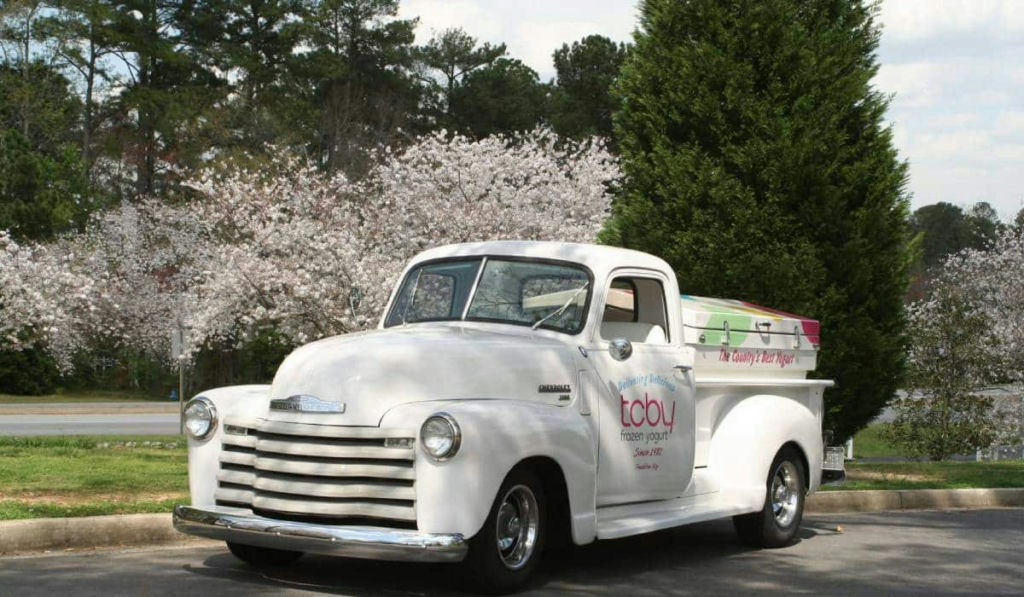
When he bought the store, catering was already part of the operation. The previous owner had outfitted a 1950s-vintage Chevy truck to add a touch of nostalgia to private events. However, once Walsh took over the store, he expanded on that vision, eventually adding a second catering vehicle, this time in the form of a small bus.
“The goal would be to really market both of these vehicles,” Walsh says. “One is for a private event, maybe a one-to-two-hour type of service, and then the other is for more long-term festivals, places where we can expand beyond our local area and participate in more half and full-day type events.”
Catering operations
That distinction matters because dessert catering has to be set up for efficiency based on the environment it’s serving. A school event, corporate gathering, birthday party, and outdoor festival each bring different traffic patterns, staffing needs, product volumes, and service expectations.
The business is also highly seasonal. Catering begins to pick up around late March or April and usually continues through October. May is the busiest month for Walsh’s team because of end-of-school-year programs. During that time, Walsh says the business is typically on the road an average of three days a week. Schools are at the center of Walsh’s catering and community strategy. While the store serves a big customer base, the brand’s core demographic is largely kindergarten through eighth grade. The younger guests are especially important because they often drive family visits.
“When the kids come in the store, they are coming in extremely excited,” Walsh says. “They’re bringing mom and dad, they’re bringing their sister, their brothers.”
The store works closely with schools by hosting spirit nights, offering student certificates and teacher appreciation coupons, and supporting other community efforts. Spirit nights allow schools to promote a specific date and time for families to visit TCBY, with a percentage of sales going back to the school.
“We give it to them at a discounted rate, and they sell it at retail during the school lunch period, which is a way for them to help raise money for the schools,” Walsh says. “It’s been a great program and has really provided a lot of loyalty.”
That is especially useful for a legacy brand like TCBY, which carries recognition across generations. Walsh sees that mix as one of TCBY’s advantages.
“We’re nationally known,” Walsh says. “It is a brand name that has hit the homes of not only the kids that are familiar with it now, but their parents from back in the ’80s and ’90s when TCBY was introduced.”
The catering menu is designed to be manageable in the field while still offering customers choices. In the store, Walsh has six machines, each offering two flavors, giving customers access to as many as 12. For catering, customers can choose from the flavors currently available in the store, or they can ask Walsh’s team to select options based on what tends to perform well.
The team also narrows toppings to about six or seven popular options. That helps protect quality and simplify service, especially at outdoor events where certain toppings may not hold up well. That balance between choice and control is part of what makes the set up work.
Walsh can offer enough variety for guests without being too difficult for employees to execute.
When building the schedule, events don’t require as many team members.
“The store is obviously where our bread and butter is at,” Walsh says. “Managing the overhead with the catering is pretty simple; it doesn’t require the staffing that the store does.”
Business performance
Walsh tracks the time and resources needed to put each vehicle in the field, the amount of product sold, gross sales, and expenses. That gives him a way to understand which events are more profitable and how the catering business is performing across the season.
The store has very little turnover, which means training is less about constantly bringing new employees up to speed and more about refreshing the team on upcoming promotions, events, and seasonal needs.
“As we do pick up, I conduct a monthly staff meeting personally with all of the staff,” Walsh says.
That becomes especially important as temperatures rise and traffic increases. Summer brings longer store hours, higher inventory needs, and more pressure on the frozen yogurt machines. Walsh says the team has to manage air conditioning, machine performance, flavor rotation, and product flow to keep service consistent.
“With the temperatures outside averaging 90 degrees, and we have six machines that are continuously working to keep the yogurt frozen and dispensed, which can sometimes overheat,” he says.
The same discipline extends to the values Walsh emphasizes with his staff: customers, teamwork, quality, and accountability. Customers are the priority. Teamwork matters because every part of the operation depends on the whole staff. Quality applies to the product, the service, and the store’s cleanliness. Accountability means employees understand their role in the guest experience.
“We always make sure that all of our staff know that they’re accountable for the service that we provide,” Walsh says. “And they also have the autonomy to make what we do their own so that they take pride in it.”
Walsh also has a direct line into the broader TCBY system. He sits on the brand’s advisory board, which includes 10 high-volume store owners. The group participates in bimonthly calls with TCBY corporate marketing and supply chain leaders.
“We try to provide as much feedback as we can so that corporate has enough knowledge and feedback from what it’s like from us franchises, so that they can better put together the marketing programs that support all the franchises,” Walsh says.
That combination of brand support and local entrepreneurship has helped Walsh generate brand awareness throughout his city. For a frozen yogurt concept with decades of name recognition, that may be the sweetest kind of growth. Familiar to longtime fans, new to the next generation, and mobile enough to meet both where they are.
In this story
This story was originally published by Ben Coley in QSR Magazine on July 20, 2026. Burnaze summarizes and links to the original reporting.
Read the full story at QSR MagazineLiked this? Get the week's franchise news, explained
- Sunday 8 AM ET weekly + a monthly deep dive
- Sections picked for the industries you follow
- Every claim linked to its source. Free.