TL;DR
SweatHouz Franchise has expanded on Florida's Gulf Coast with a new development agreement for 30 locations, bringing the brand to the region. The expansion is led by Ethan Lewis and Brian Massoll, who were drawn to the brand's focused offering and lean staffing model.
Ethan Lewis was already investing in health and wellness when a search for recovery concepts pointed him to a small SweatHouz “1.0” studio in Boca Raton, Florida. The visit was enough to spark a larger conversation with his business partner, Brian Massoll, a veteran multi-brand operator who evaluates opportunities through systems and repeatability.
They compared SWTHZ with other sauna and recovery brands they’d been studying, paying attention to the private-suite flow, the tight menu of services and the way the guest promise held up in practice. A meeting in Atlanta with then-CEO Jamie Weeks confirmed the fit.
From there, their plan took shape quickly. Massoll and Lewis secured development rights for 30 locations on Florida’s west coast and began building around the elements that first stood out: a focused offering, lean in-studio staffing and a consistent, premium environment. The goal wasn’t novelty; it was a model they could execute the same way, site after site, in markets where the real estate would support it.
Growth Strategy
Massoll and Lewis approach growth like operators first and marketers second. Massoll brings years of multi-unit franchise experience; Lewis comes from health-focused consumer products. Both are fluent in wellness and comfortable making calls based on what works at unit level.
For Lewis, the category itself carries staying power. “Infrared sauna and cold plunge has unflappable, time-tested science,” he said. “It’s been going on for thousands of years in different forms.” That perspective dovetails with Massoll’s focus on systems and simplicity. Together, they look for models that reduce variables, not add them.
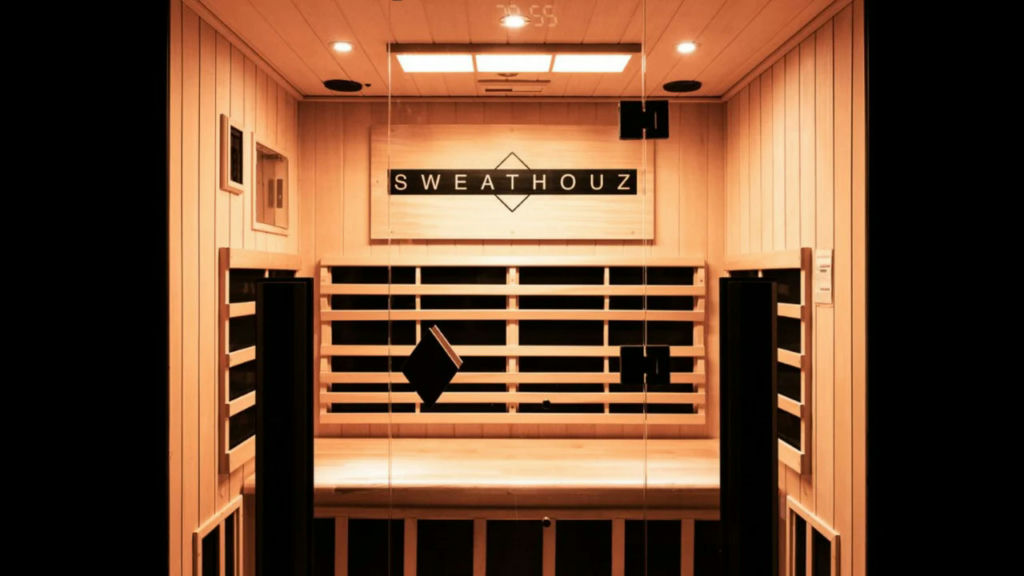
Before Boca Raton, the pair had looked widely across sauna and recovery concepts. SWTHZ stood out for a design choice that seems obvious but isn’t common: private suites built around contrast therapy. “We explored a variety of sauna franchise groups and really fell in love with the model that SWTHZ built,” Massoll said. “We believe the private-suite contrast therapy is a wonderful moat within the industry and one that is not being replicated through the overwhelming majority of the brands that are out there.”
The more they tested the experience and pressure-tested the economics, the more the pieces lined up with their criteria.
Operations Focus
Clarity is the point. SWTHZ doesn’t try to be a day spa with a long menu; it promises a premium, private recovery session and delivers that without drift. Lewis likes what that does for the customer journey and for operations. “Having a very simple and straightforward message to the customer of what you do, who you are, and what you don’t do and who you are not makes things really easy,” he said.
Massoll sees the same advantage from the back of the house. “There’s no perfect system in the franchise world, especially while in growth mode, and this brand absolutely is,” he said. “But in principle, it’s a much easier system than many other franchises have built.” He points to “low staff volume,” “relatively simple equipment,” and a “timeless interior design” that reduces moving parts and keeps the focus on execution.
With development rights in hand, the strategy is direct: move with urgency, but only into A-grade locations. “We are building studios as fast as we can,” Lewis said, “but we’re solely focused on getting the right real estate and the right locations because that’s everything.” In a fast-growing state where the best centers are competitive, that requires patience and a firm bar. “Admittedly, Florida real estate is challenging because everybody wants to move here,” he said. “We’re aggressive in our pursuit of growth, but we’re also very careful in our choices.”
That tension — pace versus placement — defines the work: site tours, LOIs, build-outs and hiring running in parallel, all in service of delivering the same guest experience every time.
Operating hours run long — 7 a.m. to 8 p.m., 364 days a year — which compresses personal time and raises the stakes on purpose. “Forget free time,” Lewis said, noting that family fills whatever margin exists around the business. Massoll shares that balance and keeps the motivation simple. “It’s not just about making money. You have to believe in what you’re selling,” he said. “This is an easy pitch for me.”
Long Term Goals
Near term, Massoll and Lewis will keep pressing for premium corners and passing on sites that don’t fit the brand. Long term, the aim is a network of studios that feel identical to guests and predictable to operators — a simple promise, delivered the same way every day.
Massoll’s advice to anyone eyeing the space mirrors the approach that brought them here: pick a model that runs cleanly and then run it. “It’s a relatively simplistic model, albeit there’s lots of complexity around execution,” he said. “It really gives the franchisee a reasonably established foundation … a much easier model to pivot in than some of the other businesses I’ve been involved in.”
Lewis’ filter stays tight: define what you are, define what you’re not and protect the experience. Or, in his words, keep the offering “very simple and straightforward” — every suite, every guest, every time.
In this story
This story was originally published in 1851 Franchise on November 25, 2025. Burnaze summarizes and links to the original reporting.
Read the full story at 1851 FranchiseLiked this? Get the week's franchise news, explained
- Sunday 8 AM ET weekly + a monthly deep dive
- Sections picked for the industries you follow
- Every claim linked to its source. Free.