TL;DR
Houston TX Hot Chicken CEO Brian Simowitz emphasizes the importance of strong four-wall economics and well-capitalized franchise partners for the brand's growth strategy. The brand has grown to over 30 open locations and 150 in development, backed by a strategic investment from Savory Fund in 2023.
Houston TX Hot Chicken may have the energy of a viral restaurant brand, but CEO Brian Simowitz says its growth strategy is grounded in something far more durable: strong four-wall economics, well-capitalized franchise partners and a system built to support long-term scale.
For Simowitz, who has spent more than 25 years growing restaurant franchise brands, including leadership roles with Applebee’s and Slim Chickens, that discipline is personal. Before moving into corporate franchise operations, he and his wife were franchisees themselves in Minnesota, operating restaurants while raising three young children. The experience taught him firsthand what happens when an owner has ambition, but not enough capital or infrastructure to scale sustainably.
“I was undercapitalized,” Simowitz said. “We took on a store that we had to remodel right away, and it was about a $550,000 remodel. We spent our whole amount of money on that one store and that remodel.”
The restaurant performed. Simowitz said they took a Ground Round location that had done about $1.5 million in sales for decades and grew it to a little over $3.2 million in 18 months. But the success came at a cost.
“We did a great job of driving that business, but it came at a price,” he said. “We didn’t have the capital to really grow out that team. It was my wife and me running those businesses.”
Brand growth strategy
That experience now shapes how Simowitz thinks about Houston TX Hot Chicken, also known as HHC. The fast casual Nashville hot chicken brand, founded by Houston Crosta and Edmond Barseghian in 2021, has grown to more than 30 open locations with more than 150 in development. Backed by a 2023 strategic investment from Savory Fund, the brand is now focused on scaling with the right operators rather than simply selling as many franchises as possible.
“There’s a lot of franchisors out there that want mailbox money,” Simowitz said. “They want that check coming in, and you sign up and you’re on your own at that point.”
That is not the model he wants for HHC.
Franchise partner selection
When Simowitz joined the brand in October 2024, he said the team paused franchise sales to make sure the business was truly ready to scale.
“I said, ‘We’re not going to do any franchising. We’ve got to make sure that our four-wall unit economics work and that we have a franchiseable proposition before we go try and sell anything,’” Simowitz said. “We shut down any inbound inquiries.”
The team spent the next several months improving unit-level economics and strengthening the model before reopening the franchise funnel. Now, Simowitz said, the brand is looking for franchisees who are capitalized for growth, aligned with HHC’s values and willing to be engaged in the business.
“We want well-capitalized franchise partners,” he said. “At the end of the day, we want franchise partners that have similar values and visions as we do.”
Franchisee expectations
For Simowitz, fit goes beyond financial capacity or territory availability. He said HHC wants franchise partners who understand that restaurant ownership requires leadership, community engagement and hands-on involvement.
“It’s not just about can they do five units? Do they have the right territory?” he said. “It’s about making sure that there’s a connection with that franchisee.”
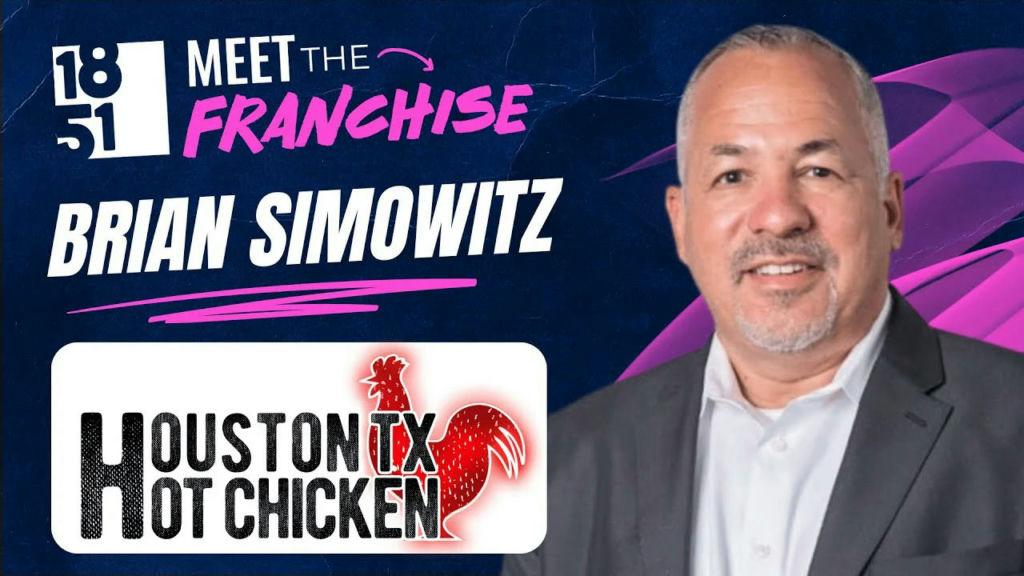
Simowitz joined 1851 Franchise publisher Nick Powills on a recent episode of the “Meet the Franchise” podcast to discuss his franchise journey, HHC’s growth strategy and why the brand is focused on building a disciplined system for long-term expansion. A transcript of the interview — edited for brevity, clarity and style — has been provided below:
Brian Simowitz: I’ve been in the restaurant business my whole adult life, which is longer than I care to share on this podcast.
I was a franchisee of a brand in the late ’90s in Minnesota. My wife and I were franchisees. We had three young kids, and we decided that wasn’t the lifestyle we wanted because we were always going from restaurant to restaurant.
So I went back to corporate America. I had always been on the company operations side of the business, and Applebee’s brought me on as a franchise area director because I had that franchise background and the operations experience. That’s how I got into franchise operations.
Simowitz: An old brand called Ground Round. We had some Ground Rounds, and we had a couple of independents in Minnesota as well.
So I bought one store. When you buy one restaurant, you’re basically buying yourself a job. Then we started adding on other businesses. We had a banquet and event center. We had a bar in a college town. It came to the point where my wife and I were always running. We didn’t have the infrastructure or teams to be able to run these things. We were running them ourselves.
Simowitz: I think it was a combination of all of those things. One of the biggest things in my mind is that there are a lot of franchisors out there that want mailbox money. They want that check coming in, and you sign up and you’re on your own at that point.
Those were valuable learning lessons for me in my franchise career because I learned a lot from that situation. I was undercapitalized. We took on a store that we had to remodel right away, and it was about a $550,000 remodel. We spent our whole amount of money on that one store and that remodel.
We did fantastic. We took a store that had done $1.5 million for 30 years, and we increased the sales. In 18 months, I think we were doing a little over $3.2 million. We did a great job of driving that business, but it came at a price. We didn’t have the capital to really grow out that team. It was my wife and me running those businesses.
We did great with all of those businesses, but the reality was that we didn’t have a family life at that point. I didn’t have the capital to really grow that infrastructure, and I didn’t have the time to wait. We could have sweated it out and continued to grow the business, but at what sacrifice to our children and to my wife? She wanted more of a family life.
So we made the decision to sell the businesses. We were very successful in getting those sold quickly. Applebee’s made me the offer, and I said, “I’ve got to go sell these businesses first.” They kept the job for me, so it worked out well.
I was not going anywhere. That was my last gig. I was pretty happy. I loved Fayetteville, Arkansas. But the opportunity came around to look at HHC, and I told the recruiter I wasn’t interested. She said, “You know Andrew Smith, the founder of the private equity company.” I said, “I absolutely do know Andrew.” She said, “At least take a conversation with him.”
I talked to Andrew. We had a great conversation. I still didn’t know what Houston TX Hot Chicken was. Fast forward two or three months later, I went out to Utah for a meeting with the Savory executive team. We went to lunch at an HHC. I was sold the moment I spent about an hour with the executive team at Savory. They’re incredible people. Then they took me to a Houston Hot Chicken, and I was like, “Where do I sign up? This is fantastic. It’s a great opportunity.”
Powills: How does that philosophy of not just selling franchises, but finding people who can scale, apply to what you’re doing now?
We want well-capitalized franchise partners. At the end of the day, we want franchise partners that have similar values and visions as we do. It’s not just about can they do five units? Do they have the right territory? It’s about making sure that there’s a connection with that franchisee.
I want franchisees that are going to be engaged in their business. There are a lot of franchisees out there that want that turnkey operation and say, “I’ve got somebody running it for me.” That doesn’t work.
We want franchisees that understand they need to be engaged in their community. They need to be engaged in their business to be successful, and they need to be well-capitalized and positioned for growth.
Simowitz: Some of it is that I love the puzzle. The opportunity was fantastic, and I knew there were some wins that we were going to be able to pull off the table right away for this brand.
But some of it is that I wanted to show that I could do this with a brand at a different level. I had been the vice president of franchise ops for 10 years. I also took on the responsibility of running Slim’s company restaurants, so I ran company and franchise.
I wanted to do it from a different seat, and I knew I was making a bet on myself as well. I could go out there with a small emerging brand and do the same thing I did at Slims and build that team out to achieve the same type of results.
Simowitz: It’s fantastic. I joined the brand in October of 2024. I said, “We’re not going to do any franchising. We’ve got to make sure that our four-wall unit economics work and that we have a franchiseable proposition before we go try and sell anything.”
So we shut down any inbound inquiries and told people, “We’ll get back to you in probably six to eight months.” We set out to fix the unit-level economics and make sure it was a solid proposition for franchisees. We achieved great results. There was a lot of low-hanging fruit. I already had the playbook. I’ve done it a couple of times, and we did a fantastic job with that.
Then we turned on the franchising funnel and started talking to prospective franchisees. It was important to us that we found not only the people who had the capital and the desire to grow a great brand, but people who had the same vision and values as us.
Simowitz: The vision is to continue to grow the brand through franchising and company stores. We’re going to open three stores a year in our company markets, which are currently Las Vegas and Arizona.
We’re also in some conversations with some international players right now that could be happening very soon. We’re going to continue to find the right qualified franchisees and grow this brand into something bigger than it is today.
In this story
This story was originally published in 1851 Franchise on May 4, 2026. Burnaze summarizes and links to the original reporting.
Read the full story at 1851 FranchiseLiked this? Get the week's franchise news, explained
- Sunday 8 AM ET weekly + a monthly deep dive
- Sections picked for the industries you follow
- Every claim linked to its source. Free.