TL;DR
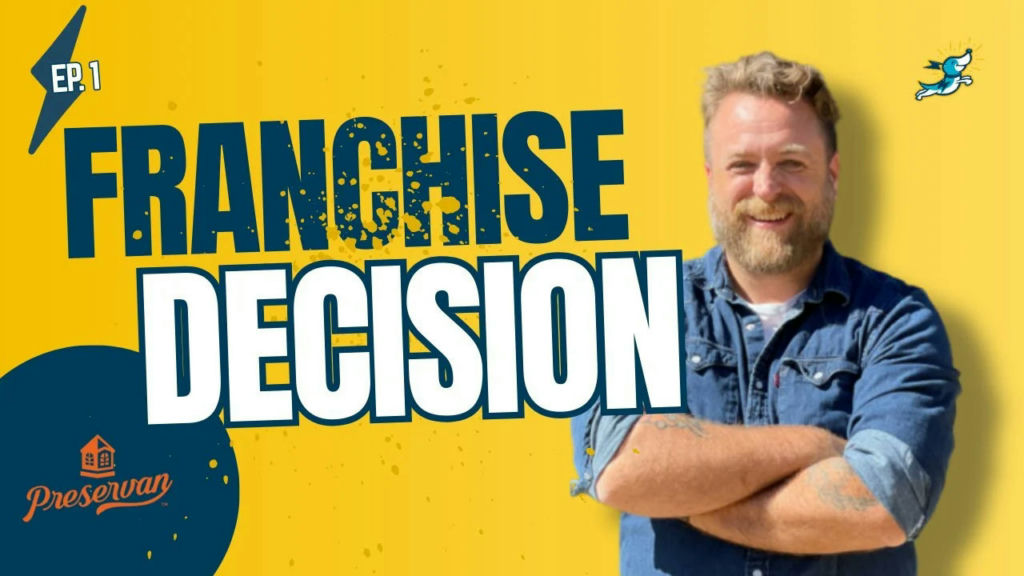
Preservan founder Ty McBride considers franchising his historic preservation business for a more replicable model. He shifted his mindset from selling units to building something together with his franchisees, which helped turn things around for the business.
Before franchising, Preservan founder Ty McBride was running large historic preservation jobs. The work was steady, but it pulled him away from his community and into a constant cycle of stress. He remembers dreading the four-hour drives to big projects and feeling like the business relied entirely on his presence. During those long commutes, he began to imagine a simpler, more replicable model — one that could grow without him needing to be everywhere at once. And he began to wonder if he could build a business that could franchise.
Even after shaping his concept into Preservan, doubt never fully left his side. McBride describes those first steps into franchising as a daily gut-check. He wasn’t completely sold on the idea at first. A few friends who had bought franchises told him stories that made the industry sound messy, even unfair, and it left him second-guessing the decision. Then, when his first Franchise Disclosure Document went out, he realized parts of it didn’t fit Preservan at all. The territory model didn’t make sense for a home-service brand, and the financials barely scratched the surface.
"When we actually started to really put it out there, we realized that we had something that wasn't right for our business, he told GoodSpark Franchise Growth Accelerator CEO Charles Internicola on a recent podcast. "That was a gut punch."
What turned things around was a shift in mindset. McBride stopped thinking about franchising as selling units and began to view it as building something together. His first franchisees were people he already knew, which set a tone of trust and collaboration. That philosophy carried into his approach with brokers. Instead of pitching Preservan, he simply asked to learn.
“All of a sudden, my calendar filled up with calls with brokers,” he said, noting that those conversations shaped his understanding of how to communicate and support the people who could help him grow.
Preservan’s early growth didn’t come from glossy campaigns or big ad budgets. McBride leaned into the scrappy habits that helped him launch his first business — showing up at events, posting on LinkedIn and filming quick YouTube clips. The goal wasn’t polish but presence. “You got to just get in front of people and tell people about what you’re doing,” he said. It was the same hustle that once meant hanging door flyers, just adapted for a digital age.
Underneath the strategy and the stress, McBride says two things keep him moving: a belief in the importance of home and a commitment to helping other small business owners succeed. He sees every repair as a way to protect someone’s biggest investment and every franchise as a chance to help an entrepreneur build long-term value. “Small business ownership is really hard,” he said, and franchising became his way to make it less lonely. For him, Preservan is about more than expansion — it’s about creating impact and leaving a legacy.
In this story
This story was originally published in 1851 Franchise on September 5, 2025. Burnaze summarizes and links to the original reporting.
Read the full story at 1851 FranchiseLiked this? Get the week's franchise news, explained
- Sunday 8 AM ET weekly + a monthly deep dive
- Sections picked for the industries you follow
- Every claim linked to its source. Free.