TL;DR
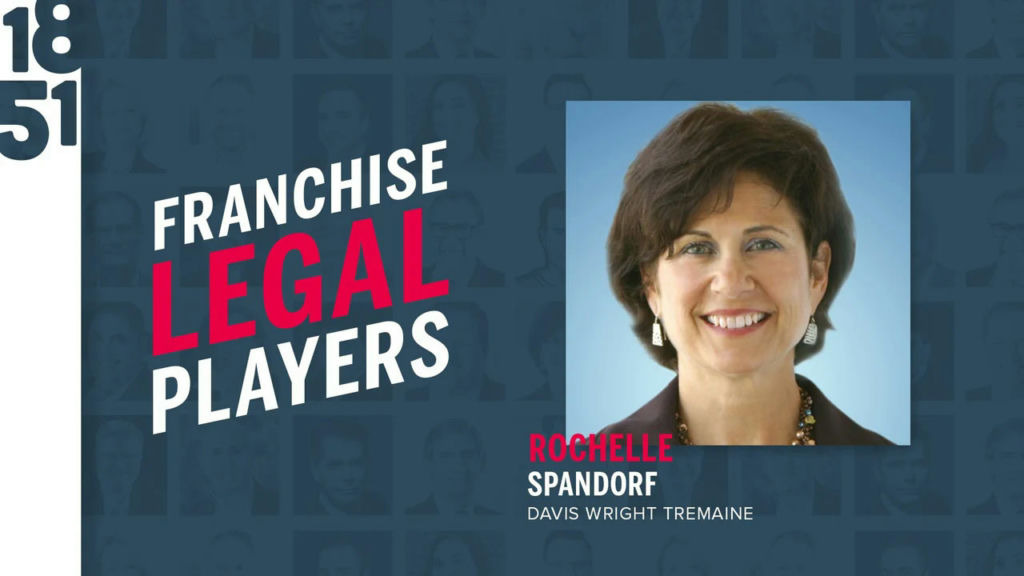
Rochelle Spandorf, a partner at Davis Wright Tremaine, leads the national franchise practice with over 40 years of experience representing franchisors and franchisees. She has been recognized as one of the leading Global Elite Thought Leaders in franchise law.
Rochelle Spandorf, Partner at Davis Wright Tremaine LLP: I bring almost 40 years of experience representing franchisors, manufacturers, licensors, suppliers, franchisees, and distributors in their domestic and international expansion and strategic development. I have the distinction of serving as the first woman to chair the ABA Forum on Franchising, the nation’s preeminent association of franchise attorneys. Most recently, in 2018, Who’s Who Legal based on peer reviews recognized me as one of the leading "Global Elite Thought Leaders" in franchise law in the world.
I lead the national franchise practice at Davis Wright Tremaine, or DWT, a full-service law firm with approximately 550 lawyers in eight offices on the east and west coasts of the United States. We stand out among franchise law firms by offering our franchise clients seamless comprehensive legal support in all areas of business important to them, from domestic and international franchise sales regulation to M&A, advertising and marketing practices, privacy and cybersecurity, tax, and dispute resolution.
For restaurant owners, DWT has the leading restaurant practice in the U.S., providing advice not only on franchise law topics, but cutting-edge issues unique to restaurant owners including food safety and menu labeling, restaurant labor and employment rules, retail leasing, IP protection, alcoholic beverage control, supply chain projects and rules for cannabis-friendly bars and restaurants. Foremost, DWT offers franchise clients deep practical knowledge of franchise law and important perspectives when clients ask us, “What are other franchisors doing about this?”
Spandorf: There is no substitute for experience. Clients should ask for references and call them. In vetting a potential franchise attorney, clients should consider the feedback of other clients regarding the attorney’s responsiveness, objectivity and practical business sense. Legal fees are obviously an important consideration, but experience counts for more: a seasoned franchise attorney may take less time to get the job done right. Franchise law is not a commodity; it is a practice that requires specialization, which only comes about with experience.
Spandorf: Collectively, the joint employer cases stand out because they illustrate how poorly public officials understand franchising as a unique business method.
Spandorf: Helping a client navigate through change or solve a business problem who takes a moment to say thank you.
Spandorf: Revenue recognition rules for franchise fees; ability of Congress and state legislatures to enact legislation to eliminate concerns over joint employer legal risks for franchisors (risks unwelcome by franchisors and franchisees alike); and the government stalemate due to extreme partisanship.
Spandorf: Business ownership and expansion opportunities for first-generation business owners; continued job creation for our economy; and the increasingly diverse profile of franchisees including continued attraction of sophisticated companies, young business talent and private equity investors to franchising.
In this story
This story was originally published in 1851 Franchise on April 1, 2019. Burnaze summarizes and links to the original reporting.
Read the full story at 1851 FranchiseLiked this? Get the week's franchise news, explained
- Sunday 8 AM ET weekly + a monthly deep dive
- Sections picked for the industries you follow
- Every claim linked to its source. Free.