Two generations will decide what the convenience store becomes. One is already the industry’s most frequent shopper. The other is still in middle school, arriving with more developed opinions about food than any cohort before it.
Gen Z shopping habits
For Gen Z, the convenience store is already a true food destination. According to Datassential’s 2026 C-Store Keynote Report, 47% of Gen Z consumers visit convenience stores at least several times a week compared with just 18% of boomers, and 53% purchased a prepared food item on their most recent visit versus 35% of boomers. Buying patterns shifted with too: impulse purchases of prepared food items are up nine points since 2023, and 45% of shoppers are buying more c-store food to eat on the go, against 10% buying more to eat in-store.
What Gen Z has not brought is engagement with traditional loyalty tactics. Only 9% cited a loyalty card as the reason for their last c-store choice, the lowest of any generation. Value-driven pricing does that work now. When asked what would make them pick one c-store over another for prepared food, 71% named buy-one-get-one offers, 69% said combo pricing and 64% pointed to “happy hour” pricing — all significantly above boomers.
Technology divides the customer base almost in half. We asked c-store shoppers about their potential interest in 13 specific technologies, from mobile apps to facial recognition software. Gen Z interest more than doubled boomer interest on every form tested: mobile apps (53% vs. 21%), scan-and-pay (49% vs. 15%), predictive ordering (42% vs. 6%), or artificial intelligence (AI) tools for front-of-house (28% vs. 7%) and back-of-house applications (33% vs. 6%) alike.
However, even for these younger, tech-savvy shoppers, digital tools are more likely to be perceived as table stakes or nice-to-have enhancements rather than a reason to walk in. Among Gen Z shoppers who tried something new on their last visit, only 10% credited a social media promotion, down from 23% in 2023. In-store cues mattered far more: an unusual or interesting item they had never seen before (30%), a limited-time callout (27%), a featured item on display (27%) and combo pricing (23%) all ranked higher.
Digital fluency shapes how younger consumers pay, but discovery still occurs on the store floor.
Food preferences and trends
At c-stores, Gen Z over-indexes on French fries, warm bakery sweets and burritos compared to older shoppers. Prepared beverages are doing even more work: 46% buy retail-prepared drinks like smoothies, slushies and specialty coffee frequently or always. Flavor is where Gen Z separates most clearly from older shoppers.
They are driving demand for flavored ketchup (31% interested), dry herb and spice shakers (28%) and Tajín (13% vs. 2% of boomers) while showing markedly less interest in the yellow mustard and plain mayonnaise that anchor older palates. Bolder condiments are among the cheapest ways to make a familiar item feel new.
Like millennials before them, Gen Z consumers are heavily driven by personal values and strive to act on them. In a May 2026 survey, 63% of Gen Z said it is extremely or very important to make environmentally sustainable choices, the highest of any generation, and 48% say their values always or very often influence their decisions. Over the past year, 41% of Gen Z consumers directly supported businesses owned by communities they care about, 30% supported brands committed to sustainability, while 27% directly avoided brands whose public positions they opposed.
Gen Z now shows the strongest demand for global flavors at home and away from home. Gen Z also views authenticity and invention as complementary. While 58% of Gen Z prefer global dishes faithful to their original roots over Americanized versions, that share sits below millennials (62%) and Gen X (63%).
And while 68% say authenticity matters more to them now than it used to, 71% also see fusion as creativity rather than a dilution of tradition. For c-stores, that combination offers flexibility: Gen Z will embrace a gochujang-glazed sandwich or birria-style burrito without demanding strict authenticity as long as it delivers on flavor and feels thoughtfully developed.
Gen Alpha influence
Gen Alpha may not be old enough to have complete spending autonomy, but they are already active participants in the food ecosystem. In a January 2026 Datassential survey of 754 parents of Gen Alpha children, more than 40% said they take their children to a convenience store at least weekly. Ninety percent say their children have some influence over what goes into the grocery cart, and a similar share say their kids influence where the family eats out. Money is already part of their lives: 79% receive an allowance, and 39% may spend it as they please.
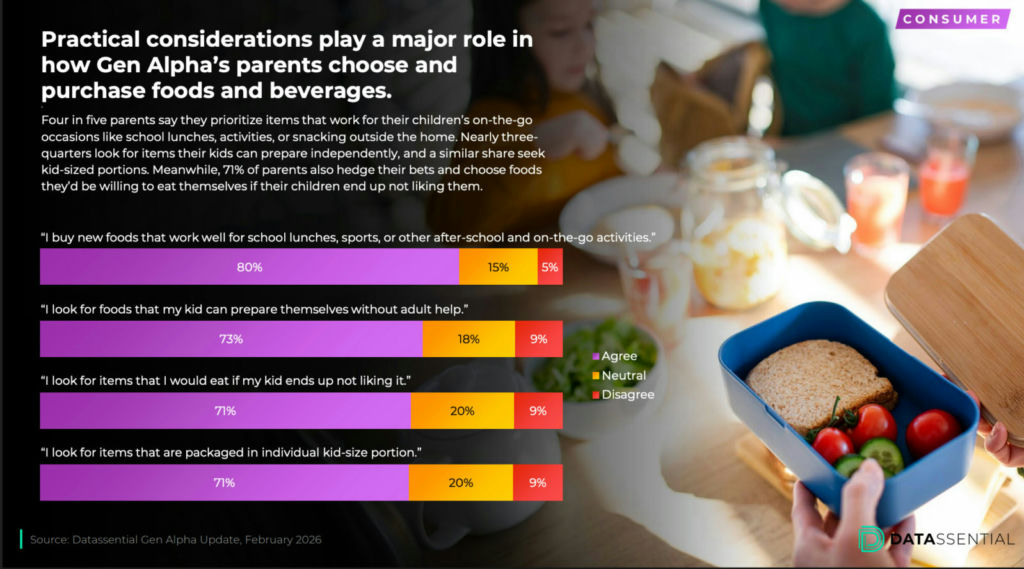
Their everyday habits already point toward the c-store aisle. Eighty percent of parents prioritize food that travels well for school, sports and other on-the-go occasions, and 73% look for items their children can prepare without adult help. Choice matters just as much as portability: 79% of parents say their children want variety and options in their daily routines. The beverage case may be where these habits land first: among 13-15-year-olds, 67% already drink specialty coffee beverages, and 63% drink energy drinks, categories in which convenience stores hold a commanding position.
As this generation gets older and develops firmer preferences, how might Gen Alpha differ from Gen Z? The difference may rest with their parents. Gen Z was largely raised by Gen X, while Gen Alpha is being raised primarily by millennials, the generation most passionate about food, beverage, restaurant experience and social values.
That passion is being passed down. Three-quarters of parents say they explain unfamiliar foods to their children while grocery shopping, 74% give their kids hands-on roles in the trip, and nearly two-thirds have taken them to a farm or farmers’ market so they understand where food comes from. The results show up early.
More than 80% of parents say their children’s tastes keep expanding as they age, 61% say they watch cooking shows for entertainment, and 85% report that their child already has favorite restaurants they ask for by name.
It is not unreasonable to expect this cohort to grow into adults who are even more food adventurous than Gen Z, since they’re being handed the exposure and the skills a decade earlier. Where the two generations converge is appetite. Both look to food and drink for delight, for something unique that also tastes good. That shared pull toward indulgence and discovery is the opening for convenience retail across packaged shelves and prepared counters alike.
*Huy Do is a trendologist and research & insights manager at Datassential, where he helps the food and beverage industry make sense of what’s happening now and what’s coming next. At Datassential, he leads the development of forward-looking studies that explore emerging food and beverage trends, shifts in consumer behavior, and the many economic, technological and cultural forces shaping them. Above all, Huy strives to merge data with storytelling to make complex research clear, engaging and actionable.
A frequent speaker and media contributor, he has spoken at conferences such as the CIA’s Menus of Change Summit and has been quoted by outlets including MarketWatch and CNBC. He holds a Bachelor of Science degree from Northwestern University and a Master of Arts degree from DePaul University.
This story was originally published by Huy Do in CStore Decisions on August 25, 2026. Burnaze summarizes and links to the original reporting.
Read the full story at CStore DecisionsLiked this? Get the week's franchise news, explained
- Sunday 8 AM ET weekly + a monthly deep dive
- Sections picked for the industries you follow
- Every claim linked to its source. Free.