TL;DR
HomeWell Care Services has waived its franchise fee and offers strong support to new owners, prioritizing openings and revenue over signatures. The brand's Vice President of Franchise Development, Mike Condon, emphasizes the importance of execution over category flash in a demand-rich senior care market.
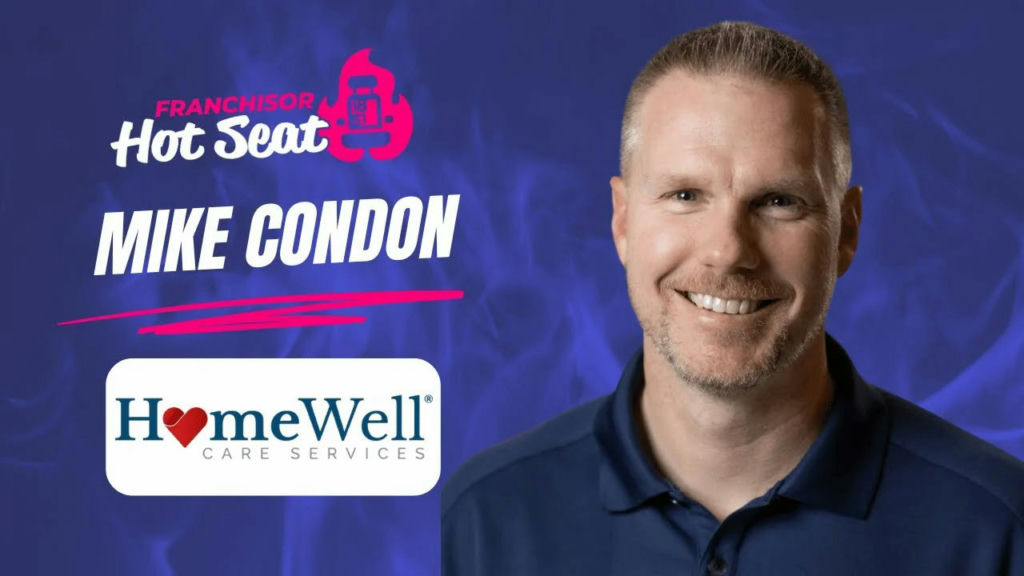
In a recent “Franchise Owner Hot Seat” interview with 1851 Franchise Publisher Nick Powills, HomeWell Care Services Vice President of Franchise Development Mike Condon framed a clear why-now for career-changers: The brand has waived its franchise fee, measures success by openings and revenue rather than signatures, and organizes launch services around break-even so new owners can move from survival to growth. The conversation centered on transparency with candidates and brokers, mindset fit for buyers leaving steady careers, and a development process built to reduce early-stage stress.
“We talk about that during development. It’s one thing to get a great candidate in the door; it makes no difference if they never open,” Condon said. “Our success at HomeWell is because we’re opening franchises, producing revenue and growing. That’s the long-term success of our company. As a leadership group, we ask: How do we support openings? What programs do we need? What resources and people are required?”
Condon came to development through ownership. After earning an MBA and pivoting from the corporate track, he consulted with Business Alliance before buying units in a massage concept with his wife. He still owns Hand & Stone and Game Day Men’s Health, and he describes himself as both operator and owner, with a seasoned team running the former and hands-on attention on the newer venture. At HomeWell, he applies that operator’s lens to recruiting, opening services and accountability to launch targets, emphasizing execution over category flash in a demand-rich senior care market.
“I get that question all the time from consultants: ‘What’s your differentiator?’ At the core of what owners do, it’s very similar. There are nuances and different programs, but it comes down to the right owner with the right mindset plus proper training and support. That’s where the difference comes in,” he said. “What they’re doing is the same. How they execute is vastly different. We differentiate in support and how we help you grow. Newer owners will tell you the process we take them through makes them feel ready to succeed.”
HomeWell is leaning into waived upfront costs, a race-to-break-even opening playbook and candid guidance for buyers moving from paycheck certainty to ownership. For candidates ready to be all in, the promise is simple — clear expectations, support calibrated to opening and growth and a system that prioritizes long-term royalties over short-term signings.
A transcript of Powills’ interview with Condon has been provided below. It has been edited for clarity, brevity and style.
Mike Condon: In 2015, I got my MBA and was on the corporate track. Like many people, I thought I was going to be CEO of the next big company and came to realize that probably wasn’t the case. As I looked for a career pivot, I wanted something that would allow me to be home for my kids — young at the time — and present for my family.
So, franchisee to franchisor — I see it. How did you accidentally fall into franchising? What’s your franchise backstory?
I jumped into franchising in 2016 with Business Alliance, became a consultant and just wanted to learn. A couple of years later, I had an opportunity to buy a couple of franchises in a massage concept. My wife and I took the leap, and it’s been history ever since.
I fell in love with entrepreneurship and the business side of it, and also with what it afforded my family in time and flexibility. I’ve been lucky to have opportunities line me up and bring me into HomeWell kind of on a whim, to be honest. I wasn’t looking for this, but an opportunity presented itself to work with some great people.
Here we are. I’ve been here three and a half years and loving every minute of it. It’s been a crazy shift, but it’s something you can do if you’re out there looking at an opportunity.
Condon: Still a franchise owner with Hand & Stone. Also a franchise owner with Game Day Men’s Health — the men’s hormone clinic. Those are the two we own here. I’m loving what we’re doing with HomeWell as well.
Powills: We’ll get into HomeWell, but at a cocktail reception, do you identify more as a business owner or a business operator?
Condon: A little of both. Our Hand & Stone business is in a good spot. I have a great team — what I call the dream scenario — where I’m involved, but I’m not there every day. The team runs it day to day, and what we’ve been building has gotten to a point where I don’t need to be there daily.
The other side is the new business. Being a year in, I can’t be hands off. We need to be present, and we’re building toward that. I look at myself as able to do both, which is fun. It keeps me connected to what’s important in the business model while still growing it into something we can eventually step away from.
Powills: The head of sales for Hand & Stone, Bob McQuillin, owned Hand & Stones because he believed in the business. It’s easier to sell when you believe in it. For you, being a multi-brand, multi-unit franchisee, I assume earning trust with the buyer at HomeWell includes saying, “I’ve walked a day in your shoes.” Accurate?
Condon: Yes. It’s important to talk with candidates about the process — the good and the challenges — and to come at it from a place of knowledge. Early in my career as a consultant, I struggled with that. If you’ve never owned a business or gone through the process, it’s hard to articulate what will help someone be successful or what to watch out for.
Now that I’ve gone through it — and many people on my team have, too — I hire specifically for business ownership experience. I want candidates to ask those questions and really understand the underlying question. Sometimes candidates don’t know what they’re trying to ask. If you have that knowledge, it accelerates the conversation.
Powills: Many buyers are leaving steady careers — health insurance, paycheck, stability — and shifting to ownership. You’re on 24/7. Not working 24/7, but “on.” Is that mindset trainable fast, or does it take years to understand you didn’t buy a job — you made a large life investment?
Condon: It’s a topic we consistently talk about. I’m an all-in person. You’re spending a lot of money to buy a business or franchise — why wouldn’t you be all in?
We help candidates understand it’s not “buy it and it runs itself.” Even if it eventually runs itself, you’re always working on the business. I tell people: when you leave your nine to five, you really do leave it. In business ownership, you never do.
What it affords you is the opportunity to choose when. If at 2 p.m. my kid has an event, I can go. The mindset side is important and not talked about enough in development. We hammer home that you’re going to work a lot — you just choose when more than in a typical nine to five.
Powills: Low investment with high return can attract “replace-the-job” buyers who pinch every penny. You have to scale to build wealth; one unit rarely makes you rich. How much do you coach whether someone wants to replace a job versus build wealth?
Condon: A lot. It’s a key component of goals. Whether it’s Hand & Stone or any brand, with one unit — at one point I had five Hand & Stones — it can be great, but it also brings challenges. You have to be prepared. Diversifying risk is where multi-unit comes in.
We ask, “What are your goals, and how do we align?” We have plenty of people at HomeWell who say, “I don’t want a $5 million territory; I want X million, and I’m happy.” That’s fine, but goals and approach must align.
On the flip side, some come in saying, “I want to earn half a million dollars in my first year.” That’s not realistic. Having open, honest conversations — especially with successful people from corporate America with well-paying jobs — is key to finding the right people for the system.
Powills: My concern with the industry is lack of transparency in how brokers get commissioned. Too many say, “I coach for free,” but commissions come from franchise fees. Fees are skyrocketing with no extra return to the buyer. Great brokers do tremendous coaching and should be paid, but when we don’t disclose costs and claim we work for free, candidates get duped.
Example: A senior care buyer used a broker who pushed donuts or kids’ soccer. The donut brand paid $85,000 commission, soccer $50,000, senior care $25,000. They felt duped. What’s your feedback?
Condon: I could not agree more. We work with a lot of great consultants and have built strong relationships with people who do it for the right reasons. Like every industry, there are some who don’t.
If I’m a candidate and the broker feels like a used-car salesman, it doesn’t set the industry up well. Unfortunately, that’s how some people feel. Buying a franchise or business is not “for fun.” It’s real life, and you have to treat it that way.
We try to work with brokers who take it seriously as their full-time job and who work with candidates to ensure a great process. On money: I have no problem paying for value. We involve good consultants in the process because they’re a critical part of helping candidates get the full picture.
What I do take issue with is, “This senior care brand pays X; you only pay Y.” Then work with that brand. I’ve said that more than I’ll admit. If that’s what you’re in it for, I wish you luck. That’s not our business. We pay a fair, market-competitive rate.
We also offer a zero franchise fee where we still pay the consultant — unheard of in the industry.
Powills: That is unheard of.
Condon: As former consultants — myself and two team members — we understand those relationships are key. For us, it’s about the relationship, bringing great candidates, giving them a great experience and being as transparent as possible.
Powills: On the franchise site, I look for organic sales readiness. I think brokers, in their current format, aren’t long for this world. AI can replace a lot of research, so leads will trend organic. Brands that use storytelling well will lift on the website.
In senior care, I don’t know that there needs to be a lot of differentiation because demand is so high. Your statement — that you don’t charge a franchise fee yet still pay the broker — is huge. Why not lift that up? And is there a true differentiator I’m missing, or is it largely supply and demand?
Condon: I get that question all the time from consultants: “What’s your differentiator?” At the core of what owners do, it’s very similar. There are nuances and different programs, but it comes down to the right owner with the right mindset plus proper training and support. That’s where the difference comes in.
What they’re doing is the same. How they execute is vastly different. We differentiate in support and how we help you grow. Newer owners will tell you the process we take them through makes them feel ready to succeed.
All home cares are essentially the same. I’m OK saying that.
Powills: Same with Hand & Stone versus Massage Envy — nuances, but people want massages. Game Day has differentiation now, but competition will fill in because of demand. Ultimately, it’s: do you truly support franchisees?
Most franchisors judge success on franchise sales as the signing, but the potential on royalty is the long game. If you commit more support to someone who may be an expert in one function but now has 10 jobs, the support becomes essential and feeds royalty and gross sales.
Condon: We talk about that during development. It’s one thing to get a great candidate in the door; it makes no difference if they never open.
Our success at HomeWell is because we’re opening franchises, producing revenue and growing. That’s the long-term success of our company. As a leadership group, we ask: How do we support openings? What programs do we need? What resources and people are required?
We discuss it constantly, internally and candidate-facing, and with consultants. We just did a webinar on our opening process — how we launch successfully. Long-term royalty growth is how we’re sustainable.
The hardest part for buyers is knowing what’s on the other side. We talk about that in development so they’re not surprised and know what they’re getting.
Powills: One big push in our growth plans: In Item 5, grand opening should be 10 percent of total investment. When you line grand opening to cost of customer acquisition, you can race to profitability. As soon as you get to profitability, stress comes off the owner and they can go be the owner.
“Grand” can be the first year. Earmark operating capital. If you’re gangbusters, use that capital to hire. Put the tools against a race to profitability.
Condon: Exactly. Step one is break-even and profitability. We talk about it in discovery and opening services. We do break-even after break-even analyses to help them understand the goal. We’re big on setting goals and working backward — six, 12, 18 months.
It’s great to own a business. It’s better when it’s successful and profitable. People can be enamored with “I own a business.” Everyone can own a business; not everyone has a great business. How do we make sure you’re great, successful and happy? Those are our tenets.
Condon: I have not.
Powills: The good in that answer is the insight for buyers. If someone says, “Mike, you own other brands — why not this one?” and you say it’s timing, that lets you tell candidates, “If you can’t put the energy against this, you won’t achieve your goal.” It allows you to lead them to “no” more than “yes,” which can be an asset.
Condon: The goal of franchisors is open units that are profitable and successful. As developers, it’s easy to get sucked into “move X units.” I don’t care how many units we sell; I care how many we open.
When we talk to candidates, it’s not just getting them excited. It’s whether they will successfully open and pay a royalty. That’s what our team focuses on.
We have a number, but we’re not fixated on it. We’re fixated on the right candidate through the right process. If a candidate isn’t right, they aren’t right. Move on. That’s OK. Let candidates know there’s no pressure.
Powills: I’m aligned. I’m not sure that mindset is universal. Most value a sale at signing. If one franchisee in Hand & Stone goes to five units, you paid more in royalty with five than with one, yet both sales count the same on the board. That’s the miss. Supply and demand can mask it in hot categories, but your answer is what we should focus on to drive system success.
Condon: That’s how we think. Also, not everyone will be successful. Some borderline candidates crush it; others aren’t the right fit over time. That’s OK. You won’t hit 100 percent, and you have to be OK with that.
Powills: We’re dealing with many former employees. Turnover happens. You think they were great in the interview; sometimes it doesn’t work out. Entrepreneurs don’t see the brick wall; they run through it. A franchisee may blame the franchisor. Knowing that sets the tone.
Condon: If you’re interested in learning more, talk to us. We’re friendly. Our team will educate you, answer your questions and figure out if it’s right for you and for us. A conversation never hurts. Call us, text us, go to our website. We have many ways to reach us, and we’re here to support you.
Powills: Great conversation. To a candidate: it costs you zero dollars to fill out the form and have a conversation. Even if you’re unsure about timing, talk to Mike — there’s value in that. It will help you on your pathway to becoming a franchise owner, too.
In this story
This story was originally published in 1851 Franchise on September 8, 2025. Burnaze summarizes and links to the original reporting.
Read the full story at 1851 FranchiseLiked this? Get the week's franchise news, explained
- Sunday 8 AM ET weekly + a monthly deep dive
- Sections picked for the industries you follow
- Every claim linked to its source. Free.