TL;DR
True Food Kitchen, a casual-dining chain, has filed for bankruptcy with $42 million in debt, including $17.2 million in traditional financing and $11.3 million in private debt. The company's debt also includes alternative financing, such as merchant cash advances, which have become increasingly common in the restaurant industry.
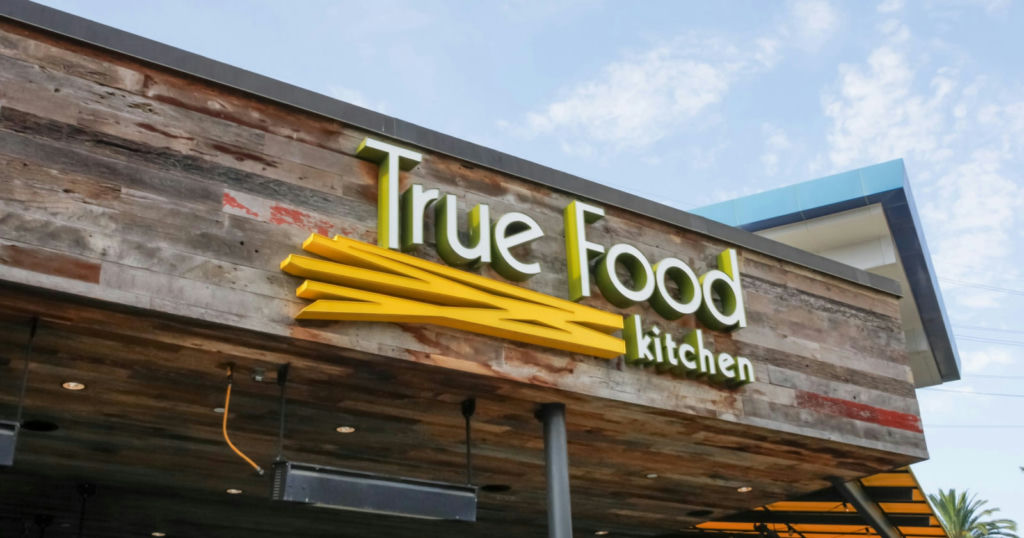
True Food Kitchen, the Oprah-backed casual-dining chain, filed for bankruptcy this week and closed a dozen restaurants.
Like many companies, it had some debt, though perhaps not as much as you might think. It had debt of more than $42 million, including $17.2 million in traditional financing, another $11.3 million in private debt plus $5 million in convertible notes.
The rest, about a quarter of the overall total, come from what court documents describe as “merchant cash advance” financing. It includes $2.2 million to Parafin, also known as DoorDash Capital, which provides advances on future delivery orders, and $1.7 million to Rewards Network, which provides advances on credit card sales.
Not all of it is true MCA debt, however. Most of that $11 million, $7.2 million, is to InKind, which provides financing in exchange for food and beverage credits that the company’s customers use to buy meals at a discount.
Yet alternative financing has become increasingly common through the restaurant space. And we’ve come across it repeatedly in operator bankruptcy filings of late. Bravo Brio Restaurant Group, Fireman Hospitality, Dave’s Hot Chicken operator TIG Reaper, Buttermilk Eatery, Indochine Restaurant Group, Bertucci’s, Moe’s franchisee Quality Fresca and multiple independent restaurants all relied on alternative financing.
This is in addition to the dozen restaurant operating companies, including franchisees and independent operators, that have filed for bankruptcy with traditional MCA debt this year.
This is unsurprising. When companies run into trouble, they look for ways out of that trouble. That often leads them to turn to roughly anything they can to survive, and that often means searching for alternative forms of cash.
And a lot of companies have liquidity problems right now.
The problem is relatively simple in principle. Industry demand has waned in recent years as a large swath of consumers cut back on dining while others diversify their spending toward more independents. Aggressively developing chains, meanwhile, keep adding supply to a business with demand that is, at best, stagnant. The population isn’t increasing all that much, either. Tourism is down in many markets. And it all makes this business a lot tougher.
It also costs a lot to operate a restaurant these days. Labor costs are up. Food costs aren’t getting cheaper. And the technology increasingly important in operating a restaurant doesn’t come cheap.
That has led to a surge in bankruptcies among restaurant operating companies, and franchisees in particular. But plenty of company-operated chains, like True Food, have also landed in bankruptcy court.
While a lot of these companies have poor capital structures that contributed to their condition, more of them are simple poor sales or poor profit filings, meaning the companies are simply struggling to generate enough cash. So, they turn to other forms of debt, even at an elevated cost.
Traditional MCA financing is arguably the most dangerous type of debt there is, because it can come at a high cost (100% in some cases) and it gets taken right from companies’ accounts. Using such cash to pay off other bills may keep a restaurant open for now, but unless that restaurant has a pile of cash coming in the short-term it can worsen cash problems down the line.
Other alternative funding sources may seem better, and often are, but they are not giving out free money, either. InKind, for instance, brings customers directly to restaurants, which is a good thing. But the cost is steep: The financier gets $2 in restaurant credit for every $1 it provides. It’s like selling off a massive amount of 50% off coupons.
Bravo Brio received $3.5 million in such financing, in exchange for $7 million in credit. InKind in that company’s bankruptcy asserted nearly $12 million in secured debt, but the bankruptcy court in March ruled that it could not recover anything in the reorganization. So there is some real risk to some of these alternative financing companies.
Regardless, restaurants should take special care when taking out any kind of advance financing, no matter how it is structured. The money may help now, but it could create problems down the line.
In this story
This story was originally published in Restaurant Business on October 6, 2026. Burnaze summarizes and links to the original reporting.
Read the full story at Restaurant BusinessLiked this? Get the week's franchise news, explained
- Sunday 8 AM ET weekly + a monthly deep dive
- Sections picked for the industries you follow
- Every claim linked to its source. Free.