TL;DR
Franchise developers are facing challenges in 2027, including limited options and higher costs, due to historically low vacancies and rising real estate costs. Companies such as WOWorks, Slim Chickens, and Woof Gang Bakery & Grooming are adapting to these challenges by evolving their prototypes, expanding search criteria, and offering incentives to franchisees.
Finding good real estate locations in a competitive market is tougher than ever, and those in franchising are bracing for more of the same challenges in 2027.
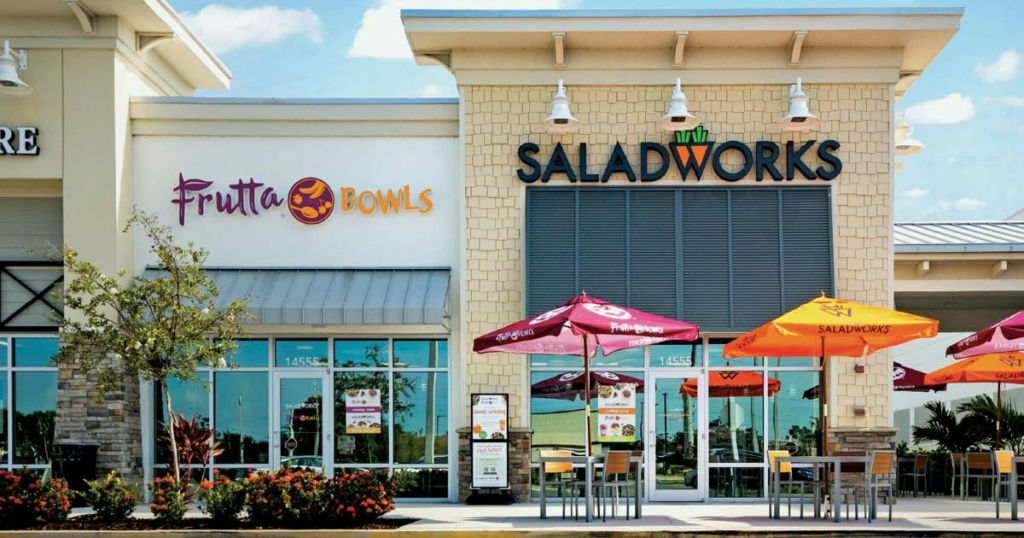
“There’s no shortage of real estate. There’s a shortage of great real estate, and a number of brands are vying for those better sites,” said James Walker, chief growth officer at WOWorks, parent company of fast-casual brands such as Saladworks, Frutta Bowls, Barberitos and Zoup Eatery.
As a veteran franchise executive and developer, Walker understands that a great location is a critical part of the equation needed to set franchisees up for success. “Finding great sites is not as difficult as finding a site that really works from a quality standpoint, but also from a lease package standpoint,” added Walker.
Franchise growth plans
WOWorks is on pace to open 40 stores by year-end, which brings the company’s total footprint to more than 250 nationwide. Across its six brands, WOWorks typically targets highly visible, highly accessible locations that range in size from 1,400 to 2,000 square feet.
Franchisors such as WOWorks are bumping into what remains a persistent problem—historically low vacancies and rising real estate costs. As of mid-year, the national average retail vacancy rate was hovering at 4.4 percent, with malls experiencing the highest vacancies at 8.5 percent, according to Colliers.
In the quick-service restaurant category, there is huge demand and not enough inventory of good real estate in established markets where brands want to grow, said Sarah Shanks, vice president of capital markets at SRS Real Estate Partners. “The available inventory of vacant former QSRs for redevelopment is even tighter, and we’re seeing this on a national level,” she said.
Suburban sites with strong surrounding tenants and easy accessibility are the most in demand, and competition is especially fierce for hard corners and sites with easy access, added Shanks.
Market trends and costs
New retail construction remains historically low nationwide, and current supply and demand dynamics are giving landlords more leverage to raise rates and negotiate tougher tenant improvement packages.
According to JLL, national retail rent growth at mid-year was relatively modest at 1.7 percent. Tenants, however, are finding bigger variances in rent trends across different property types and geographic markets. For example, JLL data shows bigger annual increases in Charlotte, North Carolina, at 6 percent, whereas Los Angeles saw a 1 percent decline in asking retail rents.
Franchise groups are reporting that construction costs that skyrocketed following the pandemic now appear to have stabilized, with increases that are more in line with a 2 to 4 percent rise in inflation.
“We’ve seen many franchisees, especially first-timers, get frustrated with current market conditions,” said Jonathan Lapat, senior vice president and managing principal in the Boston office of SRS Real Estate Partners. “Not many realize how expensive real estate is until they get into the trenches.”
Frustration stems primarily from two realities. The first is low inventory. Second, with low inventory, rents go up.
“Franchisees need to go into this process eyes wide-open and with confidence in order to get doors open—which is much easier said than done,” Lapat added.
Franchisee strategies
Franchisees are finding different ways to navigate market challenges. Some are shrinking footprints, expanding search criteria, or sharpening their focus on those markets with high sales projections that are better positioned to support higher real estate costs.
“We see the current environment as an opportunity to think differently about restaurant development,” said Matt Green, chief development officer at Slim Chickens. The Fayetteville, Arkansas-based QSR chicken chain is evolving its prototypes; expanding the types of real estate it can consider; investing alongside qualifying franchisees; and adding market-planning capabilities that help operators identify opportunities more strategically.
Slim Chickens has more than 300 units open, with approximately 750 restaurant commitments in the development pipeline. Rather than looking for one specific site type, the brand is open to a variety of options, including freestanding locations with drive-thrus, endcaps, inline spaces, drive-thru-only stores and conversions.
“That flexibility gives our franchisees more ways to identify real estate that fits their market and development strategy,” said Green.
A key question that remains at the forefront is what version makes the most sense for that particular site and market, he added. Slim Chickens is focused on both infilling its Southeast and Mid-America markets as well as expanding into the Northeast and West Coast markets.
“When you really need a very specific size or location or endcap with a drive-thru, those hard requirements really limit your availability,” agreed Ricardo Azevedo, the CEO of Woof Gang Bakery & Grooming. Woof Gang expected to add 70 new locations in 2026, bringing its store count to more than 335 in 37 states. And the company is projecting a similar pace of new unit openings in 2027.
The company received a growth investment earlier this year from Great Hill Partners, which joined existing investor Garnett Station Partners. Garnett Station added Woof Gang to its portfolio in 2022.
“I would consider our requirements to be quite flexible, and that is key for a concept to be successful in expansion nowadays,” said Azevedo.
Woof Gang targets convenient locations, such as inline space in grocery-anchored centers, with stores that can fit in sites as small as 1,000 square feet or up to 2,000 square feet.
Rising costs are part of what has pushed brands such as Slim Chickens to create more options for franchisees. For example, inline and drive-thru endcap restaurants can potentially require less investment than a traditional freestanding drive-thru, giving operators another way to think about how they deploy capital across a portfolio.
Slim Chickens also launched a New Restaurant Development Fund, which provides qualifying new and existing franchisees with corporate cash investments of up to $200,000 per eligible restaurant.
“We see it as an opportunity to put real resources behind the development strategies we’re providing our franchisees,” said Green.
Incentives and solutions
WOWorks recently announced new franchise incentives that include discounts to add a co-brand to a location. In particular, the focus is on adding Frutta Bowls, which brings increased traffic for morning, afternoon and evening dayparts.
“A co-brand helps leverage your real estate costs, and it also helps leverage your [furniture, fixtures and equipment] cost, energy costs and labor costs, which is a big concern within the industry right now,” said Walker.
Some franchise groups are looking to shrink the footprint to offset occupancy costs.
“However, retailers also need to be careful not to reduce their square footage so low that they can’t merchandise their full offerings,” cautioned Lapat. For some brands, smaller footprints can have a negative impact on sales, which in turn lowers what the retailer can afford to pay in rent.
Having brand recognition and scale, as well as a use landlords want, can help franchisees secure new locations in what remains a competitive market. Landlords also like brands that have longevity and a proven track record.
“What has helped us is showing that we’re a great asset for developers,” said Azevedo, who’s led the company since 2022.
Woof Gang’s model helps to draw traffic to a shopping center. About 50 percent of the grooming appointments at Woof Gang come from online bookings, which makes it a destination business. Its customers also tend to drop off pets and then run errands, which drives cross-shopping for other tenants, he noted.
Franchise groups agree that the challenges involved in finding great locations are the same across the U.S. Although being nimble and quick to vet locations can be an advantage, some emphasize the need for patience.
“We have no rush to get into any real estate. We want real estate that we see our franchisees being very successful in,” Azevedo said. It’s important to take the time early in the development process to study a market and really understand the areas where a franchisee is looking to locate.
“Spending six months or more trying to find better real estate that connects to better returns over the next 10 years is well worth it,” Azevedo added. “That can sometimes be frustrating for a new franchisee coming in. But it’s the healthiest way to grow a brand in the long run.”
In this story
This story was originally published by Beth Mattson-Teig in Franchise Times on October 29, 2026. Burnaze summarizes and links to the original reporting.
Read the full story at Franchise TimesLiked this? Get the week's franchise news, explained
- Sunday 8 AM ET weekly + a monthly deep dive
- Sections picked for the industries you follow
- Every claim linked to its source. Free.