TL;DR
Wild Bill's Craft Beverage Co. franchise has found success with its event-first model, participating in roughly 600 events annually and giving franchisees a structural advantage over traditional retail concepts. The company's mobile business model and long-standing partnerships with event promoters and venue operators have become valuable assets.
For most franchise brands, success depends on convincing customers to walk through the front door. Wild Bill's Craft Beverage Co. took the opposite approach. Rather than investing in expensive storefronts and hoping consumers show up, the craft beverage franchise built its entire business around going directly to where people are already gathering.
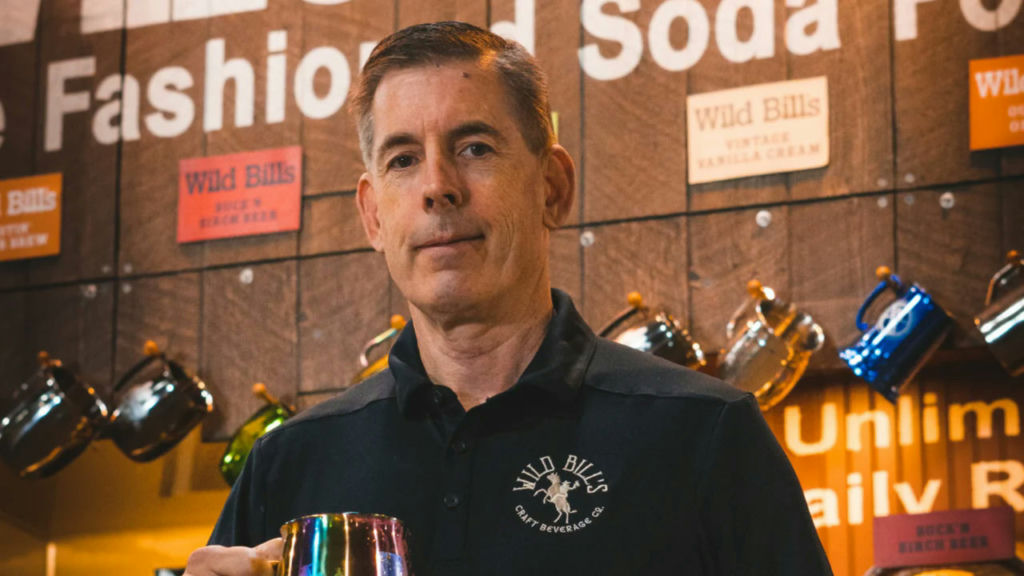
That philosophy has powered Wild Bill's since the company was founded in 2002, helping the brand become a familiar sight at fairs, festivals, comic conventions, air shows, motorcycle rallies and sporting events across the country. Today, the company participates in roughly 600 events annually, and CEO Mike Quilty believes that event-first model gives franchisees a structural advantage that traditional retail concepts simply can't replicate.
"This is a brand we acquired, and one of the attractive elements to it was the mobile nature of the business," Quilty said. "We go to the crowds. We don't need people to come into a brick-and-mortar. That really keeps costs down. You don't have a fixed rent. We also don't have to staff it to be open when people aren't around. By definition, when we are at the event, there are people there. You're already open when there are customers."
For Quilty, the biggest difference between Wild Bill's and a traditional franchise isn't simply mobility. It's the certainty of customer traffic.
Mobile business model
Instead of spending marketing dollars to generate awareness of a physical location, franchisees operate in environments where tens of thousands of people have already chosen to spend the day, whether that's a few thousand attendees at a county fair or well over 100,000 at an event like Anime Expo. That changes nearly every aspect of the business. "The event itself is bringing the crowd," Quilty said. "Our job is to deliver an experience that people remember."
The model also creates flexibility. Operators aren't tied to a single address or dependent on one neighborhood's demographics. One weekend might be a county fair, the next a comic convention, followed by an air show or food festival. Rather than expanding through additional storefronts, franchisees can increase revenue by adding more events, more equipment or additional crews as their businesses mature.
While the mobile model lowers overhead, Quilty believes Wild Bill's greatest competitive advantage is something far more difficult to build: relationships.
Over the past 24 years, the company has developed long-standing partnerships with event promoters, convention centers and venue operators across North America. Those relationships have become one of the brand's most valuable assets. "These are people who create and own and put on the events,” Quilty said. “It takes a long time to curate a good list of events."
Event partnerships
Last year alone, Wild Bill's participated in more than 500 events, with approximately 600 expected this year. Those opportunities span everything from Renaissance fairs and Comic-Cons to county festivals and air shows. Those relationships also mean the company has visibility into which markets are underserved well before a franchisee ever signs on, giving new operators a running start rather than a blank calendar. "We've been able to curate a really great list of partnerships," Quilty said. "Event promoters are looking for partners that offer a good value.”
That recognition extends into niche communities where the brand has become part of the experience itself. "When we purchased the brand, we already had a cult following in genres like motorcycle rallies," Quilty said. "Bikers know Wild Bill's, for example. We are an institution in the biker space."
For entrepreneurs considering an event-based business, securing quality bookings might seem like the biggest hurdle. Quilty says Wild Bill's eliminates much of that uncertainty before franchisees ever launch.
"We have a list of markets where we currently do events, but we do not have an operator," Quilty said. “Examples include Portland, Oregon; Denver, Colorado; Louisville, Kentucky; Minneapolis, Minnesota and others.”
In many cases, those events are already part of the company's operating calendar.
"Sometimes we already have events that franchisees can tap into," Quilty said. "Other times, we provide franchisees with a targeted list of events they can participate in. We have relationships with convention centers, concession companies, and the event promoters who bring events to them. It's a group of people that work across hundreds of venues, so these are relationships we can bring to bear in most markets in the country."
That infrastructure gives new operators a significant head start compared to building an independent event business from scratch. "When we open up in a new territory or a new state, the people at the venue or the people at the show already know us," Quilty said. "You don't get there overnight. You do it year after year."
Live events industry
Quilty believes the broader live events industry is entering one of its strongest periods in years. Consumers continue to prioritize experiences, while convention attendance, festivals, and community events have expanded significantly since the pandemic.
"It has never been a better time to be in the live event business," Quilty said. "These events aren't going away. They might change, but they aren't going away. The industry is only getting better, and it's really on the upswing. It's the right place at the right time."
In fact, demand for events is no longer the limiting factor. "The problem isn't a lack of opportunity," Quilty said. "Now it's a lack of operators."
That reality underscores the strategy behind Wild Bill's continued franchise expansion. Rather than building more permanent locations, the company is focused on placing qualified entrepreneurs into markets where relationships, bookings and customer demand already exist.
For Quilty, that's the model's enduring strength. Instead of waiting for customers to find the business, Wild Bill's has spent more than two decades building a franchise that simply meets them where they already are.
In this story
This story was originally published in 1851 Franchise on July 28, 2026. Burnaze summarizes and links to the original reporting.
Read the full story at 1851 FranchiseLiked this? Get the week's franchise news, explained
- Sunday 8 AM ET weekly + a monthly deep dive
- Sections picked for the industries you follow
- Every claim linked to its source. Free.