TL;DR
Keith Hernandez, a former MLB player, and Richard Decker, an entrepreneur, discuss how they adapted to the COVID-19 pandemic disruptions in their respective fields. Decker's mobile fitness business, AWATfit, saw growth during the pandemic and is now offering a low-entry-point investment for athletes.
On March 16, Major League Baseball announced that the 2020 season would be postponed indefinitely. On March 16, franchise brands across segments extended their arms, covered their heads, and braced for impact. On March 16, baseball, businesses, schools, families, and just about everything else was disrupted as the COVID-19 pandemic spread across our world like a tsunami.
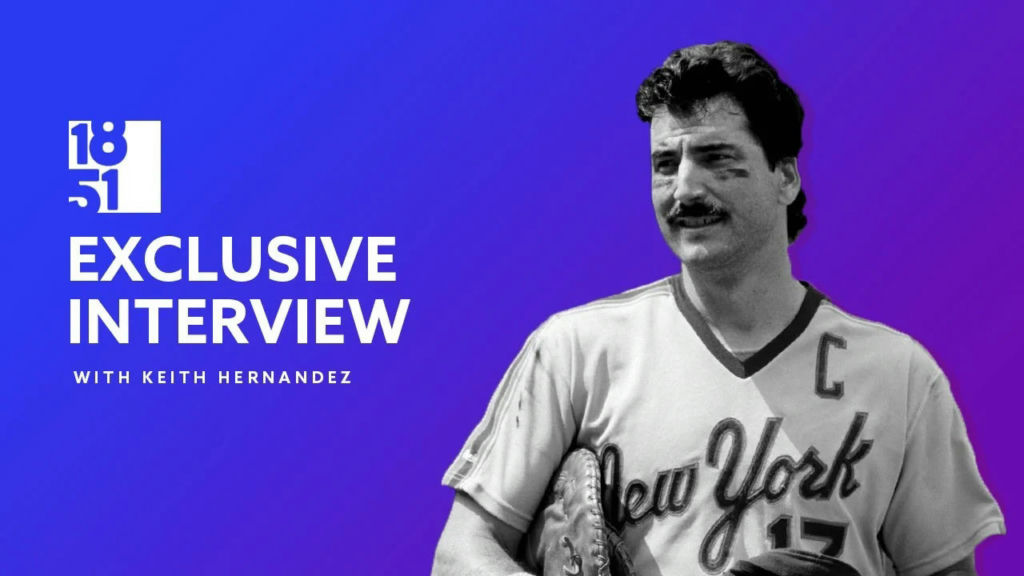
Even those superhero-type humans like Keith Hernandez, the five-time MLB All-Star, 1979 NL MVP and two-time World Series champion, felt it. No one was immune — no exceptions made for the one-time Seinfeld star and current television broadcaster for the New York Mets on SportsNet.
“It was a big concern for me,” Hernandez said. “When I go out, I wear a mask. Out of respect for others and for my personal safety, I wear a mask. The last thing I want is COVID.”
Covid impact
In 2019, if you would have bet Hernandez a free franchise — all-expenses-paid and no royalties — that in the next year, baseball would be postponed and later limited to 60 games, that he would have to wear a mask to go out, and that he would have to be fearful of a deadly disease, he would have taken that bet. But for the announcer and old-school, hard-nosed hitter, COVID’s curveball is another chance to adapt.
“The season was completely disrupted. We had no contact with the players. We had to broadcast games without fans. We were not allowed on the road. We had to broadcast our road games from our home stadium, socially distanced, and using the feed from the visitor's team,” he said.
But did Hernandez quit? Hell no.
New business model
OK, he didn’t predict COVID. But Richard Decker knew change was coming. The career entrepreneur has run a number of restaurants and gyms, and there were always a few things he disliked about both business: being handcuffed by inflexible landlords unwilling to help when times get tough; having to deal with complex labor, including those willing to quit without notice; and scale issues (when things were going well, finding the right real estate to expand remained a challenge).
So he said screw it. Decker was done with all that. He was ready to chart a new path forward.
Decker bought a truck, customized it “Pimp My Ride”-style with workout equipment, engineered his office inside the truck, and introduced the Hamptons to AWATfit, a group- and individual-training mobile fitness business.
This was in January 2019, long before the words COVID, Fauci, and social-distancing meant much to most people.
Innovator? Certainly. Disrupter? Absolutely.
The difference between Hernandez’s situation and Decker’s was that Hernandez and the MLB were thrown a curveball when they were expecting one down the middle, whereas Decker saw the pitch that was coming.
Growth and partnership
Both reacted, though. Always a hustler, Hernandez went back to work, told his stories and color-commentated the shit out of a rough situation. Equally-hard-nosed entrepreneur Decker accelerated the growth of his business, turning to franchising and quickly signing his first franchisee (a 22-year-old college grad disrupted by a brutal job market). Now, Decker’s business is taking off, thanks in large part to a low-investment solution that is perfectly well suited to a newly disrupted fitness and retail landscape that no longer accommodates brick-and-mortar businesses like it used to.
Athletes and entrepreneurs have different measures of success, but both Hernandez and Decker see a pathway for those who care about wellness, fitness and financial growth to join forces. AWATfit, both say, is perfect for athletic entrepreneurs.
“For today’s athlete, they have the wherewithal to invest in what Rich has to offer,” Hernandez said. “When I played, I made good money, but I didn’t make the astronomical dollars some make today. For both the current and former athlete, this could be a good business.”
Decker agreed. “Look at the athlete who doesn’t have a long career,” he said. “The investment [for AWATfit] is such a low entry point, and they are in business in 30 days. “We have created the cookie-cutter formula.”
Top-level athletes, of course, also come with a brand.
“I want this to be theirs. Instead of calling this a franchise, we are calling it franownership,” Decker said, explaining how his model allows owners to leverage their own existing brand name if they choose.
“Athletes are socially around people who stay in shape. They meet a lot of people. It’s much easier to spread the word around today — free advertisements. With Twitter and what we are doing right now, you can reach the public,” Hernandez said, referencing the video interview above. “If I were to invest in this, I would want to attach my name to it. It would be my trucks.”
Both Hernandez and Decker have no idea what comes next. But because of who they are, both are charting new paths forward.
“Times are never going back,” Decker said. “We need to recreate the new normal. We are traveling every day in the unknown. We must stay healthy and take care of ourselves.”
In this story
This story was originally published in 1851 Franchise on November 5, 2020. Burnaze summarizes and links to the original reporting.
Read the full story at 1851 FranchiseLiked this? Get the week's franchise news, explained
- Sunday 8 AM ET weekly + a monthly deep dive
- Sections picked for the industries you follow
- Every claim linked to its source. Free.