TL;DR
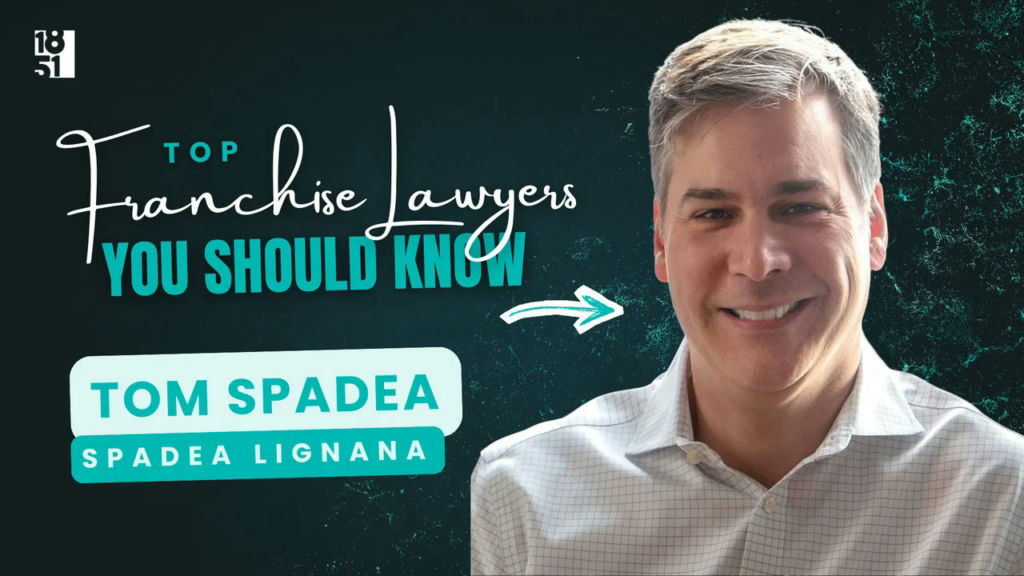
Tom Spadea, founder of Spadea Lignana, discusses his experience in franchise law and the common mistakes emerging brands make, such as underestimating the importance of FDD maintenance. Spadea Lignana is a franchise law firm that uses a subscription-based model and custom technology to help clients with regulatory compliance.
Tom Spadea didn’t take the typical path to the top of the franchise legal world. Before he ever stepped in a courtroom, or drafted a franchise disclosure document, he was actually on the other side of the table. Spadea began by selling franchises and leading development for national brands, paying his way through law school at night by closing franchise deals during the day.
The experience gave him a deep understanding of the pressure founders face when trying to scale. In 2011, he teamed up with his high school best friend, Josh Lignana , to launch a firm built specifically to fix the things entrepreneurs often dislike about lawyers: unpredictable hourly billing and a lack of real-world business perspective.
Franchise law expertise
Today, Spadea Lignana is a powerhouse in the franchise industry. The firm is known for its subscription-based model and custom technology, making complex state compliance feel like a streamlined process rather than a legal hurdle. As a Certified Franchise Executive and a regular on the Legal Eagle list, Spadea remains focused on helping founders turn small businesses into generational wealth (while avoiding the compliance traps that can sink a brand years down the road).
1851 Franchise sat down with Spadea to discuss why emerging brands often underestimate the long-term impact of FDD maintenance, the dangers of growing too fast and how his firm uses proprietary software to keep clients ahead of the curve. 1851 Franchise: What originally drew you to franchise law and what has kept you engaged in the space over time? Tom Spadea: I started my career in franchising in development before I was an attorney. My first exposure to franchising was as a business and franchise broker when I was in my early 30s.
1851 Franchise: As franchising continues to evolve, what legal issue do you see brands most often underestimating today? Spadea: Emerging brands sometimes think of an FDD as a template and one-time endeavor, instead of a living and breathing document that requires system and process to ensure compliance. It is underestimated by founders because missteps don't manifest for years. So, no short-term pain sometimes creates a blind spot. Over time, those compliance mistakes can compound and have a serious impact on long-term enterprise value.
1851 Franchise: In your experience, where do emerging franchisors tend to get tripped up from a compliance or documentation standpoint? Spadea: I think the key to good compliance is to realize that the mistakes rarely come from the document itself but the process of getting candidates properly disclosed with the FDD and having a compliant franchise sales program. They have to understand that cutting corners in the sales process gives a future franchisee a weapon to potentially shift future losses back to the franchisor.
I see that happen all the time: they’re eager to do a deal and they get tempted to cut corners, figuring this lead is a good person that will never turn on them.
Risk management strategies
1851 Franchise: How should franchisors be thinking about risk management as they scale into new markets or add new unit growth strategies? Spadea: Slow, steady growth with highly qualified and motivated franchisees is the best. And from the franchisor’s perspective, they should only go into new markets if they have the resources to support the franchisees.
Franchising takes time and money to do right. And many franchisors run into trouble by growing too fast. They shouldn’t just go into a market because they have a potential lead.
They should be very intentional about growth and know generally where and when they want to develop.
1851 Franchise: What distinguishes your approach or philosophy when working with franchise clients? Spadea: Our entire firm is built around helping founders grow and scale a franchise system. We also have experience and depth.
We have a very large team of attorneys and paralegals that do nothing but help franchisors with regulatory compliance. Clients get all of us. So, they always have coverage.
We understand that time kills deals. So, each team member has a backup so that the clients are never left without support. We are solutions-oriented.
And with this much collective experience, we can help our clients find answers to tricky questions and help them navigate the ups and downs that come with growth.
1851 Franchise: Looking back, what lesson from your legal career has had the greatest impact on how you advise clients today? Spadea: Seeing brands that have had success has helped shape my thinking and advice on best practices (and also seeing the ones that didn't make it). Over the last 14 years, I have been a part of hundreds of franchise launches. I have seen some great success and also have seen some spectacular failures. That collective real-world experience helps shape our advice and look around corners when clients are trying to get a franchise system off the ground.
In this story
This story was originally published in 1851 Franchise on June 15, 2026. Burnaze summarizes and links to the original reporting.
Read the full story at 1851 FranchiseLiked this? Get the week's franchise news, explained
- Sunday 8 AM ET weekly + a monthly deep dive
- Sections picked for the industries you follow
- Every claim linked to its source. Free.