TL;DR
Daryl Hurst, a former McDonald's team member, is now the president of Sola Salons, a leading salon suites franchise with nearly 750 units nationwide. Hurst's leadership style is centered around a people-first approach, which has been central to his career in franchising, including significant time at McDonald's and Outback Steakhouse.
With nearly 750 units nationwide, Sola Salons, a leading salon suites franchise, has built an incredible network on a strong, reciprocal culture. President and Chief Operating Officer Daryl Hurst, who found his way to the brand after years in the franchise space, supports this culture with a focus on authenticity and listening first. Though he has a “big title,” he’s on the side of the franchisees day in and day out, working to improve the system.
"I think my number one job outside of helping with vision and strategy is removing obstacles," Hurst said. "If my team has an obstacle, it's my role to be able to walk in and help remove that obstacle, whatever it may be."
This people-first approach has been central to Hurst's leadership style throughout his career, which includes significant time at both McDonald's and Outback Steakhouse before joining Sola Salons. Having experienced franchising from multiple perspectives — including as an Outback managing partner where he invested his own capital — Hurst brings a unique empathy to his leadership role.
"My main driver is how am I able to help other people? How can I build a team and pour into them? How can I pour into the franchisees or corporate operators and help their business be more successful?" Hurst said. "You learn it in church. You learn it through mentors that the only way you become successful is by really surrounding yourself with the right people, the people that are smarter than you, that have different experiences, that have diversity and background."
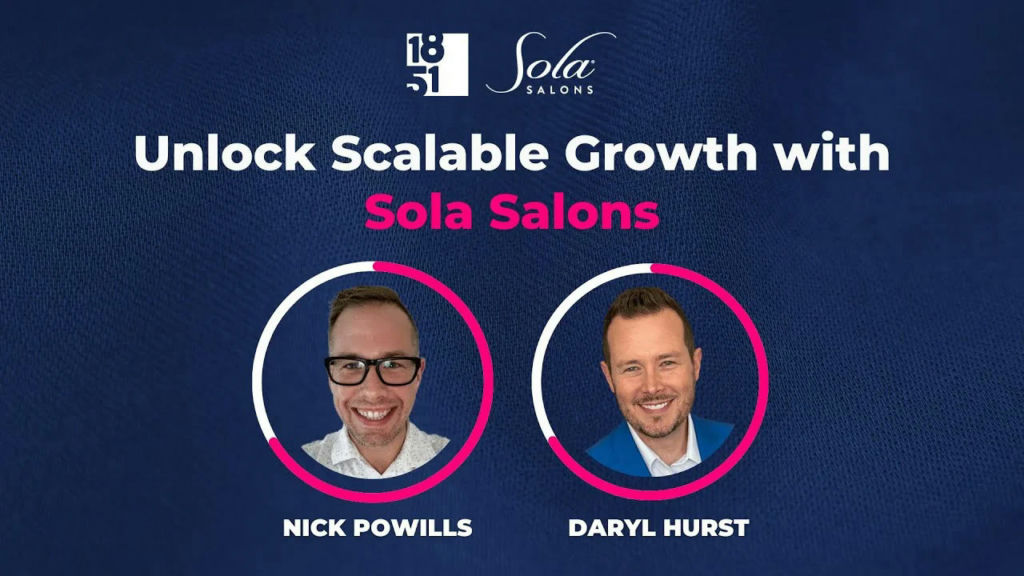
Hurst was recently featured in a webisode of "Meet the Franchise" with 1851's Nick Powills. A transcript of the interview has been provided below. It has been edited for brevity, clarity and style.
Nick Powills: Hourly team member is the first thing on your LinkedIn to now president of a brand. What I love about the story is that it shows anything is possible, that hard work and tenacity can move up the corporate ladder and create something beautiful. So the question is, how did you accidentally fall into franchising?
Daryl Hurst: My dad was an entrepreneur his whole life, so I got to see him — the challenges, the passion and the wins that he had in business. I learned a lot of work ethic from him. At the ripe age of 16, going into McDonald’s brings back a lot of memories. I have fond memories of my time there.
I started as an hourly team member, just needed a summer job. They just have great people, great systems and great training. They look for people that have passion and drive and want to work hard and do great things. And I had all of that. So they gave me opportunities to continue to grow within their organization.
At the time, I didn’t know that it was with a franchise, but I was with a very good multi-unit franchisee in that market. And I had the opportunity to learn directly from them and their leadership team.
Powills: So your entire career is around franchising. Your dad is an entrepreneur. How did you not have the bug to go into being an entrepreneur? What kept you continuing to build up the corporate ladder?
Hurst: If you know the Outback Steakhouse model at all, you do fall into the entrepreneurial set with them as a managing partner. So you do have to put up an investment to be able to get a salary and profit share. And so that was my run at becoming an entrepreneur.
My salary was based on how well my restaurant ran, and it wasn’t just “mine.” It was my team’s. We all worked very hard together. We ingrained ourselves in the community and really built a wonderful business and a restaurant that focused on people and community and operations excellence.
I did it for just over five years, and then I had an opportunity to move into their corporate support center. I’ve always had a passion for helping other people, and I’ve kind of always felt like I had more to give than just one individual location. I had the bug to go help the thousand-plus locations we had at Outback Steakhouse in a different capacity and really loved it.
Powills: The lens that you have gives you a different viewpoint. Empathy is a big term, but it’s almost like you understanding what it means — you can help navigate storms in a different light. Is that an accurate statement?
Hurst: I think it’s completely accurate. When you’re on the other side of the fence, when you’re in the location, operating it, when you were the franchisee, there’s this feeling of, “What is the corporate support team? What are they doing to me? How are they going to support me through those changes? How are they going to help my business be better?”
When we build a team, we look for individuals that have that mindset — that are going to put our franchisees first and think through how what we do impacts them. How does it simplify their operations? How does it help them be more profitable? I think to be successful as a franchisor with longevity, you really have to have that as the first and foremost piece of your mind.
Powills: How important is the focus on people to building success even as a franchisee?
Hurst: I think it’s the number one thing you should focus on — your people. I didn’t grow up with a lot of money. I grew up poor. And so while being able to take care of my family has always been a driver, the money piece of business personally hasn’t been my main driver for success. My main driver is: How am I able to help other people? How can I build a team and pour into them? How can I pour into the franchisees or corporate operators and help their business be more successful?
You learn it in church. You learn it through mentors — that the only way you become successful is by really surrounding yourself with the right people, the people that are smarter than you, that have different experiences, that have diversity and background. And I’ve found that to be true as I’ve been very thoughtful about building teams throughout my career.
Powills: You said, “Surround yourself with people that are smarter than you.” I think that’s part of what the beauty of franchising is, when the franchisor doesn’t get it wrong. The franchisors that say, “We’re going to partner with franchisees. We’re going to rely on them. We control what’s going to happen, because someone has to lead the ship, but we will listen to you and we want you to feel like you’re part of something — not that you’re on the outside.” Is that part of how you build a great franchise system?
Hurst: Yeah, I think so. I’ve been fortunate to come into Sola, and they already had an advisory board formed. We had one in my last brand. I think the more you can learn from your franchisees, who are doing it every day, the better off you are.
We have a corporate ops team, and I work with them. Ultimately, most franchisees want other franchisees to be successful, because that means the brand is successful. That’s a protection of their investment in the long term.
Powills: How do you start to take some of the culture and the vision pieces that you had built up before and put that into place in a system that’s already been in place?
Hurst: It takes some evaluation of what you’re walking into — no matter what people tell you ahead of time. It’s always going to be somewhat different. And so I think it’s taking time to talk to different groups of people — whether that’s franchisees or corporate team members, vendor partners, your customers — and just take time to learn, understand what you’re walking into, what they’re passionate about, what the challenges are.
And then also assessing your team. While you may not have hired the entire team, they’re now your team and you need to take care of them. You need to learn what they’re passionate about and how you can ultimately grow and support them.
I think my number one job outside of helping with vision and strategy is removing obstacles. If my team has an obstacle, it’s my role to be able to walk in and help remove that obstacle, whatever it may be. Now, it’s their role to be able to tell me it’s there, because I may not know — but we have to have those open lines of communication.
Powills: What is the magic to building a successful team with existing people that are already in place?
Hurst: I’d say put your ego aside. You’ve got a big title, but at the end of the day, you’re all human beings. You have one goal. You’re there to help each other. And if you approach it in such a way that — I realize we have different titles — that only means we have different responsibilities. It does not mean that we’re not on the same team working toward the same objective.
Powills: How do you protect your own personal core values and mindset when you do have a bad day or a bad moment?
Hurst: I stop, breathe, take time, walk away. I’m fortunate to work in a hybrid environment, so I’m at home for part of the time. And so I do have three really amazing dogs and a great wife and a son. So I think you have to know your personal boundaries and barriers, know when you’re stressed and have people to go talk to.
Powills: Give anybody that could be watching this a sense of where Sola is today, and where is Sola going?
Hurst: Sola has 740 locations. We have a great brand. We have systems and processes. We have tons of open markets that are ready to add more Solas to it. We have an amazing team of individuals.
If I take that and fast forward to a couple of years from now, I think the team only gets stronger.
So I see the brand continuing to only get better — support our franchisees better, support our professionals better. We have a community of almost 25,000 beauty professionals. No one else out there has that. It’s amazing.
I see us going from 740 locations to 1,000 locations. That’s where we want to be.
Powills: That’s probably how successful franchises always continue to stay successful.
Hurst: Yeah, I think so. And look, we’re not perfect. We’re kicking our toe on the rocks along the way. But that’s a part of the process. You can’t be afraid to fail at certain things — but you fail fast. You’re transparent about it. You work side by side with your franchisees and your teams. You learn from that and have a good time while you’re doing it. Have some fun. Franchising can be hard, but there’s nothing that says we can’t have fun and really lift up people on the way.
In this story
This story was originally published in 1851 Franchise on June 2, 2025. Burnaze summarizes and links to the original reporting.
Read the full story at 1851 FranchiseLiked this? Get the week's franchise news, explained
- Sunday 8 AM ET weekly + a monthly deep dive
- Sections picked for the industries you follow
- Every claim linked to its source. Free.