TL;DR
Subway has maintained its title as one of the leading global sandwich chains for decades with over 44,000 restaurants in 113 countries. The brand's loyalty and strategic leadership changes have contributed to its growth.
Since its founding 50 years ago, Subway® has become a household name and a seemingly untouchable legacy brand, poised at withstanding an increasingly competitive fast casual segment. With more than 44,000 restaurants in 113 countries, it’s no surprise that the brand has maintained its title as one of the leading global sandwich chains for decades.
While brand recognition is a major competitive advantage, kitschy marketing campaigns like the $5-foot-long, charitable initiatives that garner global interest and strategic leadership changes have most recently helped Subway remain relevant.
But loyalty has also strengthened Subway’s unparalleled growth, from customers to multi-unit franchisees who have been with the brand since the beginning. Eighteen-unit Subway franchisee Amy Snyder started her journey with Subway as an employee when she was just 19 years old, working as a Sandwich Artist™. By the time she was 23, Snyder was given the opportunity to purchase her first location. Seeing this as an opportunity to secure their daughter’s future, Snyder’s parents stepped in to help.
Franchisee growth story
“Even though my parents both had other jobs, they took out a second mortgage on their house to give me the down payment for my first location. Within 18 months, I had the opportunity to become a multi-unit owner. We saw this as a chance to get in with a growing franchise at the ground level and knew that if we didn’t jump at this opportunity, someone else would.”
While profitable initially, it was the weight loss stories that emerged from replacing traditionally calorie-packed fast food meals with Subway sandwiches that doubled Synder’s sales within her first two years – jump starting the expansion of her Subway empire throughout Lincoln, Nebraska.
“When Subway came on the scene, it owned the fresh, fast-food scene. No one else was marketing their products that way,” said Snyder. “The idea of customization was also new. There were few concepts that allowed you to build your own meal. Now we’re competing against brands like Chipotle and Qdoba.”
Expansion and competition
The small but efficient store footprint required to open a location is another big reason she, and the brand as a whole, were able to expand so quickly according to Snyder – with a flexible model that can fit into gas stations, Walmart’s, strip malls and airports. And costs to open a Subway are relatively inexpensive compared to traditional restaurant concepts, with an initial investment as low as $86,550 for a non-traditional location and $147,050 for a traditional location.
“People have grown up eating Subway, which says a lot about the quality and stability of the brand,” said Snyder. “Now, it’s about reaching millennials who want to pay for an experience. We’re still in the game because we’re an old favorite, but our challenge is to continue being a fresh, forward-thinking brand while providing the unmatched experience that people are looking for.”
Modernization efforts
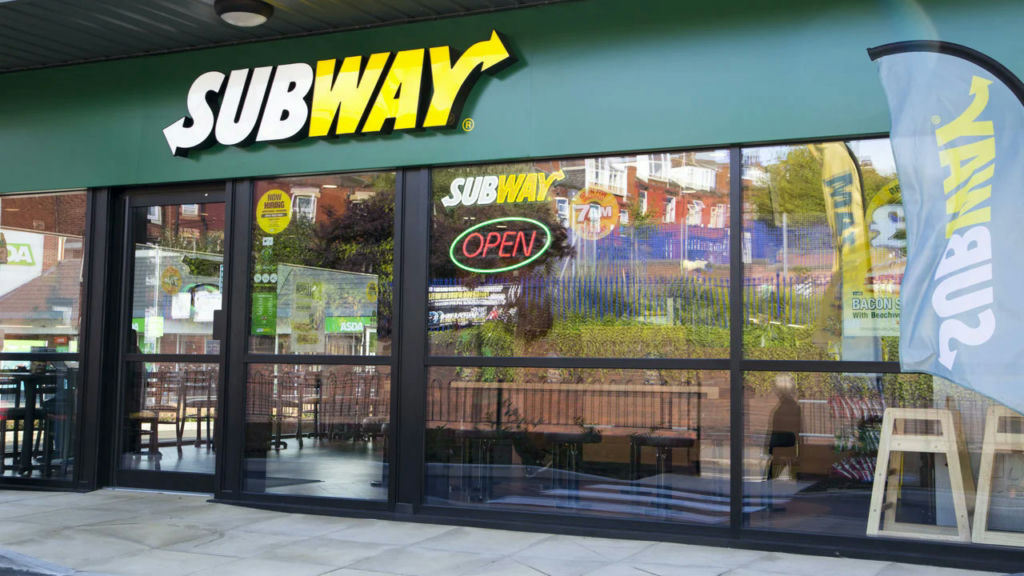
To cater to its millennial audience, Subway launched a nationwide initiative in 2017 and announced the implementation of an updated store design which includes self-ordering kiosks, charging stations, Wi-Fi and a new display for its down-the-line concept. The chain is also said to continue building on its existing fan loyalty with a new platform and app.
"We've created a modern design that gives our guests choices – from how they order, to how they pick up their food, to how they enjoy their meal," said Trevor Haynes, Vice President of Operations at Subway, in a company release. "The reactions from our guests, our franchisees and the Sandwich Artists™ has been incredibly positive."
While modernization is critical in helping Subway cater to the next generation, Subway’s reputation as an iconic brand has been built on quality, customization, franchise growth and support.
In this story
This story was originally published in 1851 Franchise on February 20, 2018. Burnaze summarizes and links to the original reporting.
Read the full story at 1851 FranchiseLiked this? Get the week's franchise news, explained
- Sunday 8 AM ET weekly + a monthly deep dive
- Sections picked for the industries you follow
- Every claim linked to its source. Free.