TL;DR
Port of Subs, a sandwich brand with 125 locations, is expanding across the US through its Regional Developer Program, which allows franchisees to build territories from the ground up. The brand is uniquely positioned to bridge competing value propositions in the sandwich category, offering premium, sliced-to-order quality with true build-your-own customization.
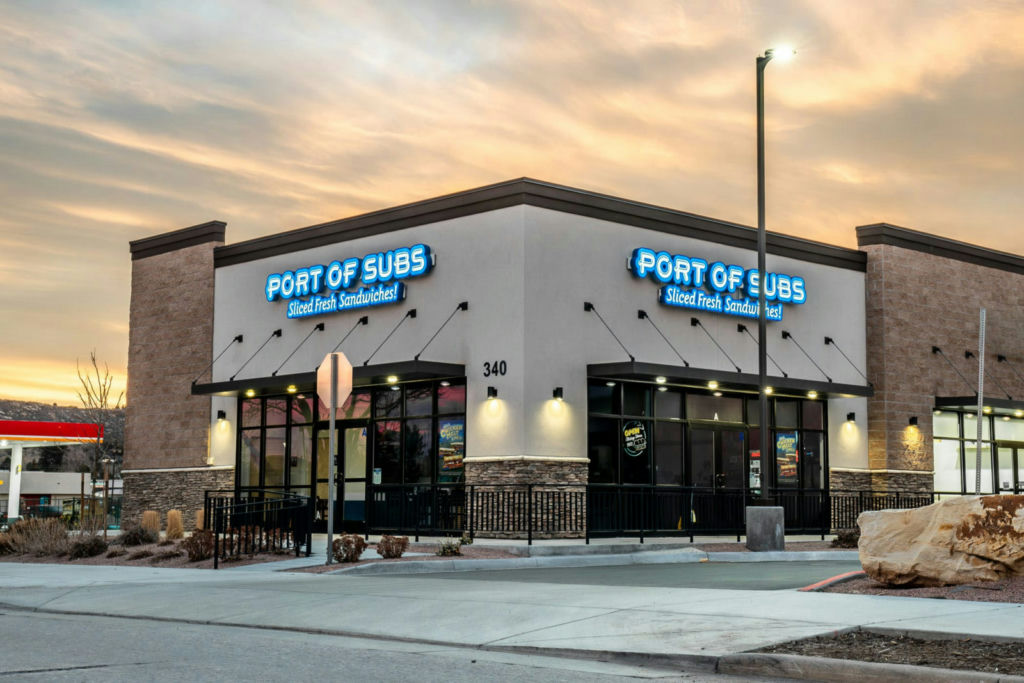
Port of Subs is at a rare inflection point. Known for its baked-in-house bread and sliced-to-order premium meats, the brand has more than 50 years of operating history. Starting with one shop in Sparks, Nevada, the brand has expanded to 125 locations and developed a loyal West Coast following, yet many of the country’s most attractive markets remain untapped.
Regional developer program
Enter the brand’s Regional Developer Program, created in 2023. With owner Dave Liniger—founder of global real estate franchise RE/MAX—at the company’s helm, Port of Subs is quickly expanding across the U.S. under his signature franchising approach.
Many franchise buyers prefer to invest in emerging brands with room to scale units in local markets. This way, they can pick and choose the best locations with less competition from other franchisees.
“The best franchise opportunities are often secured before the broader market recognizes their potential,” says Bryan Denson, regional developer in Washington, D.C. “A savvy buyer will know very quickly whether they made a good investment, and doubling down on that to acquire more locations will increase their ROI on a grand scale. I believe Port of Subs is in that window today—proven enough to reduce risk, but early enough that significant territories and growth opportunities remain available.”
While most brands sell territories, Port of Subs asks regional developers to build them from the ground up. Before entering any new market, the company secures a regional developer who first opens a flagship store. This allows the brand to line up food supply, vendors, commercial realtors, contractors, training, and other aspects of scaling into new areas before onboarding individual franchisees.
One of the greatest strengths of the regional developer model is how it transforms the relationship between franchisees and corporate offices. Instead of creating a traditional top-down structure, it fosters partnership, collaboration, and long-term thinking.
“Because regional developers are also franchise owners, they understand firsthand the challenges of operating a successful business,” says Ben Pearson, regional developer for Eastern Washington and Western Idaho.
The model also recognizes an important truth about franchising: when one store succeeds, the entire brand becomes stronger. High-performing locations build customer confidence, increase brand awareness, and create momentum that benefits neighboring stores.
Regional developers have a vested interest in helping every franchisee succeed because a healthy region leads to stronger growth for everyone. Serving as a bridge between franchisees and corporate, they bring valuable local insight to company leadership while helping franchisees understand the broader vision for the brand. And since regional developers provide the boots-on-the-ground local assistance franchisees need, corporate teams don’t need to travel as much.
“This two-way communication leads to better decision-making, faster problem-solving, and stronger alignment across the franchise system,” Pearson says.
Under Port of Subs’ royalty-split franchising model, regional developers receive a portion of the royalties from all stores in their region, which incentivizes them to help stores grow and be as successful as possible. This financial alignment helps preemptively solve some of the accountability issues that often kill emerging brands as they cross state lines.
Market opportunity
The model gives Port of Subs a framework for entering new markets, but the opportunity ultimately depends on what franchisees are bringing to those markets. That case is especially interesting when viewed against the broader sandwich category. As some of the largest made-to-order sandwich players consolidate under private equity and multi-brand restaurant groups, clear strategic gaps have emerged.
Some brands score high on customization but contend with the perception of lower-quality, pre-sliced ingredients. Others trade menu flexibility for speed and operational simplicity or rely on preset menu structures that limit customization.
This creates a compelling whitespace opportunity for Port of Subs, which is uniquely positioned to bridge these competing value propositions. Rather than asking guests to choose between freshness and personalization, it delivers both.
“The greatest opportunity in today’s sandwich category is the absence of a modern fast-casual brand that successfully combines premium, sliced-to-order quality with true build-your-own customization,” says Shane Shaw, regional developer in eastern Phoenix. “Consumers are often forced to choose between scale and convenience or freshness and flexibility, with few brands delivering both.”
That combination of freshness and customization gives Port of Subs a visible point of differentiation. As the brand expands into new markets, it is leaning into the “slicer-as-theater” experience that’s been part of its operating model for more than 50 years.
“The slicer is the main position on our line, with the ability to upsell and drive more revenue than any other position,” Shaw says. Double meat and cheese or a larger sandwich, for example, can increase the average check while guests watch their orders being prepared.
Growth and expansion
The opportunity extends beyond the service line. Denson says many national sandwich brands have been saturated in their markets for more than a decade, leaving fewer attractive territories and real estate opportunities for new franchisees.
Port of Subs, meanwhile, offers more flexibility in the types of real estate it can consider because it does not have the heavier equipment requirements of some competitors. That opens opportunities for both traditional (plaza, strip center) and non-traditional (airport, food court, travel center, c-store) units which gives developers more options.
Corporate has also made substantial technological investments to support national growth, and with the backing of Liniger’s Area 15 Ventures, can grow without the financial strain many brands encounter while scaling.
Those investments give regional developers infrastructure that typically comes much later in a brand’s growth cycle. For prospective franchisees, that creates an unusual combination: the systems and resources of an established brand without the territorial constraints that often come with one. In many markets, developers still have the opportunity to establish the brand and build density from the ground up.
“What makes this opportunity so compelling today is how much room the brand still has to grow,” says Kunal Suri, regional developer in Dallas and Denver. “There are major markets with significant open territory, giving franchisees the opportunity to help build a market rather than enter one that is already saturated.”
For regional developers and franchisees, that means the opportunity isn’t simply to open stores. It’s to establish Port of Subs in markets where consumers may be encountering the brand for the first time—and potentially capture the kind of territory that becomes much harder to find as a franchise system matures.
“Five years from now, I think the real proof will be when people look back and say, ‘I wish I had gotten in earlier,’” Suri says. “The people who saw that potential early will have helped shape the story.”
In this story
This story was originally published by Drew Filipski in QSR Magazine on August 19, 2026. Burnaze summarizes and links to the original reporting.
Read the full story at QSR MagazineLiked this? Get the week's franchise news, explained
- Sunday 8 AM ET weekly + a monthly deep dive
- Sections picked for the industries you follow
- Every claim linked to its source. Free.