TL;DR
Krispy Kreme reported a 0.7% increase in systemwide sales, driven by its turnaround strategy involving refranchising and expanded points of access. The company aims to grow franchising sales from 25% to 50% of systemwide sales by 2027.
Turnaround progress
Krispy Kreme reported a systemwide sales increase of 0.7% in the first quarter, to $485.3 million, prompting CEO Josh Charlesworth to tell analysts that the company is a “compelling growth story supported by strong consumer demand.”
The quarter marked the Charlotte, N.C.-based doughnut chain’s third since implementing a turnaround plan, triggered largely by an ambitious but failed partnership with McDonald’s that impacted the chain’s stock and prompted class action lawsuits from investors.
During the company’s earnings call Thursday morning, Charlesworth said he expects the domestic system to return to growth driven by higher volumes, more points of access and franchise development. Much of the company’s turnaround plan is centered on a refranchising strategy, with a goal of growing franchising sales from 25% to half of the company’s systemwide sales by 2027.
“Last year, approximately 25% of systemwide sales were generated by franchisees after the refranchising transactions in the first quarter. The expected percent of franchise sales going forward has increased to 42%, reflecting strong progress toward our goal of reaching 50%,” Charlesworth said.
Refranchising strategy
In March, Krispy Kreme completed two transactions to accelerate its refranchising strategy, including a transaction with franchisee WKS Restaurant Group to increase the group’s ownership stake from 45% to 80%. The company also completed its agreement with Unison Capital to refranchise operations in Japan.
Charlesworth also said the company has reduced “capital intensity” by improving the utilization of existing assets and leveraging franchisee investment. He expects these efforts to contribute to positive free cash flow this year.
International remains a strong opportunity for the brand, and Krispy Kreme projects more than 100 such openings this year, nearly all through franchisees. The Krispy Kreme system now includes more than 2,100 locations across 42 countries with new markets expected this year, such as the Netherlands.
In the U.S., Charlesworth said the existing network has far more growth capacity, which is a big lever to pull.
“Our current network utilization is only about 25%, demonstrating that we can reach significantly more locations without incremental capacity investment. Walmart and Target, along with other strategic partners, remain meaningfully under penetrated, and we have the capacity to support their growth through the same facilities that currently deliver to more than 7,400 fresh doors nationwide,” he said.
Operational improvements
Simultaneously, Krispy Kreme is continuing its work to expand margins, with improved production planning, labor optimization, and streamlined hub operations. Doughnut deliveries have also been improved, including through better route management and demand planning.
Also, in April, Krispy Kreme completed its transition of its fresh delivery network to third-party logistics partners.
“Now that we have successfully outsourced our U.S. logistics, we have greater cost predictability and reduced operational risk, enabling our teams to focus on what they do best, making fresh doughnuts,” Charlesworth said.
He added that the benefits from its logistics updates should offset any impact from recent fuel price increases.
The final pillar in Krispy Kreme’s turnaround plan is to improve profitability, and Charlesworth said the company has generated higher weekly sales and profitability for three consecutive quarters by optimizing its presence in “high volume, higher margins doors,” such as Publix and Sam’s Club.
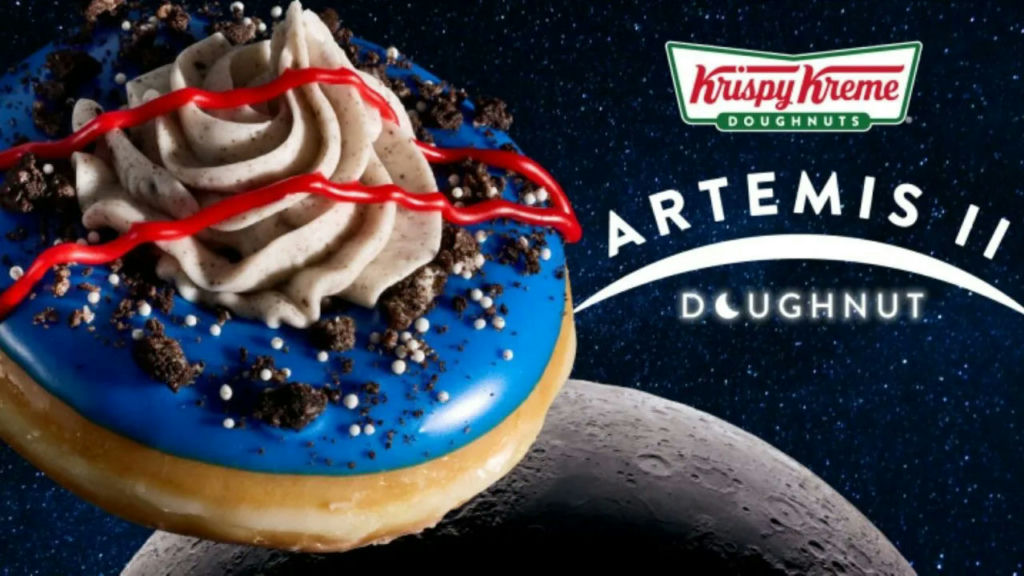
Krispy Kreme is also focused on product news, leaning into its Original Glazed equity as well as “Dozens LTOs,” which are often tied to special occasions such as Valentine’s Day and NASA’s Artemis Shuttle launch. The latter promotion was extended due to high demand. Charlesworth added that these launches tend to boost digital sales, which represented 23% of all sales in the U.S. in Q1. Krispy Kreme has a history of attaching launches to cultural and consumer trends, but one of those trends may be a bit surprising — the increased usage of GLP-1 weight loss medications.
“We conducted research which found that Krispy Kreme consumers who identify as users of these medications are just as likely as non-users to purchase sweet treats for holidays and special occasions,” he said. “With our doughnuts typically purchased two to three times per year, primarily for sharing occasions, Krispy Kreme is well-positioned in this context.”
Aside from its slight systemwide sales increase, Krispy Kreme reported a 2.2% decline in net revenue to $367 million, reflecting the strategic closure of underperforming locations. Adjusted EBITDA (earnings before interest, taxes, depreciation and amortization) increased 38% to 33.1%, driven by productivity initiatives, general and administrative savings, and the removal of costs related to the McDonald’s partnership.
In this story
This story was originally published by Alicia Kelso in Nation's Restaurant News on May 7, 2026. Burnaze summarizes and links to the original reporting.
Read the full story at Nation's Restaurant NewsLiked this? Get the week's franchise news, explained
- Sunday 8 AM ET weekly + a monthly deep dive
- Sections picked for the industries you follow
- Every claim linked to its source. Free.