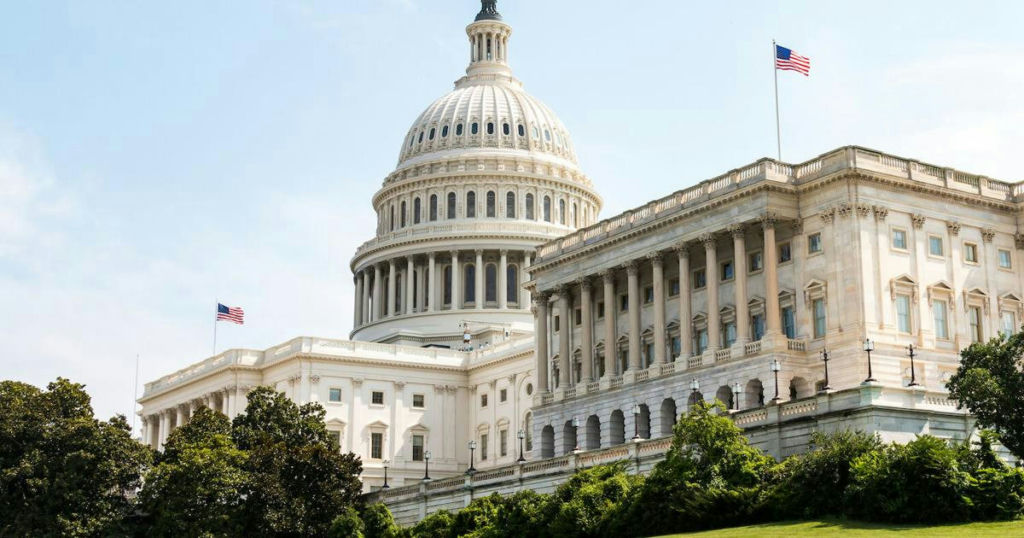
Time is running out for the American Franchise Act.
Jeff Hanscom, senior vice president of state and local government relations for the International Franchise Association, didn’t mince words when he delivered that message. With only weeks left before the current Congress ends its term, he said those in the franchise community and restaurant industry need to up the pressure to get the bill to the White House for a signature.
Jeff Hanscom, senior vice president of state and local government relations for the IFA stressed the need to pass the American Franchise Act.
Hanscom made the case during a discussion with Mike Whatley, National Restaurant Association vice president of state affairs and grassroots advocacy, at the Restaurant Finance & Development Conference in Las Vegas. Moderated by Dana Zukofsky of the advisory firm Aprio, the conversation centered on what to expect after last week’s blue wave election.
Democrats won large majorities in the United States House of Representatives and Senate, along with full control of several state governments. However, in the time before their terms begins, both Whatley and Hanscom said current lawmakers can still—and should—take action now.
“Coming out of Election Day, everyone is thinking about what the next Congress is going to do,” Hanscom said. “But we’re looking at what Congress still needs to accomplish. Right now, we have six weeks before the Congress that’s been elected goes in. The folks who lost on Tuesday can still cast votes.”
For the IFA, that means making a hard push to get the AFA passed through both chambers. The bill was first introduced by Rep. Kevin Hern, R-OK, in the House in September 2025. A companion piece was then entered the Senate in December by U.S. Sens Roger Marshall, R-KS, who lost his reelection bid last week, and Angus King, an independent from Maine who caucuses with the Democrats.
The legislation provides clarity on the joint employer standard in the franchise relationship, determining when two entities share responsibility for violations of the National Labor Relations Act and the Fair Labor Standards Act. The standard has changed four times in the last decade, depending on which party controlled the White House.
The act would apply exclusively to the franchise business model, as the bill states, “a franchisor may be considered a joint employer of the employee of a franchisee only if the franchisor possesses and exercises substantial direct and immediate control over one or more essential terms or conditions of the employees of the franchisee.”
The new legislation, which has garnered support from the IFA, NRA, Coalition of Franchisee Associations and American Association of Franchisees and Dealers, has language consistent with the National Labor Relation Board’s 2020 standard. In July, the bill advanced through the House Committee on Education & Workforce along party lines in an 18-15 vote, with Republicans in favor and Democrats against.
In September, White House staff indicated during an IFA event that President Donald Trump would sign the bill should it get through Congress.
On Monday, Hanscom said that needs to be a priority now.
“The AFA will expire if it doesn’t get done in this lame duck session,” Hanscom said. “I don’t want to leave you with a scary message. But there’s immediacy to getting the AFA on the president’s desk and signed into law. Because if you don’t, it’s going to change. What’s going to almost certainly happen in the future is we will return to the regulatory environment that was in 2015.”
During that time, the federal government had a standard in place where franchisees and franchisors could legally be considered joint employers, which the IFA claims led to an increase in lawsuits.
International Franchise Association representative Jeff Hanscom discussed the 2026 election with Dana Zukofsky of the advisory firm Aprio and Mike Whatley of the National Restaurant Association at the 2026 RFDC.
“The AFA is the long-lost solution to the issue,” Hanscom said. “It will bring certainty into federal law for decades to come and provide economic certainty for you and your businesses across the country. That’s why it’s not a Republican or Democrat issue.”
Along with the AFA, Whatley said there was another matter that, while less impactful to the overall industry, is still something the community should be aware of. On December 11, hemp-derived products containing more than 0.4 milligrams of total THC per container would become prohibited.
“The NRA indicates about 5 percent of restaurant operators are using THC beverages,” Whatley said. "But if there was regulatory clarity, upwards of 30 percent would like to sell these beverages.”
In a Farm Bill passed in 2018, hemp rules were modified to allow a certain amount of THC on the federal level. However, through recent Congressional activity, the move was reversed, and the 2018 definition will go away if no more action is taken.
“The decision day for that is on December 11,” Whatley said. “So, if you’re selling hemp-derived THC beverages, potentially after that, you won’t be able to legally sell them. It’s an issue we’re watching to see what Congress will do. Do they extend the allowance another year or put up guardrails around it in terms of requirements for selling?”
Along with restaurants, there are several retail cannabis franchises selling THC products that may be impacted. Concepts with THC items include Cannabiz Depot, Chronic Guru, Curio Wellness, Franny’s Farmacy and Sweet Spot Farms.
Expectations after Democratic sweep
While there was a call to action in the near-term, both advocates on stage noted the importance of new relationships once the recently elected officials take office. Whatley said there’s potential to work with new lawmakers as they look to tackle current affairs.
“We have a great opportunity to tell our story and explain our business model to folks who may not understand and need that education,” Whatley said. “This was a midterm election about the high cost of living and expenses. That impacts us. That impacts our customers. We can be a very realistic part of the conversation, specifically on tariffs.”
Mike Whatley of the National Restaurant Association expects more change coming from state legislatures than Congress.
Along with the new Democratic majorities putting pressure on tariff rollbacks, especially those on Canadian businesses, Whatley said they can also make an effort through funding mechanisms to halt the war in Iran, which could lead to lower gas prices. At the same time, Whatley noted potential challenges when it comes to labor policy.
Any major developments are more likely to take place at the state level than the federal level, he added. In the last election, state legislative trifectas were established in Arizona, Pennsylvania, Michigan, Minnesota, Nevada and Wisconsin. Super-majorities, meanwhile, were created in California, Colorado and Connecticut.
“Congress can talk about a lot of issues, but states can move,” Whatley said. “There are states like Pennsylvania and Wisconsin that are looking at increases to the minimum wage, or different policies on leave or scheduling. We’re watching those states, as well as Minnesota. We’re also going to interpret the national election results and what they’re going to put into effect.”
Another issue the group is tracking is Medicaid expansion at the state level. Several new governors campaigned on expanding Medicaid, and may do so similarly to New Jersey, which placed a per-employee tax on large employers to grow healthcare access.
“Democrats have never had this many trifectas since 2010,” Hanscom said. “When we see the state level change hands, the dam often breaks. There’s a lot of things that haven’t gotten done or had the limelight for however many sessions. I think it will be interesting and potentially challenging. But there will be plenty of opportunities, too.”
That means getting ahead of issues and leaning in to conversations with newly elected representatives at the local, state and federal level. Building those relationships today means they’ll remember franchising and the restaurant industry when they’re no longer a newly elected official in a few years.
“The first thing that a new mayor or governor will want to do is get after the items that got them elected,” Hanscom said. “The question is, how can we partner with them, and make franchises something they look at as ways to drive opportunities.”
This story was originally published by Matthew Liedke in Franchise Times on November 10, 2026. Burnaze summarizes and links to the original reporting.
Read the full story at Franchise TimesLiked this? Get the week's franchise news, explained
- Sunday 8 AM ET weekly + a monthly deep dive
- Sections picked for the industries you follow
- Every claim linked to its source. Free.