TL;DR
San Diego County has sued five companies operating sushi franchises inside supermarkets, alleging labor exploitation and misclassification of sushi chefs as independent contractors. The lawsuit accuses the companies of violating state labor laws and seeks relief in the form of unpaid wages and civil penalties.
The county claims the sushi companies misclassify their sushi chefs as independent contractor “franchisees” rather than employees. Shutterstock
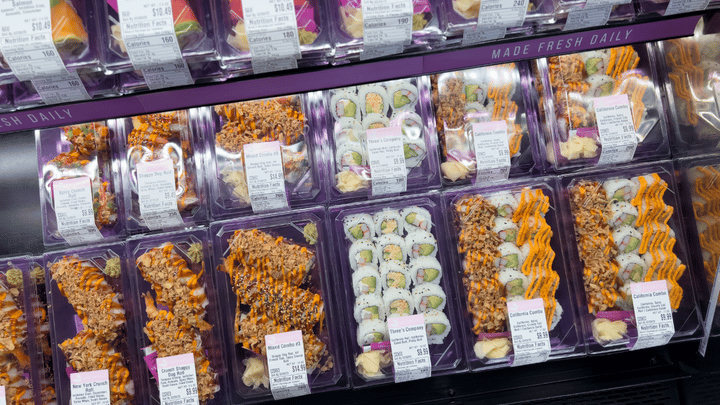
The San Diego County Office of Labor Standards and Enforcement has sued five companies that operate sushi franchises inside supermarkets, accusing them of exploiting workers and violating state labor laws.
The suit accuses these firms of staffing grocery stores with sushi chefs who often work 50-70 hours per week but take home very little money after the firms collect multiple fees from the chefs. These include not only franchising fees but payments for equipment rental, financing charges, minimum ingredient purchasing requirements and other costs.
The suit names Ace Sushi Franchise Corp. (and its parent company, Asiana Management Group), Advanced Fresh Concepts Franchise Corp. and FujiSan Franchising (and related entity Fuji Food Products), which run branded sushi counters inside grocery stores in California.
The county claims the sushi companies misclassify their sushi chefs as independent contractor “franchisees” rather than employees, which enables the companies to avoid the costs of complying with state labor laws. The companies have avoided paying state and local minimum wages, overtime, paid sick leave, workers’ compensation coverage, reimbursable business expenses, unemployment insurance and providing meal and rest breaks, the lawsuit alleges.
“These ‘franchises’ are truly sham arrangements under which sushi chefs pay to work while defendants evade numerous labor laws,” the suit alleges.
Under California law, companies are presumed to have an employer-employee relationship with the people that they hire unless the hiring companies can prove they are independent contractors, according to the suit. Independent contractors must be “free from the control and direction” of the companies, among other criteria, in order to be classified as independent contractors.
Because the sushi companies contract directly with the supermarkets, they effectively control the locations, and the individual sushi chefs are required to fulfill the terms of the contract obligations, the lawsuit states.
The suit, filed in San Diego County Superior Court, seeks relief in the form of unpaid wages, liquidated damages, restitution, civil penalties and other costs.
In this story
This story was originally published by Mark Hamstra in Winsight Grocery Business on June 22, 2026. Burnaze summarizes and links to the original reporting.
Read the full story at Winsight Grocery BusinessLiked this? Get the week's franchise news, explained
- Sunday 8 AM ET weekly + a monthly deep dive
- Sections picked for the industries you follow
- Every claim linked to its source. Free.