TL;DR
KFC’s U.S. comeback plan continues to navigate a competitive QSR environment, with the Popcorn Chicken generating strong consumer response, while the brand’s global modernization push includes the launch of the KFC Muse prototype in Dubai and plans to expand to Seoul. Yum Brands’ CEO Chris Turner and KFC CEO Scott Mezvinsky highlighted the brand’s efforts during the third‑quarter earnings call.
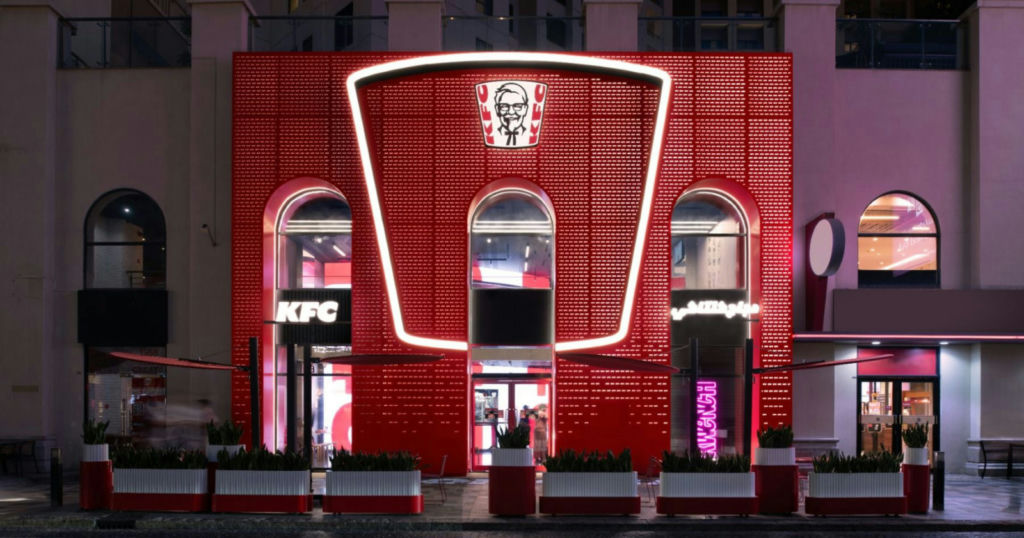
KFC just debuted the 'Muse' prototype in Dubai, which is expected to roll out in other global markets | Photo courtesy of KFC
During Yum Brands’ third quarter earnings call Tuesday morning, there weren’t a lot of updates on the KFC U.S. Comeback Plan put into place last year. What we do know is the U.S. business, which represents approximately 5% of the brand’s operating profit, “continues to navigate a competitive QSR environment,” according to Yum CEO Chris Turner.
We also know the Popcorn Chicken, brought back in July, generated “strong consumer response,” but it may not have moved the needle much as the chain lapped a “successful Wings and Wedges promotion in Q3 2025.”
There was no mention of KFC’s recent decision to switch to Coca-Cola from Pepsi after some-40 years — part of the chain’s broader modernization efforts. There was also no commentary on the Open House prototype that recently opened in McKinney, Texas, that is experimenting with things like breakfast and a Sips (beverages) menu. Granted, those two developments happened in the fourth quarter (October and September, respectively), but usually we get some early updates from decisions this big (like we did Taco Bell’s September sales performance, for example).
Notably, Yum stopped breaking out same-store sales for KFC U.S. in April because it comprises materially less than 5% of Yum operating profit.
So now we must derive some of our conclusions. We know, for instance, that KFC U.S. has closed a bunch of locations in the past year, likely underperforming locations that likely drove its 6% systemwide sales decline. Several legacy chains are currently in similar “clean up modes” to bolster unit economics amid a relentlessly tough operating environment.
We also know that KFC U.S.’s Comeback Plan is part of a broader “next chapter” initiative the company announced in June. The updated positioning includes new menu offerings, a refreshed brand identity, and modernized restaurants and has already begun rolling out in markets like the United Kingdom, Ireland, and Australia.
The updated experience will eventually roll out to KFC’s 34,000-plus restaurants in more than 150 countries. So, essentially, KFC is moving with urgency toward modernization as a giant global system versus just a U.S. system in need of a comeback. The company is pulling pages from effective playbooks and integrating those plans into additional markets around the world, including the U.S.
We can look to KFC Middle East as a strong example of what we might expect elsewhere. The market rolled out a new everyday value platform, called “Worth It,” including limited-time offers like Hot Honey and Captain Nacho. The company also just debuted a “world-first” immersive restaurant concept, called KFC Muse, in Dubai, calling it a global flagship.
Muse features the chain’s new visual identity, the Kwench by KFC beverage lineup, and the new KFC Mix’d, which is described as a “mix-your-own chicken experience.” In a statement, KFC CEO Scott Mezvinsky said the company is moving from QSR to “QXR,” or “quality experience restaurant.”
“We chose Dubai to launch KFC Muse because it reflects the ambition we have to modernize the brand across the MENA region and beyond,” he said, adding that Muse will be brought to additional cities, including Seoul, in the “near future.”
Prior to Muse’s opening, KFC same-store sales in the Middle East accelerated four points in the third quarter, Turner said.
Meanwhile, Canada and some European markets are working to “strengthen the consistency” of LTOs and value offerings, which have generated strong consumer response. The UK is the first market to have most of the core elements of the chain’s “next chapter” plan in place and same-store sales in that market were up 6% in the quarter, while traffic outpaced the QSR industry by five points.
Yum executives also noted that KFC is “battling for the future consumer” with its expanded beverage lineup to meet evolving preferences and capture new occasions to drive frequency. The Kwench by KFC beverage platform is now live in more than 1,000 restaurants across over 10 markets, including six of KFC's top 20 markets, and is on track to reach 2,000 restaurants by year-end. While it is not yet available in the U.S., the company said that it is evaluating “when” Kwench will show up in the market and “will share more as plans develop.”
“We look forward to KFC's global strategy coming together across its international markets throughout 2027,” Turner said. Whether that strategy will prove effective in the U.S. amid its comeback plan is yet to be seen.
Contact Alicia Kelso at Alicia. Kelso@informa.com
Follow her on TikTok @aliciakelso
Members help make our journalism possible. Become a Restaurant Business member today and unlock exclusive benefits, including unlimited access to all of our content. Sign up here.
In this story
This story was originally published by Alicia Kelso in Restaurant Business on November 4, 2026. Burnaze summarizes and links to the original reporting.
Read the full story at Restaurant BusinessLiked this? Get the week's franchise news, explained
- Sunday 8 AM ET weekly + a monthly deep dive
- Sections picked for the industries you follow
- Every claim linked to its source. Free.