TL;DR
Woodhouse Spas COO Ariel Clay shares insights into the Woodhouse franchise model, highlighting its success and people-first approach. Clay emphasizes the importance of passion, drive, and clear expectations for franchisee success.
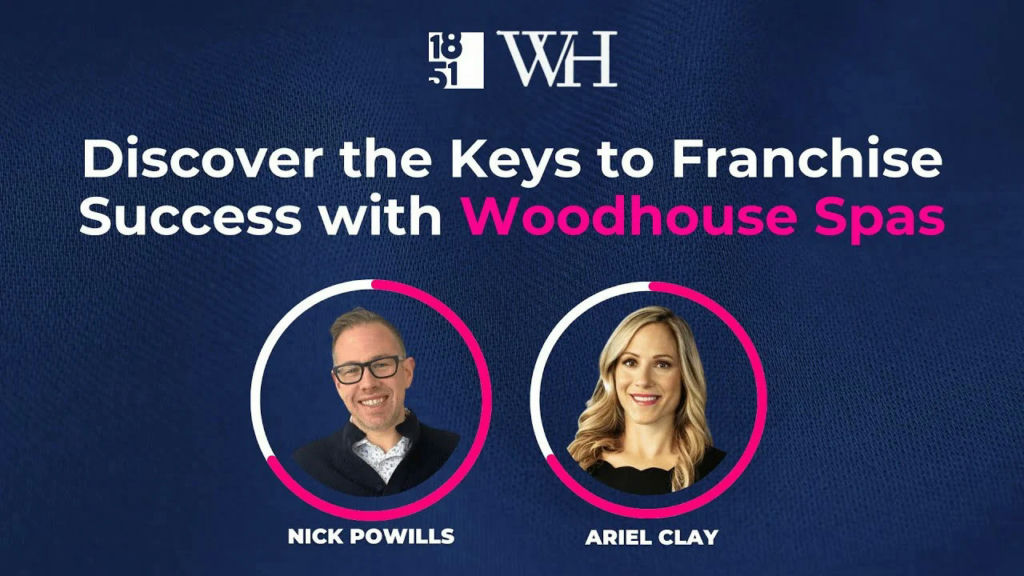
In a recent “Franchisor Hot Seat” webinar hosted by 1851 Franchise Publisher Nick Powills, Woodhouse Spas Chief Operating Officer Ariel Clay, shared her journey and insights into what makes the Woodhouse franchise model not just successful but standout. Clay, a respected franchise executive with a deep background in marketing, operations and brand development, brings a data-driven yet people-first approach to franchising, helping shape Woodhouse into a category-defining brand.
Clay didn’t set out to work in franchising. With no family background in the industry, she was originally pursuing opportunities in marketing when she happened upon an opening at QDOBA, a fast-casual concept with both corporate and franchise locations. What started as a chance opportunity turned into a long-term passion for helping franchise owners succeed. Over the years, she’s worked across multiple brands, bringing strategic focus and operational excellence to every role — and today she’s channeling all of that into Woodhouse Spas.
Throughout the conversation, Clay emphasized that franchisee success is rooted in passion and drive. Whether a franchisee is motivated by love for the brand, the desire to be their own boss or the vision of creating a legacy, the internal fire to build and grow is essential. That said, maintaining that energy — and channeling it productively — is just as important.
Franchisee success factors
Equally critical, Clay noted, is the importance of setting clear expectations from the very beginning. At Woodhouse, the franchise development team is intentional about building relationships with candidates long before a deal is signed. By the time someone attends Discovery Day, they’ve already had numerous in-depth conversations and are fully educated on the brand, the business model and the work required to succeed. This upfront transparency helps ensure that new franchisees are aligned and prepared, minimizing the risk of disappointment or disconnect later on.
Due to the complexity of the spa model and the level of investment required, Woodhouse typically attracts high-caliber candidates — often individuals entering their second careers after achieving prior success. Many have strong professional or entrepreneurial backgrounds and are looking to build something meaningful and lasting.
Clay shared that certain behaviors tend to signal misalignment with the Woodhouse system. Candidates who show no curiosity, push back heavily on brand standards or express a desire to "do things their own way" before even signing on are often not suited for franchise ownership — especially within a premium, systemized brand like Woodhouse. On the other hand, ideal candidates come to the table ready to engage, ask thoughtful questions and commit to the proven model.
What truly sets Woodhouse apart isn’t just the business model, Clay said — it’s the culture. Many franchise brands feel more like families than business units, with franchisees fostering supportive environments that extend across locations and into the broader network. That sense of camaraderie and shared purpose often translates to longer-tenured staff, higher customer satisfaction and stronger financial results.
Business model and growth
That culture, combined with a robust three-part revenue model — services, retail and gift cards — makes Woodhouse a strong candidate for multi-unit growth. Franchisees benefit not just from spa bookings but also retail sales guided by expert staff and a thriving gift card business, thanks to the brand’s positioning as a luxury experience.
Woodhouse is also well-positioned to weather economic ups and downs. The brand appeals to a broad demographic — with guests ranging widely in age and income — which helps insulate it from volatility. For many consumers, wellness has become a non-negotiable, and Woodhouse offers both indulgence and accessibility, making it a go-to destination for routine self-care and special occasions alike.
At the heart of Clay’s leadership philosophy is a focus on long-term success. That means prioritizing transparency, culture and profitability over fast franchise sales. She believes that franchisors who underrepresent the true investment required may succeed in the short term, but ultimately face bigger struggles down the line — because underprepared franchisees can’t scale, and that hurts everyone.
At Woodhouse, the team remains committed to building true partnerships with franchisees, ensuring they have the resources and support needed to thrive. It’s not just about expanding the brand — it’s about doing it the right way.
A full transcript of the conversation between Powills and Clay appears below. It has been edited for brevity, clarity and style.
Nick Powills: All right, Ariel, we’re going to start with you, then we’ll get to the brand. It’s the only scripted question I ever ask: What’s your franchise story? How did you accidentally fall into franchising?
Ariel Clay: Yeah. First of all, thanks for having me here. Excited to talk to you and talk about franchising, which I love. It really was accidental for me. I had no background in franchising, no family story — nothing. I had a background in marketing and was looking for my next opportunity. I stumbled across QDOBA — the fast-casual Mexican concept — which was about 50/50 franchise and corporate. I just sort of found my place. It really was just by accident, just as you said.
Powills: That’s part of the reason I ask. It’s the same journey for a franchise buyer. I’ve talked with many Woodhouse franchisees who say, “I was a fan of the brand. I was a customer. I was done with my corporate career, and I bought into a franchise.” For you, it’s like, “I had a marketing background, I accidentally fell into this industry, and then I fell in love with it.”
As you’ve expanded, what have been some of the “aha” moments around franchisee success?
Clay: The one thing that pops everywhere you go is passion. Some franchisees have passion for the brand before they came in — which is mostly the case at Woodhouse. Some have a passion for being their own boss, creating their own destiny, and maybe leaving something for their family. But it’s passion, and that’s what gets them started. What makes them successful is maintaining that passion.
That can create challenges because with passion comes emotion and fire. But every challenge that comes with passion also brings success. It’s incredible to see how passionate they are.
The other thing is drive. You really can’t be an entrepreneur without it. It’s incredible to see how hard some of these franchisees work every day to get started and grow. Usually there’s a payoff — they get to reap the benefits of being their own boss and building a team.
Powills: I think a lot about expectations — especially when working with frustrated franchisees. They often blame sales or marketing instead of themselves. But if expectations aren’t set properly at the start, that can be a problem.
How much is it on the franchisor to educate candidates that this isn’t easy — that there’s no get-rich-quick scheme in franchising?
Clay: I’m so glad you brought that up. It’s critical. It’s easy to avoid because it makes the sale harder. Some sales teams probably try to make it seem turnkey — “mailbox money” — just to sell licenses. But those brands won’t be successful.
If there’s no mutual understanding of what it takes, you’re setting everyone up for failure. At Woodhouse, we have a phenomenal franchise development team. They take time to get to know the candidates. By the time they meet us on Decision Day, they’re like old friends. I haven’t seen that before — it feels unique to Woodhouse.
Almost 100% of people who meet us on Decision Day become franchisees. We also spend a lot of time before they sign, talking about what’s going to happen and what the process is like. We encourage them to talk to top performers, bottom performers — everyone.
If they sign up without knowing what to expect, it’s not going to be successful. That’s unfortunate for them and for us. So we do everything we can to avoid that.
Powills: Do you think the investment level is a natural governor — in the sense that Woodhouse isn’t for someone looking to replace a job right away? It’s for someone with some success who wants to build wealth.
Investment and candidate quality
Clay: Totally. Because of the investment, we get higher-caliber people. For most, it’s a second career. Some are young and had early success — kind of a first retirement. Others are truly in the second phase of their career.
They also realize this is a complex business model. We’re not making chicken fingers. It’s not a single-modality wellness business. So yes, between the wealth baseline and understanding the model, the brand does a good job weeding out people who aren’t up for the challenge.
Powills: Can you think of a time someone came to Decision Day and you knew they weren’t the right fit?
Clay: I haven’t had that happen at Woodhouse. But in previous roles, yes. A few red flags stand out:
One, they ask no questions. Even if you’ve done all your research, there are still questions. If you think you have it all figured out, you don’t.
Two, they question everything — “How strict are you on following the rules?” That’s a red flag. Franchising comes with consistency and standards.
Three, they think they know it all. If you do, why buy a franchise? Why not just build your own concept?
Powills: That’s the same red flag I’d see in a job interview — no curiosity, pushing back on structure. Probably the same in dating, too.
I think the two biggest franchisee misses are: one, not wanting to be the highest performer. They focus on average or below average, asking, “Who failed?” instead of “Who succeeded?”
And two, they don’t understand that they’re buying into a proven operational model. When they say, “Can I tweak this?” they’re missing the point.
It’s a mindset shift. And if they come in thinking, “Impress me,” that’s not a partnership.
Clay: Totally. We’re going to work with them for 20-plus years, hopefully. There has to be mutual understanding and fit.
Powills: For successful franchisees — passion and drive are big. But how important is a growth mindset?
Clay: It’s important. People who want to settle for average — I don’t want them in my portfolio.
Growth mindset and success
The most successful franchisees want to raise the bar. Maybe they want to open a second or third location. Or maybe they want to be top in the system.
But the ones who never attend a webinar, don’t read the newsletters — nobody notices them. And that doesn’t lead to long-term success.
Powills: What about silent frustrations? Like when a franchisee says, “I’m not winning,” but you can see the fix?
Clay: Absolutely. It’s often about looking in the mirror. It’s easy to blame someone else — marketing, ops, the brand. But we usually know the issue.
Sometimes it’s a toxic manager and the franchisee is too close to see it. Delivering that feedback gently is part of franchising.
Powills: Here’s a statement I want your reaction to: I believe franchisors should budget 10% of total investment for marketing. Most brands understate it.
If the cost to acquire a customer is $80, and the LTV is $3,000, why not spend the money?
Franchisors stall when they don’t market the opportunity. Franchisees stall when they don’t spend enough to get customers.
Clay: As a former CMO, I couldn’t agree more. When times get tough, the first thing people cut is marketing — which is exactly what they shouldn’t cut.
You have to over-invest in marketing when you’re starting. Even with a well-known brand, you have to tell people where you are.
A 2% contribution to a national fund is not enough. Half of that goes to infrastructure. And in my experience, a lot of franchisees don’t even spend what’s required. Those are the ones who struggle.
Powills: On both sides, franchisors and franchisees need to focus on real numbers — not vanity metrics like cost per lead.
If you know your cost per acquisition and it works, spend the money. But if sales teams push back because higher marketing spend raises the total investment, that’s short-term thinking.
Clay: Exactly. If someone on my team said, “We need to lower the numbers,” I’d say, “Fine — you’ll sell more this year, but less next year.”
Franchisees who enter under lower expectations won’t perform as well, and that hurts the whole brand.
Fortunately, our team actually wants to raise the numbers — and that’s unique.
Powills: For franchisees, higher fees shouldn’t scare them. They should be a positive flag. Franchisors don’t make money on the initial fee — they make it on royalties, so they want you to succeed.
Clay: Totally. If I were a prospective franchisee and saw really low fees, that would concern me.
It might not be a bait and switch, but it could mean they just want to get you signed — not set you up for success.
Powills: Let’s close with this: What do you want people to know about Woodhouse as an opportunity?
I’ve talked to other brands trying to figure out how to compete with Woodhouse. The spa experience creates a moat. And franchisees talk about culture first — that tells me their staff is loyal.
What else should candidates know?
Clay: The culture is real. I’ve visited multi-unit owners where family members are on the team — and the ones who aren’t feel like family.
You sit down with them, and it’s hard to tell if it’s a family dinner or a team meeting. That creates a bond — shared accountability that trickles down to the front line.
Franchisees support their teams and each other. You don’t always see that. At Woodhouse, there’s real connection.
From a financial standpoint, we have multiple revenue streams — core spa, retail and a massive gift card business.
Our team extends care from the room into the retail space. It feels like a recommendation, not a sale.
And gift cards are huge. Woodhouse is a destination. You don’t gift a massage anywhere — but you gift Woodhouse.
Also, our demographic is broader than people expect. We’re evenly distributed between ages 35 and 65, and younger guests often come back. We’re insulated from economic shifts because of that range.
All of that — the brand, the experience, the opportunity — makes Woodhouse special.
Powills: One last thought. People think spa services are just for luxury consumers, but that’s not true anymore.
You see it on cruise ships — wellness is for everyone. And when people try Woodhouse, they fall in love. That’s the magic of the brand and the culture you’ve built.
Clay: Exactly. If that all works — then we’re very successful.
Powills: Thank you, Ariel. I’m grateful for your time. For anyone watching, you can find more information by clicking the franchise tab on Woodhouse’s website.
In this story
This story was originally published in 1851 Franchise on June 17, 2025. Burnaze summarizes and links to the original reporting.
Read the full story at 1851 FranchiseLiked this? Get the week's franchise news, explained
- Sunday 8 AM ET weekly + a monthly deep dive
- Sections picked for the industries you follow
- Every claim linked to its source. Free.