TL;DR
Slim Chickens discusses its approach to long-term growth and differentiation in the competitive chicken category, focusing on product quality, menu breadth, and a measured expansion strategy. The brand prioritizes disciplined growth, market selection, and operational support to ensure consistent performance across locations.
Flexible real estate and repeatable systems are reshaping restaurant growth.
The chicken category has become one of the busiest development arenas in quick service, but for prospective franchisees, that growth has made the investment question more complex. With more brands entering the space and many offering similar positioning, operators are looking beyond short-term momentum and asking a more important question: What will still stand out five or ten years from now?
“One of the biggest challenges today is a lot of brands are entering the category with very similar positioning,” says Shak Turner, vice president of domestic franchise growth at Slim Chickens. “Operators really have to ask what will still differentiate a concept long term.”
Key differentiators
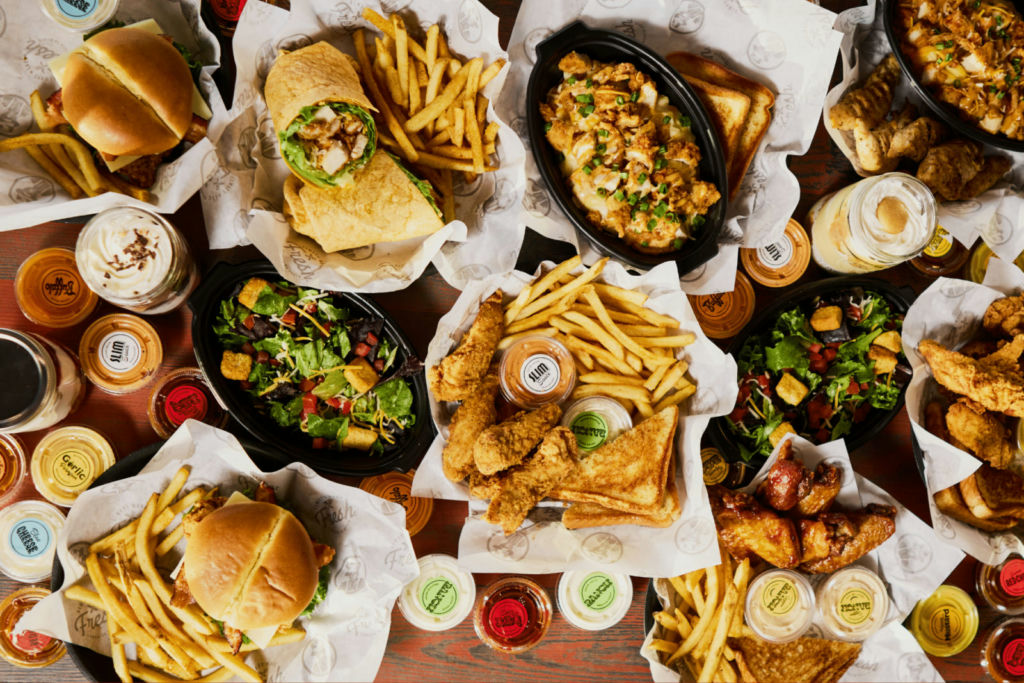
For Slim Chickens, that differentiation comes from a combination of product quality, menu breadth, and a more measured approach to expansion. While many chicken concepts compete around a narrower menu or a single flavor profile, Slim Chickens pairs hand-breaded, cooked-to-order chicken with a broader platform that includes wraps, wings, sandwiches, salads, desserts, and chicken and waffles. Its 14 signature sauces add another layer of customization that helps keep visits from feeling repetitive.
“Guests are not limited to one type of occasion or one type of product,” Turner says. “Families can come in, and everyone finds something they want.”
Just as important, Slim Chickens is framing growth as a long-term operational equation, not a race for unit count. Turner says disciplined growth means being intentional about market selection, real estate strategy, franchisee alignment, and operational readiness before restaurants open. That approach is especially important as developers navigate construction delays, permitting hurdles, and higher real estate costs.
“Franchisees need confidence that the brand has the infrastructure, communication, and operational support to help those restaurants open efficiently and perform consistently over the long term,” Turner says.
Flexible growth strategy
Support extends to development flexibility. Rather than forcing every operator into the same box, Slim Chickens has continued evolving its real estate strategy around current market realities. The system includes traditional restaurants, conversions, inline units, end-cap drive thrus, Fly-Thrus, and nontraditional locations such as college campuses and airports. For multi-unit operators, that gives more room to match format with market.
From a unit-economics standpoint, the model is built around diversification. Traditional restaurants can tap into dine-in, drive thru, digital ordering, third-party delivery, and catering, helping operators reach guests across multiple channels and occasions. Behind the scenes, Turner says the operational model is designed to support repeatability as franchisees scale.
Slim Chickens has invested in training infrastructure, field support, and technology tied to digital ordering, loyalty, labor visibility, and drive-thru testing. The goal is to make execution consistent across locations while preserving the quality and hospitality that define the brand.
For Turner, prospective franchisees should look closely at how a brand is growing, not just how fast.
“Are restaurants performing consistently across markets? Is infrastructure keeping pace with development? Are franchisees continuing to reinvest and expand?” she says. “Those are usually stronger indicators of system health than unit count alone.”
In a crowded category, that may be the clearest franchise story of all. Slim Chickens is not positioning growth as a sprint. It is presenting a case for steady expansion, strong support, and a product experience built to hold up over time.
In this story
This story was originally published by Drew Filipski in QSR Magazine on June 2, 2026. Burnaze summarizes and links to the original reporting.
Read the full story at QSR MagazineLiked this? Get the week's franchise news, explained
- Sunday 8 AM ET weekly + a monthly deep dive
- Sections picked for the industries you follow
- Every claim linked to its source. Free.