TL;DR
Erbert & Gerbert's has appointed Mark Kocer as its new CEO, with former CEO Eric Wolfe transitioning to Chief Development Officer to focus on expansion. The 60-unit sandwich chain aims to maintain its growth mission under new leadership.
Eric Wolfe has spent more than two decades building Erbert & Gerbert’s into a regional sandwich chain with a fiercely loyal following. Now he’s handing the day-to-day reins to a seasoned restaurant operator so he can return to what he says has always been his greatest passion—growing the brand.
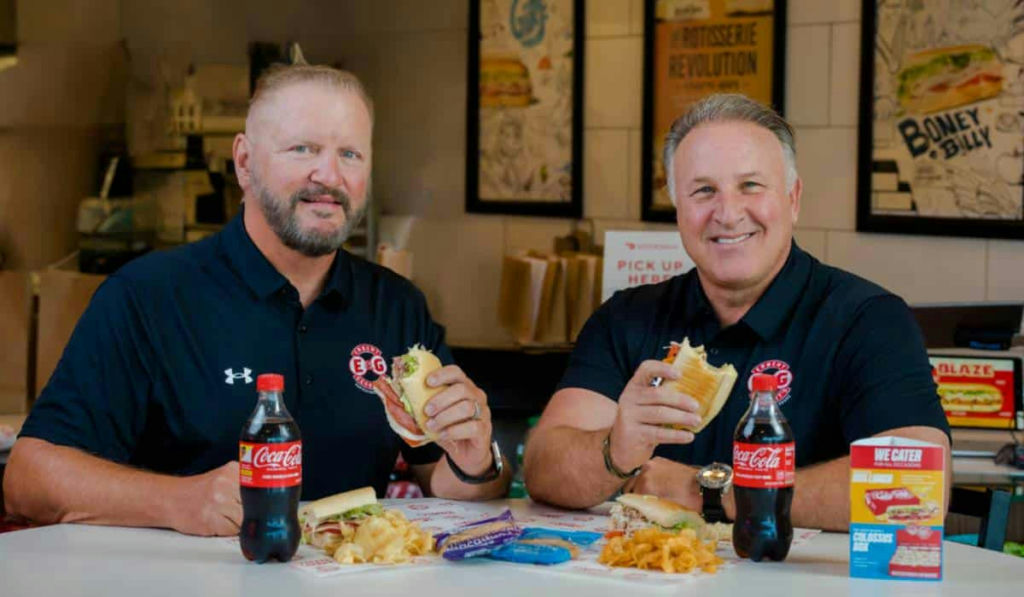
The 60-unit sandwich chain announced that restaurant veteran Mark Kocer became CEO on June 1. Wolfe, who has led the company since purchasing it in 2004, transitioned to chief development officer. As part of the leadership shift, Kocer will oversee operations, strategy, and franchise support while Wolfe concentrates on franchise sales, new revenue opportunities, and expanding Erbert & Gerbert’s footprint.
Wolfe says the decision wasn’t about stepping away from the company he helped transform. It was about putting the right people in the right roles.
“Now it’s getting to a point where I’m looking at the next generation of the brand, and I want to spend more time with my kids and grandkids and all this kind of stuff, but bringing in Mark to say, ‘OK, the next generation,’ and let me do what I love to do, which is that development side of the business and growing revenue and getting out into the field, being the brand ambassador.”
Leadership Transition
Wolfe’s relationship with Erbert & Gerbert’s began more than 20 years ago on a golf course. After selling his stake in a medical device company that he helped grow, he was searching for his next challenge when a friend mentioned that founder Kevin Schippers was considering selling the sandwich concept.
At the time, the chain consisted of only a handful of locations. Wolfe, who had become familiar with the brand through family visits after church, immediately saw something others may have overlooked.
“I’ve always been a marketing kind of guy,” Wolfe says. “I love to go out and in the field and kind of generate revenue. That’s my passion.”
After purchasing the company with several partners, Wolfe focused first on strengthening its operational foundation. He acknowledges operations wasn’t his expertise, so the company hired leaders capable of building systems, improving restaurant execution, and supporting franchisees as the business expanded.
Wolfe also became captivated by the brand’s storytelling ability.
Erbert & Gerbert’s traces its roots to founder Kevin Schippers’ father, David Schippers, who created fictional characters named Erbert and Gerbert for his 10 children as a way to teach them about history, science, and nature. Those stories eventually became the inspiration behind the sandwiches found on the menu today.
One example is Jacob Bluefinger, the brand’s vegetarian sandwich.
“Jacob Bluefinger goes back to the Declaration of Independence, and he was a little boy that got his thumb stuck in the inkwell,” Wolfe says. “To me, I’m like, wow, that is such a great thing. You could put that vision of Jacob Bluefinger on T-shirts. You can go onto college campuses. You can go into elementary school kids and tell them about the Declaration of Independence, and we’re not making it up. It’s not fake. It’s virtually embedded into our brand.”
That quirky personality became central to Wolfe’s growth strategy. Alongside traditional restaurant expansion, the chain leaned into fundraising, community involvement, and nontraditional venues. Today, Erbert & Gerbert’s operates in nine states, including locations on university campuses and inside hospitals, and maintains a network of multi-unit franchisees.
Growth Strategy
As the system matured, Wolfe’s attention expanded to technology, digital ordering, and loyalty. The company recently partnered with Olo to enhance its digital capabilities, and Wolfe believes Kocer’s operational and technology background will help accelerate those efforts.
Kocer arrives with more than three decades of restaurant experience, including leadership positions at KFC, Arby’s, and Taco John’s. Most recently, he served as chief operating officer at Taco John’s, where he oversaw technology modernization, operational consistency, and enterprise-wide performance initiatives.
“What I love about Mark is that he came through the ranks,” Wolfe says. “At Arby’s, he oversaw 700 stores. And then I’m thinking in my mind I’m like, OK, we’re here now and he has that capacity to just grow the brand.”
Wolfe believes Kocer’s experience scaling much larger restaurant systems gives Erbert & Gerbert’s the infrastructure it needs to grow without sacrificing franchise support.
“We don’t want to just throw a bunch of units out there and say, hey, thanks a lot appreciate it and we’ll see you later. Me personally, I just cannot do that,” Wolfe says.
That philosophy shapes the company’s expansion strategy.
Expansion Plans
Erbert & Gerbert’s recently opened a restaurant in downtown Minneapolis and expects to add seven or eight locations this year. Longer term, Wolfe wants the development pipeline to consistently reach 25 to 30 restaurants annually, but only if the company’s operational infrastructure can keep pace.
“I would rather have us do a very solid, slow growth and then ramp it up very rapidly, knowing that you have the systems in place that can support that growth,” he says.
The leadership transition also comes as the sandwich segment navigates a difficult environment marked by cautious consumer spending and heightened competition. Wolfe describes current traffic as essentially flat but said the brand’s loyal customer base provides a strong foundation for future growth.
Rather than relying exclusively on value promotions, the company is evaluating its menu mix, expanding its lineup of hot sandwiches, and exploring enhancements to its beverage platform. Wolfe expects Kocer’s experience at larger brands to play an important role in shaping those initiatives.
Wolfe points to the company’s longstanding emphasis on local store marketing as a competitive advantage. Without the national advertising budgets of larger competitors, Erbert & Gerbert’s has focused on becoming deeply involved in its communities through fundraising, schools, hospitals, and campus partnerships.
“It’s hard for us to compete with a Jimmy John’s or Subway because they have millions and millions of dollars in their ad fund, but how do we attack our communities is really, really critical because we can get into the hospitals, we can get into the elementary schools and do fundraising and give back,” Wolfe says.
Wolfe and Kocer have already begun traveling together to introduce the transition to franchisees, recently logging roughly 2,000 miles on the road visiting operators across the system.
“We couldn’t have a better partner with Mark, and I’m excited just to get out in the field and start building franchises and different revenue sources that we have,” Wolfe says.
In this story
This story was originally published by Ben Coley in QSR Magazine on July 1, 2026. Burnaze summarizes and links to the original reporting.
Read the full story at QSR MagazineLiked this? Get the week's franchise news, explained
- Sunday 8 AM ET weekly + a monthly deep dive
- Sections picked for the industries you follow
- Every claim linked to its source. Free.