TL;DR
Whataburger CEO Debbie Stroud discusses the brand's Texas heritage and family-focused culture while managing its multi-state expansion strategy. Stroud, who joined Whataburger in 2023 as COO, brings her experience from McDonald's and Starbucks to lead the company's growth and evolution.
Few QSR chains inspire the kind of intense customer devotion as Whataburger. Founded in Corpus Christi, Texas, and now based in San Antonio, the burger brand has been ingrained in the lives of Texans now for 76 years. And today, with its 1,000-store footprint still confined to just 17 states, the company is no stranger to expats hauling long distance to scratch their Whataburger-sized itch, bringing with them a childhood story of visiting the classic orange-and-white A-frame restaurants with a parent or a grandparent or a cousin.
That sense of family started with founder Harmon Dobson and continued with his wife Grace, who took over the company when Harmon tragically died in a plane crash in 1967. It trickled down to their son Tom Dobson, who served as president and CEO for nearly 30 years and continues, with other family members, to own a minority stake in the business. It fans out to the 50,000-plus employees whom the company calls “family members,” and to the millions of customers who helped Whataburger earn $4.3 billion in 2025 sales, according to Technomic Ignite data.
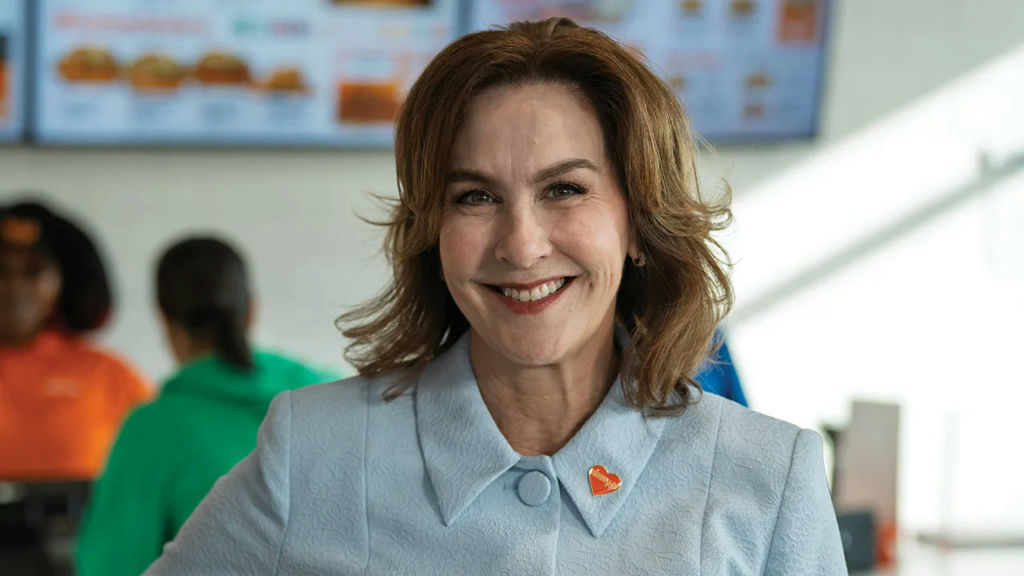
And it continues today in Debbie Stroud, who joined the Whataburger family in 2023 as COO and now, as CEO, serves as a sort of modern matriarch, shepherding the growth and evolution of the business. Stroud — who spent 27 years in the McDonald’s system and then five years with Starbucks prior to Whataburger — sat down with NRN’s editor-in-chief in a brand-new location outside Raleigh, N.C., to share how her leadership style dovetails perfectly with the brand’s family mentality and how she’s helping the company respect its legacy while adapting with the times.
The first part of my career was in the accounting or finance areas, and back in those days, you were able as a financial analyst to do the math, so to speak, around marketing and real estate and growth and mergers. So you had a good lens across all of the disciplines of the business. My last role in McDonald's was as the general manager of the Raleigh region, and again you have that broad spectrum across disciplines, teamwork, how you grow a region and have a great relationship with your franchisees.
That taught me a lot. In fact, a lot of the lessons were not only from leaders within McDonald's, but from the franchisees themselves. … The lessons I would say throughout my career with McDonald's would be around the discipline and the consistency that it takes, the focus on the customer experience, and how you galvanize a team and create clarity and alignment towards common goals. Because when you can align a team around the same outcome and then step back and empower people to get the work done — which is pretty special — you can accomplish great things together.
The moment of truth happens when you're engaging with the customer and you're sharing your food and the experience, right? It's a moment of feeling to me; it's grounded in great food, but it's grounded in the connection that you have. And I think that got amplified even more when I moved into Starbucks.
When I first began with Starbucks, I was working on the license side of the business. And again, [it was] the ability to see a brand [through a new] lens. Formerly it was through franchisees’ eyes and [now it was] understanding through a license lens. I got to see Starbucks as a brand through the lens of other major corporations, whether that's restaurants, hotels, or retail that we were a part of. And so being able to do that was really eye opening to me and it just broadened my perspective about how brands show up and how you can deliver in partnership and collaboration with other brands.
I didn't know a lot about it. I knew it as an iconic brand with great Texas roots. And I knew that the food and the experience was something that was a step up, and that it was fun. The orange and white stripes, the store, those types of things were prevalent. But the yes to Whataburger was because of the people and the culture. I had extraordinary experiences at the former two brands, but there was something about the brand Whataburger at that time where we felt like we were on the verge of something just really, really big, you know?
It's definitely an honor, but I would say I was energized by it. There was no trepidation about where we can go from here. There was a team of operators that were like, “Let's go.” The legacy that Whataburger is rooted in is exactly what we wanted; what we want to create is more relevance to the customers in the new places. [As CEO,] I just needed to continue to tap into that. When you have a team of people across the country already in the footprint, my job just became, How do I unlock barriers, accelerate the things that matter most, and empower people to go do what we do best?
I like efficiency, so I like getting into the kitchen and learning what we can do to innovate. And we're doing more of that now. But the beginnings were really about listening to our operators, connecting what was happening out in our regions and then the restaurants to the DNA of what was happening in the home office.
It’s culture. One of the things that attracted me from day one was the notion of pride, care, and love. We take pride in what we do, meaning there's high standards; the burger doesn't hit the grill until you place your order. You might wait just a minute or two longer, but it ought to be an amazing burger or chicken sandwich when you get it.
The care part is that we care about each other like family. In families, care comes in a lot of shapes and forms, but that care means we want to know who you are and how we help you thrive.
And the last part is we love serving our customers. But the family member portion of that is we are a team. Nobody does this alone. When you can help create an environment where your team members or family members can thrive in what they do every day, then the rest of it comes together.
I love the statement that leaders create the conditions for success. And so when you think about how you create conditions where people can thrive and be their best selves and have a career and grow — or even come to us for a short period of time while they're going to school and then leave and go do bigger and better things in the world — you create the conditions where people can really be successful. You do that through, No.
1, understanding the context of the problem you're trying to solve … and getting everybody focused. And that creates clarity. Once you have clarity, you have alignment within the teams.
And most big problems are solved cross-functionally.
When I first got here, we wanted to make sure that the benefits for our family members were a package that made people want to work here, thrive here, and have a career here. So there were a lot of great pieces in place. But it is ensuring people have time off and making sure that people understand the career path, have role clarity so that they know what success looks like.
I think about an operating partner named Sergio who started as a 16-year-old in El Paso, Texas, didn't speak a lot of English, and he had a leader that came to him and coached him and gave him three-by-five cards that helped him understand how to talk to customers. That little spark helped Sergio understand that he could do more. Now he's an operating partner of our highest-volume Whataburger in the system in San Marcos, Texas. That's cool, right?
So culture and career path opportunities exist, because when you're part of a brand that is growing, you have the opportunities and leaders share that opportunity with others. It's why I've been part of the food and beverage industry, because we really can change people's lives.
I like to spend time in the restaurants. I think that when you're engaging in the work that we do, that is a big part of it: listening and understanding what barriers they might have so I can go and take action. It’s not just listening; it's taking action, it's making decisions. And I think that builds trust between people, because there's consistent and repeatable behavior again and again and again.
It's about delivering higher standards; it’s about expecting behavior that's respectful and warm. And it's also about taking the time to listen and then make decisions together. That's how you show up each and every day. And I happen to do it usually with a smile on my face and with a lot of energy.
Oh, 1,000% the relationship that Whataburger has with its customers and strives to have with customers is unique. It's a differentiator. It is something that we want to protect and grow.
I would I describe it as intentional discipline to grow. And that means we've got to get the formula right.
We've done a lot of work over the past year developing a new prototype building. Listening to our family members, listening to our customers, one of the things that we heard again and again was they missed the A-frame. They missed that iconic orange-and-white stripe. So we have a prototype that will start building in 2027 that brings back a bit of that A-frame warmth and iconic branding.
It's also the economics, right? So when you're growing, you want to make sure the economics are right, which means, what's the right capital investment? How do we open with the right local store marketing and don't take our communities that we enter into for granted? We're here to be a part of the community, which is how we built our brand in Texas years and years ago. So that matters to us. But that takes a bit of time. And so all of those things, I think, will prepare us for the next step and then the next step.
I would say the first [growth driver] is menu innovation. And so that is bold flavors; the customizable opportunity that you have on our menu is second to none. That's the fun part of introducing customers to all the different ways that you can build a Whataburger.
We also know the customers are eating more chicken, so the innovation around our chicken platform is real. So how do we innovate around our chicken platform and ensure that our customers can enjoy that protein as well? [And then there’s] beverages, which is a big part of how consumers enjoy their experiences.
So more innovation in all of those places.
The next piece is digital. You can't deny the digital customer. And so we have a very functional app, and we have delivery like a lot of brands. But we're in the process right now of completely revamping our app, and we want it to be more experiential. You should feel like you're getting the Whataburger experience through our app. By the end of this year, I think that we will have a completely new immersive experience for the app, which is exciting.
I don't know that it's keeping me up at night, but we have specific work streams that the team is working on to help our business be more efficient.
So first of all, when you cook made to order, it takes a little bit longer, and the consumers certainly say they want their orders to be accurate and efficient and timely. We're implementing a new kitchen flow with new equipment that helps us deliver the exact same quality fresh beef cooked to order, but in a faster setting. Value is on customers’ minds; we serve customers from small-town America to big cities, and value comes in a lot of shapes and sizes.
Price point matters; portion size matters. The experience that you get and the quality of the food that you get matter. So we are really just trying to look at that holistically.
The challenge, I think, is balancing that margin with the experience and being true to who you are. We just launched our $3-$4-$5 Whatadeal menu in January, and that's great for the price point. But we have a lot of other entry points to our menu that I think for the portion size and the quality of the food mean a lot to our customers.
A leader once described me as having pace. And I think stepping into this role, I started to understand how pace of decision-making and setting a vision and gaining alignment and moving towards better started to really come to life. In my first year, given all of the challenges that we faced in 2025 and a bit of the uncertainty, pace and moving through with a lens of “better” was something that I learned.
I think now more than ever, as much as you can, bring your people along and empower them to make the decisions. I don't make the decisions, right? You set the framework so that the teams can move forward and make great decisions. The right leaders in the right place at the right time help everything get done.
I'm authentic. People have described me as being warm and approachable. That works great when you want to listen and you want to understand the real. So I think that's a big part about who I am as a leader. And then I like fact-based decisions. That's a little bit of my financial background: I like data that tells a story. And when data can tell a story and you understand the context of the situation, then that allows you to act. So I like to make decisions and take a little bit of risk, but I like to find the edges of situations and see what great looks like.
In this story
This story was originally published by Sam Oches in Nation's Restaurant News on May 5, 2026. Burnaze summarizes and links to the original reporting.
Read the full story at Nation's Restaurant NewsLiked this? Get the week's franchise news, explained
- Sunday 8 AM ET weekly + a monthly deep dive
- Sections picked for the industries you follow
- Every claim linked to its source. Free.