TL;DR
Döner Haus founder Nikolaus von Solodkoff set a 3% royalty and 2% marketing fee to support owners and keep the system financially healthy. The emerging franchise has posted steady growth, with dozens of locations in the works.
Döner Haus founder Nikolaus von Solodkoff set a 3% royalty and 2% marketing fee to support owners and keep the system financially healthy, he says.
Von Solodkoff believes low franchise fees benefit franchisees, as well as franchisors who profit when operators do.
Döner Haus also keeps franchisees’ costs low with a lean business model including small restaurant footprints, efficient technology, minimal staffing and a streamlined menu.
Lean business model
- The emerging franchise has posted steady growth, with dozens of locations in the works.
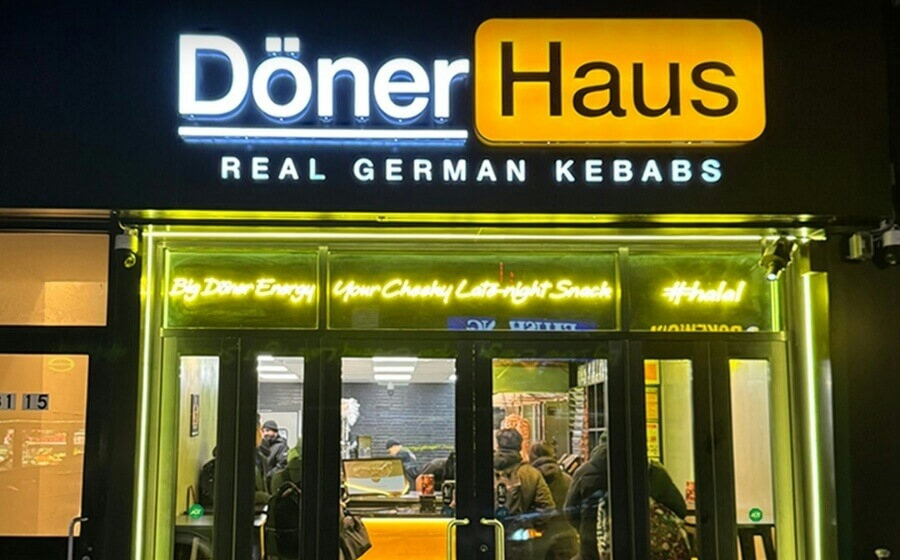
Founder and CEO Nikolaus von Solodkoff structured his Döner Haus brand around a lean business model and franchisee-first philosophy. And because minimizing overhead is high on every franchisee’s wish list, von Solodkoff established a 3% royalty and 2% marketing fee to reduce ongoing costs.
As he puts it, “we do not want franchisees to just buy themselves a job running our restaurants,” which serve Berlin-style döner kebabs that are highly popular in Europe. “We want our franchisees to build a long-term career with Döner Haus and have a real path toward owning multiple units over time. That only works if the economics leave enough room for them to make money, reinvest, hire good people and grow.”
Von Solodkoff sees Döner Haus’ low franchise fees as fair and sustainable, allowing operators to make money while preserving the bottom lines of the franchisor and its operators.
“Franchisees are long-term partners, not customers to be charged as much as possible. The 3% royalty and 2% marketing fee still give us the resources to support the system, protect the brand and invest in growth. They also keep the economics healthy for the operator. The brand becomes stronger when the franchisees are building businesses, not just working extremely hard to pay fees.”
Franchise fees comparison
Many franchises set their fees considerably higher than those of Döner Haus. According to the International Franchise Association, royalty fees vary from franchise to franchise, but on average “can range from 5% to 9% of gross sales.” As a restaurant example: Subway charges franchisees 12.5% of gross sales, minus sales tax, each week: 8% for royalties and 4.5% for advertising/marketing. (The initial franchise fee for Döner Haus is relatively conservative, too: $35,000 for the first unit and $17,500 for each additional unit. Dunkin’s initial franchise fee can soar as high as $90,000.)
“If a brand charges 6% in royalties and 3% in marketing fees, that is 9% of gross sales before the operator has paid rent, labor, food cost, insurance, utilities, repairs and everything else. That’s too much. If the store has a 15% profit margin before those fees, the franchisee is giving more than half of that profit to the franchisor,” von Solodkoff says.
“That does not make sense to us. Our view is that the franchisor should make money because the operators are healthy and growing, not because the fee structure takes too much from every store. That is fair, and we believe it is also the better long-term business model.”
Von Solodkoff emphasizes that the Döner Haus fee structure “makes solid business sense. A franchisee who is profitable is more likely to reinvest, retain good staff, maintain strong operations, advocate for the brand and open more locations. For us, the better outcome is not squeezing more fees out of one store. It is helping a strong operator open three, five or 10 stores over time. That is better for the franchisee, better for the customer and ultimately better for the brand. We do not believe a franchise system needs bloated fees to provide strong support.”
He adds that low franchise fees send a broader signal about how the franchise operates. “We do not waste time or money on things that do not matter, and that gives us more room to focus on what does matter – product quality, operational consistency, customer experience and franchisee economics.”
Streamlined operations
The low royalty and marketing fee are just two components of the brand’s lean business model, which was designed to be streamlined and scalable, von Solodkoff says. Other savings-oriented Döner Haus perks include:
A small, flexible restaurant footprint. Most customers order takeout and delivery, so restaurant square footage can be as little as 700 square feet.
Technology-forward operation. There’s a training portal, kiosk and online ordering, automated royalty tracking, inventory management and more.
Lean staffing. Kiosk and online ordering reduce counter service needs; each shift requires only one to two cooks.
Few ingredients needed. The simple food menu consists only of döner kebab sandwiches, wraps and boxes.
Döner Haus’ lean business model has fueled growth, and the royalty and marketing fee, in particular, have resulted in favorable feedback. “In an industry where higher royalties and marketing fees are common, our 3% and 2% stand out,” von Solodkoff says. “The response has been very positive, both from franchise partners and from prospects in the pipeline.”
Döner Haus, founded in 2023, has experienced steady growth. To date, von Solodkoff says the Döner Haus franchise has 50-plus locations under contract, with five of those open and more launching this year. The pipeline stretches from New York to New Jersey, California, Florida, Mississippi and other developing markets. “All of our stores so far have been in New York, so we are excited to be opening in entirely new markets this year.”
In this story
This story was originally published by Mary Vinnedge in Franchise Wire on May 28, 2026. Burnaze summarizes and links to the original reporting.
Read the full story at Franchise WireLiked this? Get the week's franchise news, explained
- Sunday 8 AM ET weekly + a monthly deep dive
- Sections picked for the industries you follow
- Every claim linked to its source. Free.