TL;DR
In-N-Out Burger has chosen not to franchise due to concerns about maintaining quality and customer service. Other brands like Shake Shack and Chipotle have also opted for company-owned models, with Chipotle previously having a franchised model before converting back.
In-N-Out Burger is known nationwide for its Instagram-worthy burgers, fries and shakes. The brand has a cult following and is a popular destination for both domestic and international tourists traveling to California. Since it was founded in 1948, In-N-Out Burger has not expanded any farther east than Texas, and the majority of their 313 company-owned locations reside throughout California.
Quality control concerns
A big reason the company chose not to franchise? Management’s concerns around upholding the level of quality and customer service as the number of In-N-Out restaurants would exponentially increase in a short timeframe.
Steve Beagelman, the founder and CEO of SMB Franchise Advisors, says that maintaining control is a big reason that brands, despite having the criteria to succeed at franchising, decide against the business model.
“Some brands like having control and they want to control everything. The employees that work in a franchisee’s locations work for the franchisee and don’t work for the franchisor, so it’s difficult for some people to give that up to a franchisee in a local market,” says Beagelman.
Beagelman says that handing over the reins of day-to-day operations and entrusting someone else is a large obstacle for franchisors and can hold a company back from growing into new markets. For any brand thinking of franchising, Beagelman says to make sure to check these boxes off: revenue must be on the rise, the concept needs to be easy enough that it can be replicated by store employees, the idea is able to work in other geographical regions and a desire to study up on how to succeed in franchising.
“You really have to commit yourself to understanding franchising and wanting to learn everything about the industry. Go to free events through the International Franchise Association, attend trade shows,” says Beagelman.
Company owned brands
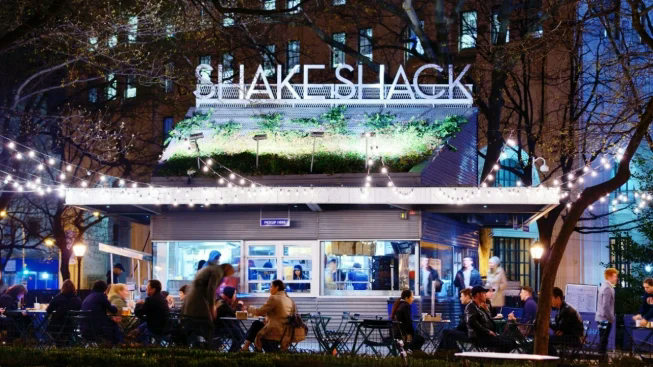
Shake Shack is another company-owned burger chain. Serving up mouthwatering burgers and frozen custard, the straightforward concept and commitment to perfection has led to incredible growth with almost 100 locations worldwide and three venues right in the heart of Chicago. Adam Shapiro is the Marketing and Communications Manager for Shake Shack and he says that the brand has no plans to franchise anytime soon in the U.S.
“Shake Shack is not currently franchising; rather, our growth strategy lies in seeking locations in thriving, bustling communities near key business drivers like parks, cultural institutions, schools and residential/commercial hubs,” says Shapiro in an email.
Shake Shack is publicly traded and its revenue forecast is predicted to reach up to $242 million for 2016, according to the company. The chain has hefty plans in coming years with a goal of 450 total Shake Shack locations in the U.S.
Another prime example of a company-owned brand is Chipotle. Founded in 1993, it has grown to become a staple in towns and cities across the United States. While it’s had a tough year dealing with the E. coli outbreak and food safety concerns in some restaurants, Chipotle is still regarded as one the nation’s most popular fast-casual chains with quality food and a simple menu that works. The brand has been growing steadily the past eight years topping off last year with 2,010 company-owned locations worldwide.
A reason that Chipotle didn’t need this initial capital investment to increase its number of locations is partly due to the hamburger giant, McDonald’s. In 1998, the dominant chain invested in the brand and helped it inflate from 14 locations to almost 500 locations in a span of seven years. At one point, McDonald’s owned 87% of Chipotle’s common stock until it decided to cut ties and sell its shares. Interestingly, some of Chipotle’s restaurants were franchised for a short period of time, but converted back to a company-owned model after McDonald’s parted ways with the establishment.
Beagelman says a company’s lack of funds for expansion is typically what turns them towards franchising.
“The reality is that if you can go and raise a hundred million dollars and you have great systems and processes in place, and you can hire the right people, everyone would have company-owned stores,” says Beagelman. “Most people franchise their business because they want to expand outside of their immediate area but they don’t have the capital.”
Whether a chain chooses to franchise or not, one of the most important pieces of advice is to keep your brand focus and culture intact as you expand and grow into new territories.
In this story
This story was originally published in 1851 Franchise on August 4, 2016. Burnaze summarizes and links to the original reporting.
Read the full story at 1851 FranchiseLiked this? Get the week's franchise news, explained
- Sunday 8 AM ET weekly + a monthly deep dive
- Sections picked for the industries you follow
- Every claim linked to its source. Free.