TL;DR
Gochujang sauce is becoming increasingly popular in quick-service restaurants, with 57% of guests craving Americanized global fare and 69% of operators planning to expand their global menu footprint. CJ Schwan's is helping operators incorporate Korean flavors into their menus with products like bibigo Gochujang Hot & Sweet Sauce.
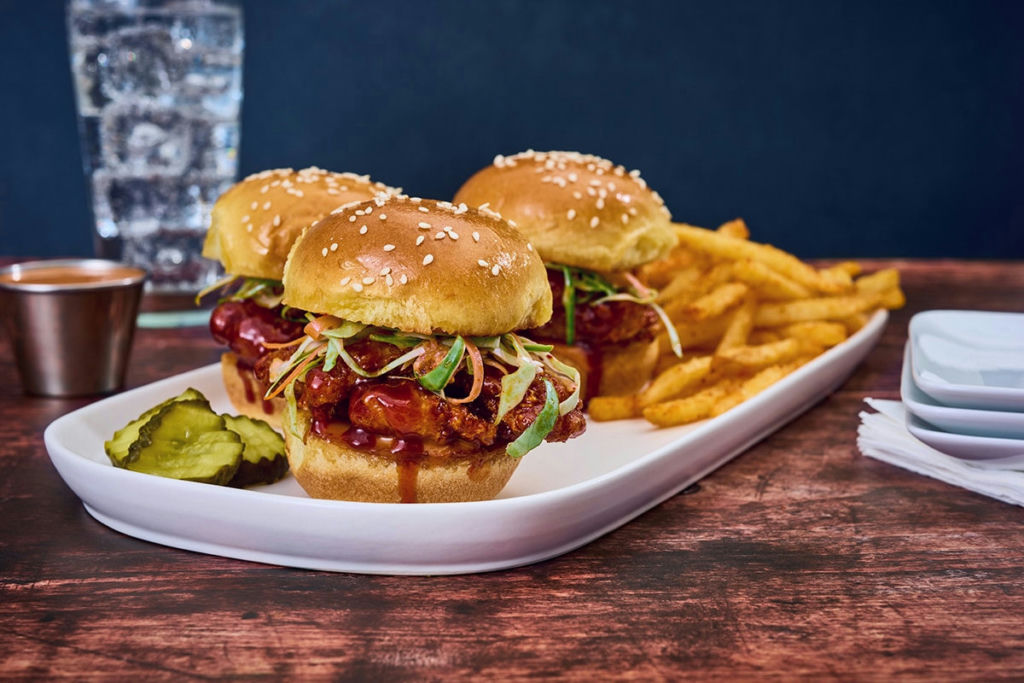
Gochujang-sauced crunchy chicken sliders
Fried gochujang-sauced chicken & vegetable steamed dumplings with gochujang aioli
Gochujang sauce chicken flatbread
Fried beef mandu with gochujang aioli
Breakfast egg roll with gochujang maple syrup
Korean dirty fries with gochujang sauce drizzle
Global flavor trends
With 57 percent of guests specifically craving Americanized global fare, according to Technomic, global flavor is no longer a niche menu experiment for specialized concepts. Quick-service restaurant guests are actively hunting for ways to put a spin on familiar favorites; whether it’s a bold sauce, a new spice profile, or a globally inspired twist on an item they already know how to order.
According to Datassential, 69 percent of operators plan to expand their global menu footprint to match this demand, so the real challenge for the busy operator to get on board is delivering these trending flavors without ballooning prep times, training requirements, or single-use ingredient counts.
CJ Schwan’s is helping operators bridge that gap by pairing iconic global profiles with the operational simplicity of egg rolls, spring rolls, and dumplings. Providing craveable, low-friction ways to drive variety and frequency across every shift is essential to keep up, and by anchoring a menu program in versatile, quick-to-execute components, brands can satisfy the modern appetite for bold flavor while keeping back-of-house workflows fast and focused.
Korean flavor growth
Korean flavor is moving from a trend-forward experiment to a dependable profit engine for quick-service restaurants. According to Datassential, gochujang menu penetration has surged 48 percent over the last four years, reflecting the wider visibility of Korean culture, from K-pop and K-dramas to the food content that fills consumers’ social feeds.
“Korean culture is taking over through the ‘K-wave’—K-dramas, K-pop, and influencers,” says Chef Vivian Hsiao, corporate chef at CJ Schwan’s. “Because of that visibility, people become curious about Korean food.”
Sauce versatility
Sauces can be one of the easiest, lowest-risk ways for quick-service restaurants to make a menu feel new. Datassential reports that 60 percent of consumers look forward to a restaurant’s unique sauce, condiment, or dressing when deciding where to eat.
bibigo™ Gochujang Hot & Sweet Sauce gives operators a fast, flexible entry point into Korean-inspired flavor. Unlike traditional gochujang paste, which can be thick, concentrated, and require additional prep, the sauce is smooth, pourable, and ready to use as a dip, drizzle, marinade, or cooking sauce.
“Traditionally, the paste can be intimidating because it is thick, concentrated, and not exactly ‘ready-to-use,’” Hsiao says. “Our gochujang sauce is smoother and pourable from a jug. Operators can use it as-is or as a ‘flavor bomb’ by adding it to things like ranch.”
This focused functionality is essential for high-volume settings where accuracy and speed are non-negotiable. Research from Datassential shows that 81 percent of operators view sauces like bibigo™ Gochujang Hot & Sweet Sauce as the secret to mastering global flavor efficiently. bibigo™ was also named the most-liked gochujang flavored sauce on the market in a 2023 consumer test.
For quick-service kitchens, the best new flavor ideas are the ones teams can execute consistently. CJ Schwan’s “plus-one” recipe strategy lets operators create distinct sauces by pairing bibigo™ Gochujang Hot & Sweet Sauce with one familiar ingredient already in the kitchen.
Mixing it with ranch creates Creamy Gochujang Ranch. Adding maple syrup produces Gochujang Maple Syrup for a sweet-and-spicy twist. Operators can also create Gochujang Honey Mustard, Soy-Gochujang Dip, Honey-Gochujang Glaze, Gochujang Barbecue Sauce, or Gochujang Hot & Sweet Aioli without adding a complicated prep process.
That kind of flexibility matters. According to Datassential, 50 percent of operators say cross-utilization is key because it allows one sauce to work across multiple menu sections.
“Once operators taste how good it is, they believe in it,” Hsiao says. “Our products reduce prep complexity by taking care of labor-intensive flavor-building steps, helping kitchens deliver consistent results while allowing staff to focus on quality and execution.”
Instead, teams can use a straightforward approach that supports speed, consistency, and more menu creativity from one flavor platform.
All-day menu appeal
Turn One Flavor Platform Into All-Day Occasion Appeal
The ultimate menu goal is a versatile flavor engine that powers sales across every daypart. By using the “plus-one” strategy, bibigo™ Gochujang Hot & Sweet Sauce can anchor a morning traffic builder, a lunch lift, and a late-night snack program.
At breakfast, a MINH® Breakfast Egg Roll paired with Gochujang Maple Syrup offers a sophisticated sweet-and-spicy profile that feels like a morning-ready indulgence. This simple pairing allows operators to capture coffee-and-sandwich daypart traffic with a unique, high-margin offering.
The momentum continues through lunch and the critical afternoon snack windows. A MINH® Philly Cheesesteak Egg Roll served with Gochujang Honey Mustard provides a bold flavor twist that encourages repeat visits for a snack or side.
As the daypart shifts to dinner or late night, bibigo™ Chicken & Vegetable Steamed Dumplings can be upscaled into a shared appetizer flight featuring an array of gochujang-based dips like aioli or barbecue sauce.
“Operators can use the gochujang hot and sweet as a drizzle or dip for breakfast and lunch—on a burrito or with chicken nuggets for dinner,” Hsiao says. “We do not want operators to purchase something for one use only.”
Global flavor does not need to mean a complex back-of-house build or a high-risk menu overhaul. With familiar formats, adaptable sauces, and cross-utilized ingredients, operators can bring Korean-inspired flavor to the menu in ways that are easy for teams to learn and easy for guests to try. The CJ Schwan’s portfolio is built to give operators that balance of creativity and simplicity.
“Korean Cuisine is all about balancing salty, sweet, umami [savory], and acidity,” Hsiao says. “It works with everything: hamburgers, quesadillas, chicken nuggets. Sauces are a fun, low-risk way to introduce new experiences to your customers.”
Starting with a familiar format and a sauce that can work across multiple menu items and dayparts, quick-service restaurants can create more distinctive flavor experiences without slowing down the line.
"*" indicates required fields
In this story
This story was originally published in QSR Magazine on August 6, 2026. Burnaze summarizes and links to the original reporting.
Read the full story at QSR MagazineLiked this? Get the week's franchise news, explained
- Sunday 8 AM ET weekly + a monthly deep dive
- Sections picked for the industries you follow
- Every claim linked to its source. Free.