TL;DR
Wendy's is buying up restaurants as part of its turnaround plan, aiming to own more restaurants to boost sales and profitability.
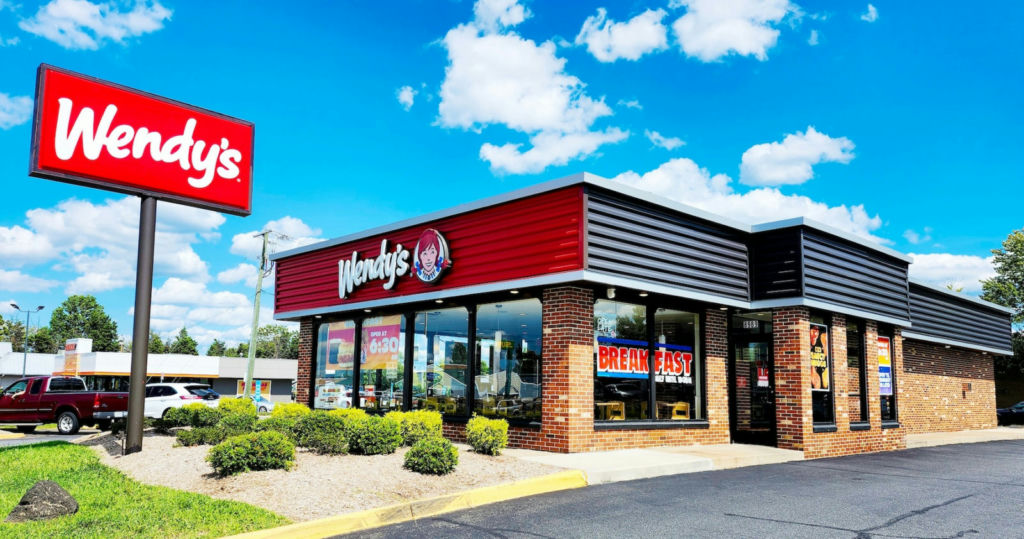
Wendy's is buying up restaurants as part of its turnaround plan. | Photo: Shutterstock
For years, franchised restaurant chains couldn’t shed company-owned restaurants fast enough.
Driven by an investment community, both public and private, that strongly prefers the asset-light model and its predictable cashflows and low capital costs, businesses have just kept shedding restaurants.
Yum Brands, rather than buy restaurants in a bid to fix Pizza Hut, got rid of the brand instead. McDonald’s is selling more company restaurants to franchisees. The onetime 20% company ownership stalwart will soon get that percentage down to 2%.
Burger King seemed to be headed into major company-run restaurant status after buying the 1,000-unit Carrols Restaurant Group, but it is selling those restaurants quickly to get back to the investor Shangri-la that is the asset-light business model.
Not so Wendy’s. The company is the stalking horse bidder for 163 locations owned by the bankrupt operator Meritage Restaurant Group. Assuming it buys the restaurants, which, let’s face it, is probably likely, then it will have made a massive franchisee acquisition.
“This will be, we think, one of the largest, if not the largest acquisition of franchise to company restaurants in the company’s history, certainly a long, long time,” CEO Bob Wright told analysts earlier this month. “So, we take that decision very seriously.”
“We think this is a very good decision,” he added. “It’s also the right brand decision.”
Assuming it buys the restaurants, Wendy’s will operate more locations than it has in a decade, both as a percentage of locations and in total.
Like many fast-food franchises, Wendy’s historically operated a lot of its own units. It operated nearly a quarter of its restaurants before the Great Recession. It then engineered a massive refranchising initiative from 2013 through 2016. Between 2012 and 2016 its ownership went from nearly 1,300 locations to 330, or less than 6% of its domestic locations.
The Meritage deal will give the company 585 restaurants, or just more than 10% of its 5,700 domestic units. And Wendy’s likely will buy more in the coming years as part of its revitalization plan.
There is at least some evidence that the industry is inching in this same direction, despite the experience of McDonald’s and Yum Brands, among others. For years, restaurants shed company locations.
In 2006, for instance, 74% of the locations in the Technomic Top 500 were franchised. By 2017, that number grew to 77.3%. But that number has slowly declined every year since. Last year, 75.5% of the 239,000 locations on the Top 500 were owned by franchisees.
Ask executives who’ve worked for both company and franchised operations and many will privately tell you they prefer the former. Franchised operations are particularly difficult to turn around. When a company executive wants to fix operations or upgrade a store or add more staff in a bid to improve customer relations, they can simply get it done.
If it’s a franchised business, they have to convince franchisees to do these things. When those franchisees are struggling financially, those conversations can be particularly difficult. Operators worried about closing their restaurants are a lot less likely to agree on new investments than those who are less worried about closing their restaurants.
In that sense, McDonald’s shifting more stores to franchisees while it tries to implement changes to improve results is counterintuitive. Brands are better off going in the opposite direction when sales go awry.
To be sure, there are some real drawbacks. Companies buying out franchisees when they’re struggling can create some tension among operators who believe that the brand is taking advantage of low prices for their own ends.
Wendy’s is struggling with low valuations and low profits. Franchisees selling stores at the prices operators can fetch today are definitely selling low. Franchisors also can command a market enough to force such sales.
Yet franchisees are struggling to find financing. The weakness at Wendy’s, coupled with the sense that the market for fast-food chains isn’t getting better, means that it may be the only buyer in many cases. And by acquiring the restaurants, Wendy’s can prove that investments make money.
But such deals can help with turnarounds. Chili’s acquired many of its restaurants before the pandemic, which now looks prescient given the company’s remarkable comeback. Many executives at the company credit corporate ownership with helping smooth its turnaround.
And companies can definitely make money when they buy up restaurants and turn them. Wright seems less intent on flipping the restaurants that Wendy’s buys, but it isn’t out of the question.
“When you look at the multiple of our equity and the trading multiples of franchise transactions, you’ve got accretion there,” he said. “You’ve got a business that is in turnaround, so we drive and enjoy the benefit of the turnaround in those markets.
“If we do reposition them back into the franchise system at some point in the future, we anticipate there would be a gain on that sale, which is another point of financial leverage for us.”
Restaurant Business Editor-in-Chief Jonathan Maze is a longtime industry journalist who writes about restaurant finance, mergers and acquisitions and the economy, with a particular focus on quick-service restaurants.
View All Articles by This Author
In this story
This story was originally published by Jonathan Maze in Restaurant Business on November 17, 2026. Burnaze summarizes and links to the original reporting.
Read the full story at Restaurant BusinessLiked this? Get the week's franchise news, explained
- Sunday 8 AM ET weekly + a monthly deep dive
- Sections picked for the industries you follow
- Every claim linked to its source. Free.