TL;DR
Struggling chains like Wendy's are turning to delivery as a way to improve digital sales and generate revenue.
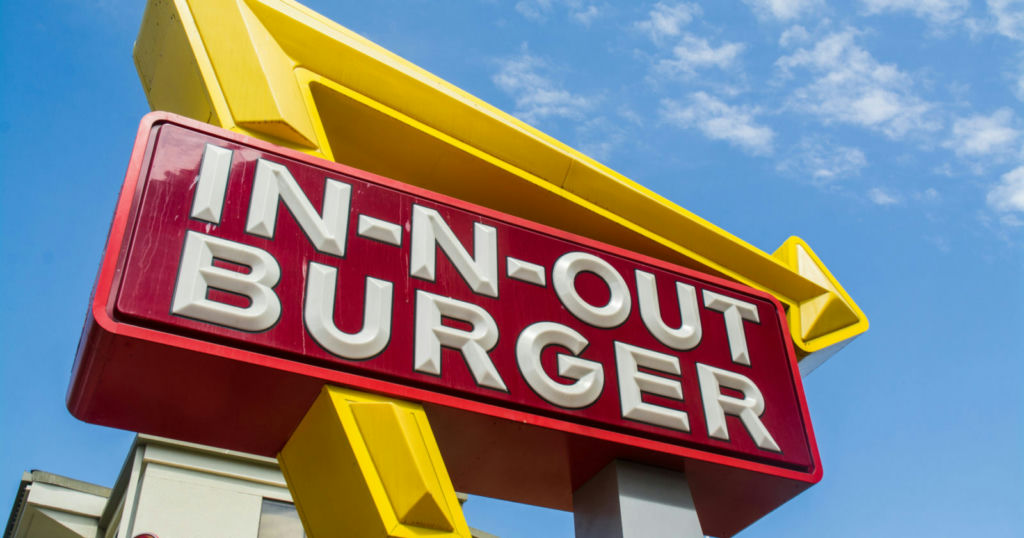
It's easy for In-N-Out to say no to delivery when its unit volumes are over $6 million. | Photo: Shutterstock
Wendy’s, the struggling fast-food chain, last week put forth its revitalization plan, which it calls Dave’s Way. One crucial pillar of that plan is to improve the company’s digital sales, a common strategy in the industry these days, particularly through third-party delivery.
The company has talked franchisees into boosting delivery and more than 90% of operators are using delivery promotions, nearly double the level of a few months ago. And the chain is improving its presence on the marketplaces.
To Bob Wright, the reason is simple: It generates sales. “That’s a lever that can make our digital game stronger,” he said in an interview.
They’re hardly the only restaurant chain looking to delivery as a potential vehicle to lift otherwise weak sales. Subway, the giant sandwich chain, is now requiring franchisees to participate in all available delivery marketplaces in their area and demanding they remain open.
Third-party delivery in its current form is about a decade old, and it has established itself as a marketplace consumers want. The simplicity of picking up the phone, choosing from a selection of restaurants, then having that food brought to you is alluring, even if it is expensive.
At a time when traffic is weak, it makes sense to solidify that line of business. Companies are doing everything else, after all, including discounts and record numbers of limited-time offers. Why not boost delivery?
Except some of the most successful brands don’t do that, and for good reason: They lose control of the customer relationship.
“In-N-Out doesn’t offer” third-party delivery, John Weiss, senior advisor at the investment banking firm Harrison Co., said at the Restaurant Finance and Development Conference this week. “Raising Cane’s has no formal arrangements with third-party delivery companies.
“Yes, delivery can produce some incremental sales. But some of those public companies that have sold their souls to third-party delivery companies are learning to regret it. Those third-party delivery guys really don’t care about your brand image.”
Of course, it’s easy for a brand like In-N-Out to say no to third-party delivery when it generates consistent sales growth and its restaurants average $6 million in unit volumes every year. Or Cane’s, which does $6.6 million selling chicken fingers. Restaurant companies like Wendy’s that are struggling with one-third of those volumes have less choice in the matter.
But then that’s the point. In-N-Out, as Weiss pointed out, is privately held, and can make decisions for the long term. In so doing, it opts not to compromise on its principles. It wants to sell high-quality food at a low price and in a hospitable environment. Third-party delivery may provide customers with something they want – food brought to them – but it certainly doesn’t improve a brand’s customer perception.
Brands that find themselves in the position that Wendy’s and Subway are in need to get the kind of immediate sales boost that delivery can provide. Yet in so doing, they are automatically ceding control of the customer relationship to the delivery companies. They may bring in sales, but those sales come at a cost. That cost is steeper than it seems, given that the current environment punishes companies that don’t do a good job in their stores.
And we haven’t even mentioned the impact to franchisees. The sales they’re bringing in are lower-profit sales at a time when margins are thinning. That a brand like Subway is pairing those low-profit sales with a demand for extended hours only makes matters worse.
The franchisors often need these sales, too, because the brands’ weak sales have cut into their royalty streams and other revenue. Many of these franchisors, including Subway and Wendy’s, have bondholders, after all.
The brands would be better off keeping the delivery dogs at bay while they work with franchisees to fix operations and food quality first, rather than further pressure margins with that delivery push to get those immediate sales. Improve the way restaurants are operated, give consumers something they want, and the delivery sales will come, whether the brands want them or not.
Restaurant Business Editor-in-Chief Jonathan Maze is a longtime industry journalist who writes about restaurant finance, mergers and acquisitions and the economy, with a particular focus on quick-service restaurants.
View All Articles by This Author
In this story
This story was originally published by Jonathan Maze in Restaurant Business on November 13, 2026. Burnaze summarizes and links to the original reporting.
Read the full story at Restaurant BusinessLiked this? Get the week's franchise news, explained
- Sunday 8 AM ET weekly + a monthly deep dive
- Sections picked for the industries you follow
- Every claim linked to its source. Free.