TL;DR
Bee Organized co-founder Kristen Christian shares a step-by-step playbook for emerging franchisors, emphasizing the importance of starting with a real problem, building a strong brand, and growing on purpose. Christian's playbook is based on her own experience growing Bee Organized from a single location in Kansas City to 46 markets nationwide.
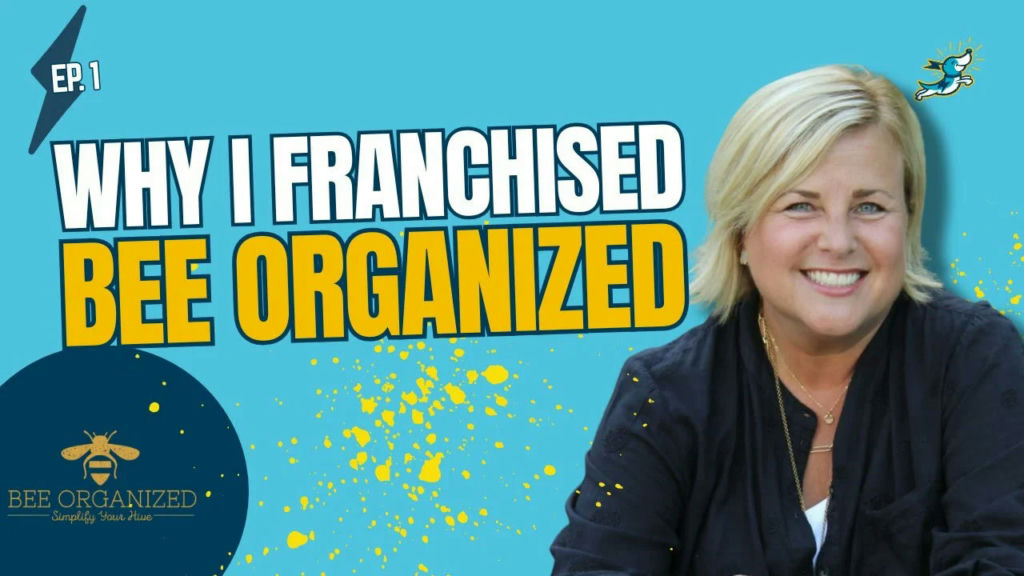
When should you franchise — and how do you do it without losing your soul (or your savings)? Bee Organized co-founder and franchisor Kristen Christian lays out a refreshingly candid blueprint: start with a real problem you’ve lived, build a brand that’s bigger than you and grow on purpose — even when it’s uncomfortable.
“I am a hot mess. I am the most unorganized professional organizer or owner of a nationwide organizing business,” Christian told GoodSpark Franchise Growth Accelerator CEO Charles Internicola on a recent “Building a Franchise Brand” podcast. “I needed to get control of my environment because I knew how much that was affecting my head, my heart, my ability to be present. We started in 2015 in Kansas City. We started franchising in 2017 and now we are in 46 markets nationwide. We’ve built our business on three primary beliefs: compassion, confidentiality, and judgment-free.”
Franchising playbook
Below is a step-by-step playbook for franchising, distilled from Christian’s story.
Christian didn’t start with a spreadsheet; she started with pain. That gave the brand its “why” and tone.
“There was such a need and demand and if we approached it with compassion and confidentiality and without judgment, we could really do this,” Christian said.
Use it: Write the sentence your ideal owner should be able to say out loud. If you can’t state the human pain you solve in one line, you’re not ready to franchise.
Kristen and her co-founder (and best friend) Lisa Foley brought opposite strengths: sales/marketing and ops/HR.
“I’m kind of learned in [organization] and she’s naturally that way,” Christian said. “We really come to the table with a strong skill set and different professional experiences.”
Use it: Map two columns — What I Do Naturally vs. What Drains Me. Your first leadership hires must live in column two.
They didn’t show up as “hobbyists.” They named it, branded it, ran focus groups and even accepted a surprise trademark gift from family — a signal to behave like a company, not a gig.
“We really came to the marketplace on a strong front,” Christian said. “We did not want to be seen as this being a hobby.”
Use it: Before you sell a franchise, finish a minimum viable brand system: name, voice, values, visual kit, services, pricing guardrails and a simple sales script.
The constraint wasn’t demand — it was founder time. The fix was a crew model (“worker bees”) so multiple jobs could run simultaneously.
“It’s really hard to build and scale a business when you’re in a basement or a pantry all day,” Christian said. “You build a hive of bees and send multiple bees out to multiple homes in a given day. That’s a scaled business.”
Use it: If the unit can’t run with you out of the field for two weeks, you haven’t proven the model yet.
Scaling the business
Signals: repeatable services, mobile/low-overhead unit economics, multi-segment revenue (homes, businesses, seniors downsizing), and processes that mirror known service-franchise playbooks.
“There was nobody franchising in the organizing industry at that time,” Christian said. “But when you look at other home services, it follows very much the same model [as] non-medical home healthcare.”
Use it: Show how your model mirrors a successful franchise category’s unit structure (staffing rhythm, job flow, KPIs).
The leap felt daunting — which is normal. “I’m glad I didn’t know what I didn’t know,” Christian said. “It’s the hardest thing I’ve ever done. You can’t ‘kind of’ franchise.”
Use it: Create a 12-month “franchise readiness” roadmap with four sprints: legal/readiness, ops manual and training, development process, and pilot-owner support rhythm. Commit fully.
They built their “scaffolding” themselves, then paused growth to shore it up.
“We didn’t have deep pockets,” Christian said. “We authentically built the scaffolding of our franchise system. We sold one in ’17, two in ’18 then paused 2019 [to] get our foundation in place.”
Use it: Spend early dollars on systems and people who “teach you how to fish.” Consultants are great teachers — not replacements for founder judgment.
They launched, learned, paused and came back stronger — even through COVID headwinds.
“We actually sold Miami in the middle of the shutdown,” Christian said. “We were essential because we were helping people move. We came out of that.”
Use it: After your first 3 to 5 owners, pause. Audit training, marketing handoff, job margins and support load. Fix gaps before awarding the next cohort.
Launch and growth
Christian tried a third-party dev arrangement, then took it back.
“People didn’t want to talk to a random guy,” Christian said. “I took over the [franchise development] and I’m the one who walks people through. Nobody cares like we do.”
Use it: Until you have a clear, teachable development narrative and owner proof, keep founders on candidate calls. Your conviction converts.
From “Main Hive” to the race-car analogy, the brand’s language reinforces identity and accountability.
“We hand over the keys to a tricked-out race car,” Christian said. “We’ll train you, but you’ve got to put the gas in and we’re your pit crew. Our job is to protect the brand and protect the franchises.”
Use it: Name your support model, define your non-negotiables and repeat them everywhere: training, calls, field visits, conference.
Systems evolve; that’s the point. “Living things change and they have to,” Christian said. “The answer to success and growth in franchising is growing that brand.”
Use it: Publish a transparent change log. Explain why changes happen, how they improve unit economics and how you’ll support the rollout.
For Christian, this is purpose and profit. “They want to be a part of something bigger,” she said. “It’s a mission-driven business that can be really profitable, too. Nothing beats your kids and their pride. They’ve sacrificed a lot.”
Use it: Tell real stories of owner wins, client transformations and team growth. Purpose is a retention strategy.
Define the pain you solve (one sentence).
Document a day-in-the-life playbook that works when you’re not there.
Codify values + language; embed them in training.
Sell 3 to 5 franchises → pause → fix → proceed.
Keep founders on development calls until your story and owner proof carry themselves.
Publish a change log; launch changes with training and guardrails.
Measure success at the unit level first, always.
In this story
This story was originally published in 1851 Franchise on October 24, 2025. Burnaze summarizes and links to the original reporting.
Read the full story at 1851 FranchiseLiked this? Get the week's franchise news, explained
- Sunday 8 AM ET weekly + a monthly deep dive
- Sections picked for the industries you follow
- Every claim linked to its source. Free.