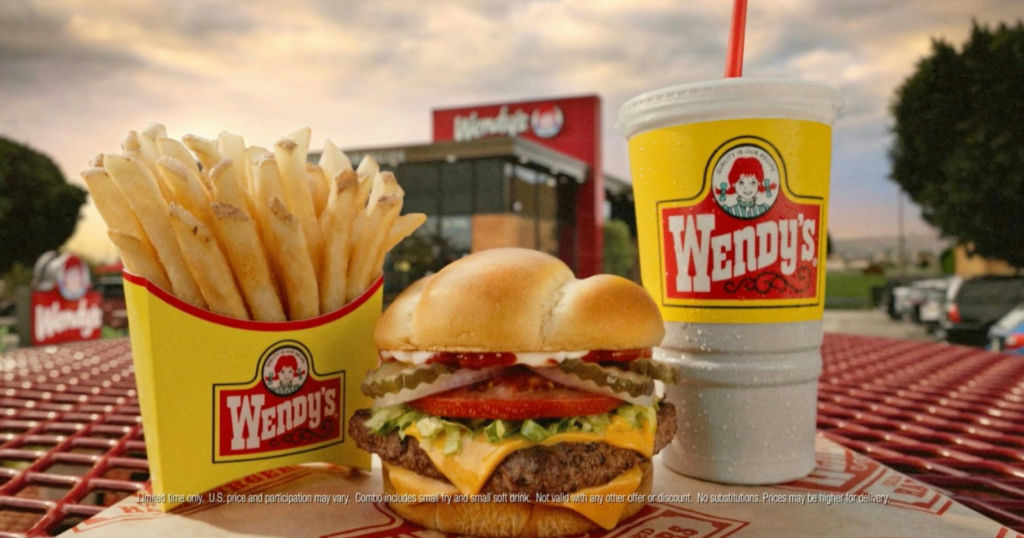
Wendy’s is emphasizing its made-to-order burgers with fresh-never-frozen beef | Photo courtesy of Wendy's
Several major chains have even shaken up their marketing leadership this year in a bid to turn things around, as the function tends to be considered a direct lever for traffic and sales when traffic and sales have been (to put it politely) soft.
As third-quarter earnings calls come to an end, we took a look at how some of the biggest restaurant chains are approaching marketing in a tough environment.
Chipotle
Chipotle’s longtime marketing leader Chris Brandt left the company in January following the chain’s first full-year of same-store sales declines in over 20 years. The company brought on Fernando Machado — of Moldy Whopper fame — to oversee global marketing and customer engagement.
According to its Q3 earnings call, Chipotle is zooming in on “connecting with consumers in new and culturally relevant ways,” including through a new 100 Creators campaign in which the chain hands cameras over to creators to capture their experience prepping, seasoning, and grilling at restaurants.
The chain is also leaning into buy-one-get-one activations to keep the brand top of mind. These promotions, executives said, have driven new and lapsed guests, as well as more frequency. Marketing costs were in the mid-3% range during Q3, which is an increase of about 40 basis points from last year.
“We evaluate marketing and promotional investments through a return-focused lens,” CEO Scott Boatwright said.
Wingstop
The chicken chain has had a few tough quarters and is adjusting its marketing strategy accordingly, with an objective of driving consideration versus its previous goal of building brand awareness, which CEO Michael Skipworth said wasn’t connecting with guests. Wingstop is now leveraging its Club Wingstop loyalty program to “deepen guest relationships.”
It’s also building reach by ramping up video investments in more premium placements, like during NFL games, and pushing weekly 15-second spots via social media.
Cheesecake Factory
The Cheesecake Factory had a quarter to write home about, with same-store sales up 15.2% driven primarily by 9.5% traffic growth. Much of that momentum came from broadening its marketing efforts to drive awareness and engagement across digital and social channels. This strategy has particularly appealed to younger guests, reinforcing the “enduring relevance of the brand,” executives said.
Cheesecake also launched a rewards program in the second quarter that has generated strong engagement so far and has helped the company create more personalized offers. And, the chain will continue to “leverage the visual appeal” of its menu to increase engagement on social media, which has helped bring new customers into its restaurants, especially following a viral TikTok showcasing its signature Cajun Salmon.
President David Gordon said 12 months ago, the brand was “a little gun-shy” to engage on social and “today we’re talking about the brand and sharing what we’re doing. That’s resonated really well.”
Jersey Mike’s
Jersey Mike’s is new to the public market, and we now know what the company’s marketing priorities are and they’re quite simple — attract a younger and more diverse customer base. To do this, the company has increased its investment in digital marketing from about 1% to about 20% of its marketing budget.
CEO Charlie Morrison said, so far, the company is seeing encouraging results, with purchase consideration up among younger consumers, as well as women and Hispanic consumers.
“We are in the very early stages of optimizing our mix within channels and speaking to and acquiring a broader mix of consumers,” he said, adding that this investment shift includes a move from only being on TV and into social media, influencers, and other digital marketing channels.
Chili’s
Much of Chili’s success throughout the past three years has come from its compelling marketing messaging, positioning its strong value proposition versus its fast-food peers. That will continue.
The company is also accelerating its celebrity partnerships, including recent campaigns with Snooki and Lizzo. This is part of the chain’s “always on” strategy led by the food and complemented with new news to build relevancy, according to CEO Kevin Hochman. Generating high social media impressions has traditionally been a QSR strength, but Chili’s is pushing to bring that to casual dining as well because of its service model.
“It’s not just about going viral. … When you have a good product and it shows up in social media and then people go to replicate it, if you have that (good operational) experience, that's what grows your business,” Hochman said.
Starbucks
Starbucks has poured a lot of work into its marketing since Brian Niccol implemented the Back To Starbucks plan in late 2024. During the company’s recent earnings call, he said brand affinity is now near record levels as “menu innovation, marketing and merchandise continue to create moments that drive culture and bring people into our coffeehouses.”
Those moments include the August Unicorn Frappuccino relaunch and a global Peanuts collaboration. We can expect merchandise to be a growing part of Starbucks’ business, Niccol said.
McDonald’s
McDonald’s, facing two straight quarters of lackluster sales, has shifted its marketing support toward “rest-of-day entry-level meal deals and Extra Value Meals.” This shift comes as CEO Chris Kempczinski said, “the marketing has not been where we would set the standard at for McDonald’s.” The company is now thinking about changing its go-to-market approach, changing its demand generation approach, and emphasizing its global brand equity.
“We haven't done as much as we could to really channel it into driving brand love for us, and so that is going to be something you're going to see us doing increasingly over the next several years,” Kempczinski said.
Papa Johns
Following several consecutive negative quarters, Papa Johns is executing against a “new marketing framework” that includes a shift back to local co-ops, which the company moved away from in early 2024. To support this shift, Papa Johns is increasing local co-op spending to 2% from 1%, while sizing down its national spend by a percentage point.
CEO Todd Penegor said the company is seeing about a 200-basis-point-delta in favor of the markets that have the co-ops back in place.
“We now have an opportunity to get ahead of the 2027 national calendar and partner with the co-ops that have been established to make sure the message at the local level complements the national calendar, which is an opportunity to be even more efficient and effective with the spend,” he said.
First Watch
First Watch is prioritizing “compelling stories” across its content and social media platforms, including seasonal launches. The company is also testing TikTok Go, aimed at bolstering local discovery.
“Considering that TikTok attracts 200 million active monthly users, we're proud to have been invited as one of the restaurants in their first group for their test. This new relationship will introduce First Watch and our differentiated menu to a highly engaged audience,” said CEO Chris Tomasso. “It complements the investments we have already made across paid social, online video, connected television and influencer marketing while creating an additional opportunity to turn awareness and engagement into traffic and transactions.”
Sweetgreen
Sweetgreen is developing what CEO Jonathan Neman calls a “stronger marketing ecosystem” to drive frequency and reignite lapsed users. That includes more investments in storytelling, such as the 30 Days of Sweetgreen Challenge, inspired by a customer who ate at the chain twice a day for nearly a month.
The company’s 2027 marketing calendar, Neman added, is its strongest yet with culinary launches, partnerships, and brand moments tied into six “experience windows.” He said Sweetgreen will take an “always-on approach” to keep it top of mind and make it easier for customers to discover and order food. Last week, Sweetgreen launched agentic ordering in ChatGPT and Claude, for example.
“We've shifted our media mix to be more top of funnel and invest a little bit more on the brand side,” he said. “You'll see us do more things in real life, in events, in activations local marketing.”
Wendy’s
In a bid to turn around a streak of negative quarters, Wendy’s brought on former McDonald’s marketing chief Tariq Hassan to create “distinct branding to drive demand” through the right media, messaging, and creative.
“Wendy's has enduring brand equity, and our goal is to translate it into more frequent visits. We're strengthening the marketing team, creating more leadership roles and putting data to better use to drive performance,” CEO Bob Wright said.
Out of the gate, Wendy’s is emphasizing its made-to-order burgers with fresh-never frozen beef and is promoting its $7.99 Dave’s Single Combo. The longer-range marketing calendar will “help us tell a more consistent brand story,” Wright said.
BJ’s
BJ’s Restaurants has been a dark horse this year with nine consecutive quarters of sales and traffic growth. Much of its momentum has come from a sharpened focus on marketing, with spending increasing 13% year-over-year in its most recent quarter. Executives said the marketing team has driven “significant traffic growth with improved efficiency.” BJ’s signature Pizookies and new products have especially resonated in the “social word-of-mouth influencer space.”
Noodles & Company
Noodles & Company has also had a year worth writing home about as it executes against a turnaround plan put into place last year. Part of that plan includes taking a more integrated approach across national advertising, digital and social media, influencer partnerships and local restaurant marketing to “turn awareness into visits,” according to CEO Joe Christina.
Noodles is now turning its marketing attention to its permanent ramen launch: “Our objective is to ensure that our marketing strategy supports both the immediate success of our menu innovation and the long-term strength of the brand,” he said.
Contact Alicia Kelso at Alicia. Kelso@informa.com
Follow her on TikTok: @aliciakelso
This story was originally published by Alicia Kelso in Restaurant Business on November 24, 2026. Burnaze summarizes and links to the original reporting.
Read the full story at Restaurant BusinessLiked this? Get the week's franchise news, explained
- Sunday 8 AM ET weekly + a monthly deep dive
- Sections picked for the industries you follow
- Every claim linked to its source. Free.