TL;DR
Founder-led, regional restaurant brands, such as In-N-Out Burger, are thriving due to their focus on employee care and customer lifetime value.
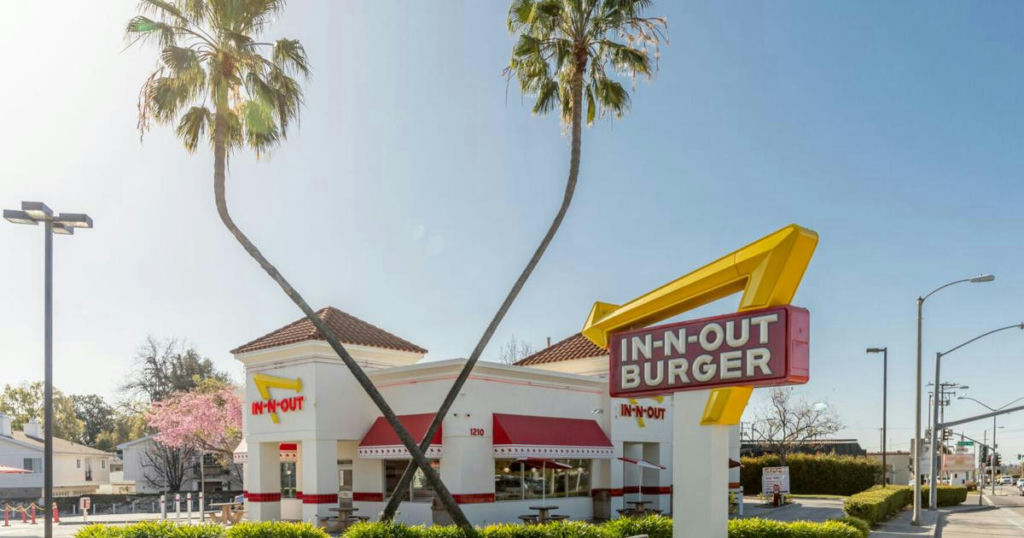
In-N-Out Burger, which doesn't franchise, prioritizes hospitality and considers smiles part of its employee's uniform. The brand's current president is the granddaughter of founders Harry and Esther Snyder. Jayme Burrows
With a cult following among West Coasters and an estimated $5.8 million average unit volume, In-N-Out Burger could teach something to the franchisor giants like McDonald’s or Wendy’s.
Founder-led, company-owned regional chains, like In-N-Out, are thriving because they prepare for the next generation—not the next quarter. That’s according to John Weiss of Harrison Co., who emphasized the importance of taking care of employees and focusing on the lifetime value of a customer.
“They understand the pyramid of success,” Weiss said about top-performing, primarily regional brands, which also includes Culver’s and Mediterranean bowl concept Cava. “They know that if they take care of their team members, those team members will execute well at the restaurant level. The customers will have a great experience. Sales margins and earnings will go up.
Lynsi Snyder is the president of In-N-Out Burger.
Weiss spoke on the performance of regional brands compared to the big guys during the Restaurant Finance & Development Conference today in Las Vegas.
Publicly traded, national companies like McDonald’s or Burger King can often miss the mark on the experience front, Weiss said.
“Many of the large, publicly owned companies have turned this pyramid upside down. They focus on cutting costs to improve margins,” he said. “They have high store-level turnover. Restaurant-level operations suffer. Customers have a bad experience, and guess what? The sales, margins and the earnings go down.”
Family- and founder-led companies often maintain CEOs and other executives for longer.
In-N-Out, which doesn’t franchise, has had the same leader since 2010. Lynsi Snyder is the granddaughter of In-N-Out’s founders, Harry and Esther Snyder, and she’s just the sixth president in the company’s nearly seven decades of operations.
Culver’s, founded in 1984, had the same CEO until 2015, when co-founder Craig Culver stepped down. (He’s still involved as the face of the brand.) Today, Julie Fussner leads the franchise and is the fifth-ever CEO and its first woman in charge. Culver’s is posting great AUVs: last year, restaurants did $4 million on average. Systemwide sales were up 14.2 percent year over year, to $4.2 billion in 2025, according to Franchise Times Top 400 data.
Related: Craig Culver Has a Fear of Failing. That’s Why Culver’s Franchises ‘The Right Way.’
Chick-fil-A, with about 3,300 locations, posted $24.8 billion in system sales last year, per Franchise Times’ estimate. That equates to a $7.5 million AUV, which is extremely rare for a quick-service restaurant chain. It’s still run by the founding family, the Cathys, after 80 years.
Chick-fil-A, with about 3,300 locations, posted $24.8 billion in system sales last year.
Wendy’s meanwhile, reported same-store sales are down 5.7 percent last quarter, and system sales in 2025 were down 3.6 percent, despite an increased unit count.
McDonald’s sales were down slightly last quarter. The chain reported a 0.2 percent decline for same-store sales compared to the third quarter last year. In 2025, worldwide sales were up 6.7 percent, to $139.4 billion.
Related: Franchise Founders Learn Lessons the Hard Way
These astronomical AUVs can be attributed primarily to hospitality and human interaction, Weiss said.
“At In-N-Out, they say a smile is part of the uniform. At McDonald’s, it seems as if they’ve almost abandoned cashiers. You’re forced to use a kiosk. Those kiosks don’t smile,” he said.
Culver’s CEO Julie Fussner is the fifth CEO in the brand's decades-long history.
Chick-fil-A and In-N-Out will send employees outside when drive-thru lines are backed up to take orders and provide that signature hospitality while customers wait. It’s rare, or nonexistent, to see that at McDonald’s or Wendy’s, Weiss said.
The lack of friction in the ordering process at Culver’s or Raising Cane’s is a positive experience for customers. At Cava, Sweetgreen or Chipotle, the customizability creates bottlenecks in the ordering line and, Weiss said, can lead to confusion at the register.
“Customization has become extortion,” Weiss said.
He continued, “There’s just way too much friction. Why doesn’t the salmon qualify for the half-portion option at Cava? Why do I have to pay an extra $2.95 for guacamole at Chipotle? … Why do I need a calculator to know how much my lunch is going to cost?”
The Nickel and diming of consumers is another cause for friction and frustration. Sauce packets might cost an extra quarter or two if you want some extra-saucy nuggets. Weiss called the practice “insulting” to consumers.
“Those little signs telling you how many sauce packets you can get before you pay another 35 cents are an example of what happens when these large chains ask a fresh graduate from an MBA [program] who’s never worked in a restaurant to try to save them a few pennies.”
The Restaurant Finance & Development Conference, put on by Franchise Times’ sibling publication Restaurant Finance Monitor, runs November 9-11 at the Wynn hotel in Las Vegas.
In this story
This story was originally published by Emilee Wentland in Franchise Times on November 10, 2026. Burnaze summarizes and links to the original reporting.
Read the full story at Franchise TimesLiked this? Get the week's franchise news, explained
- Sunday 8 AM ET weekly + a monthly deep dive
- Sections picked for the industries you follow
- Every claim linked to its source. Free.