TL;DR
Penn Station East Coast Subs' sales continue to rise despite the industry decline, with a +1.39% comparable sales growth for the year. The brand prioritizes reach and marketing efficiency, and has made changes to its advertising strategy to focus on social media and content marketing.
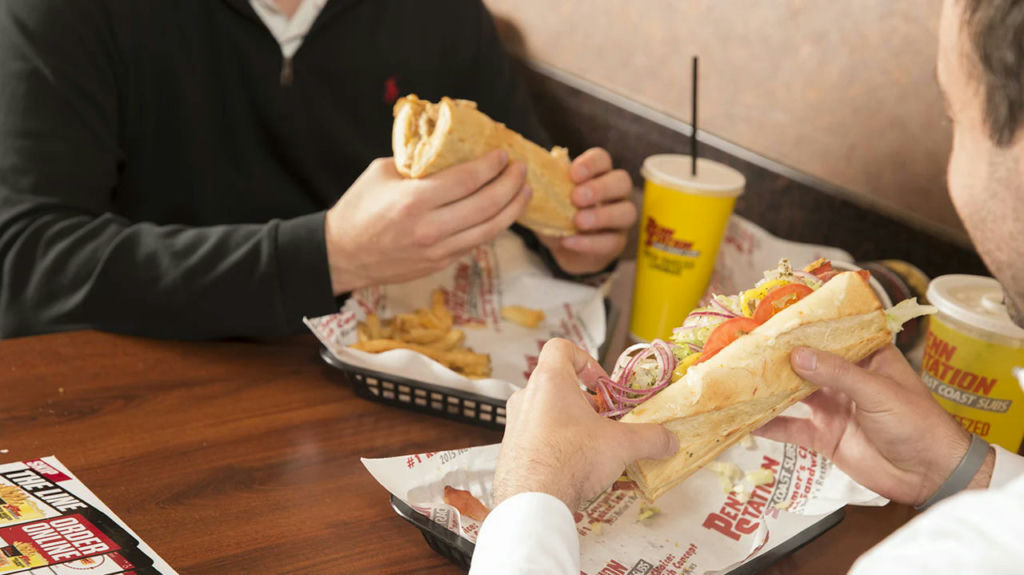
Since 1985, hot grilled sub brand Penn Station East Coast Subs has made a name for itself thanks to its commitment to using high-quality ingredients and fresh-cut fries and fresh-baked bread, not to mention keeping beloved items such as freshly-squeezed lemonade on its menu. Another way Penn Station stands out in the industry? By prioritizing reach for a nimble approach to marketing strategy and the required marketing spend for franchisees.
**When it comes to advertising, for example, Penn Station takes deliberate, careful steps to ensure that advertising money is being spent wisely. To that end, Penn Station took a good, hard look at its social media and advertising strategy and decided to make some changes to keep everything streamlined. The brand decided to forego radio, television and billboard advertisements, given their comparatively smaller reach when stacked up against new media tactics like social media and content marketing.
The brand also enjoyed a major financial win when it opted to bring certain workflows related to customer messaging back in-house.
“We’ve stayed true to ourselves regardless of opinions and followed the data,” Penn Station Director of Development and Franchising Greg Goddard said. “A lot of franchisees like billboards, for example, as they find those more tangible, but we know the most consumer impact is coming through our social media channels. To that end, we’ve gone hyper-efficient on social media and kept the focus on the brand. Our Facebook page has always been clean and filled with native content, but our continued focus on paid social media strategy is paying dividends.”
Sales growth trends
The brand’s efforts are paying off, as Penn Station’s sales continue to rise at the same time as other big names in the sandwich category are witnessing sales dips.
Subway, for example, is projected to fall out of the top five in the annual Technomic Top 500 Chain Restaurant Report this year due to an expected system sales decline of 4%, according to a September 2019 Restaurant Business article. In a May 2019 report, Restaurant Business also pointed to a Potbelly stock plunge due to weak sales.
“Our company is doing well,” Goodard said. “Sales have been up since last June and we’ve done so without discounting our product nor rolling out delivery. We are keeping it simple. From a competitive standpoint, our comparable sales are +1.39% for the year. Knowing that a lot of our competition is doing heavy discounting and offering pricey and profitless third-party delivery options that can poorly impact the quality of the food when it reaches the customer makes us quite proud of that number.”
Franchisee support strategies
Goddard attributes much of Penn Station’s success to its commitment to supporting franchisees in seeing as quick of a return on investment as possible. The brand does what it can, for example, to keep food costs low.
“As a franchisor, we’re hyper-cognizant of supporting our operators’ profitability. We’ve never lost focus on maximizing the franchisee’s return on investment,” said Goddard. “If you start denigrating a bottom line because you’re employing shortsighted tactics to just drive revenue, then your ROI shrinks.”
Such tactics, like third-party delivery or discounts, do provide a short-term revenue bump by capturing consumer interest. But novelty wears out—especially novelty that comprises product quality. And that’s just not in Penn Station’s DNA.
“We feel very strongly about our products. For example, we won’t make fries until our customer is in the store,” said Goddard. “We have that mentality of having the best product and we’re not going to agree to deliver products if they’re not as good as what we have in the store.”
Delivery and brand integrity
Delivery may be a hot topic in the foodservice industry, but Penn Station wants to keep costs as low as possible for the franchise system—hence the brand’s decision to opt out of offering delivery options. Plus, brand integrity and quality assurance are everything to Penn Station.
“We’ve decided not to do delivery and it’s an advantage because we maintain ownership of our brand,” Goddard said. “Restaurants as a category have been down for the last year and third-party delivery is a $15 billion category, give or take, so it’s not incremental. We’ve been able to grow our sales organically and stay relevant with our consumer without heavy and sustained discounting and third-party delivery; something we’re very proud of.”
The brand’s decision to not jump on industry trends has not negatively affected its relationship with the franchise system; in fact, Penn Station has had franchisees in the system for almost 30 years. In 2018, the average net sales for all locations operating were $641,474. The brand will see about 80% growth this year from its existing partners.
“A lot of brands lose focus and get lost in meaningless metrics—our KPIs are sales, pretty simple,” Goddard said. “We don’t have a $100 million budget. Ours is just $4 million, and so we have to ensure our marketing strategy maximizes every dollar.”
By building and nurturing an enthusiastic franchise system and being careful about how to spend marketing dollars, Penn Station is clearly focused on the long game and positioning itself—and its hard-working owner-operators—for future success.
In this story
This story was originally published in 1851 Franchise on October 11, 2019. Burnaze summarizes and links to the original reporting.
Read the full story at 1851 FranchiseLiked this? Get the week's franchise news, explained
- Sunday 8 AM ET weekly + a monthly deep dive
- Sections picked for the industries you follow
- Every claim linked to its source. Free.