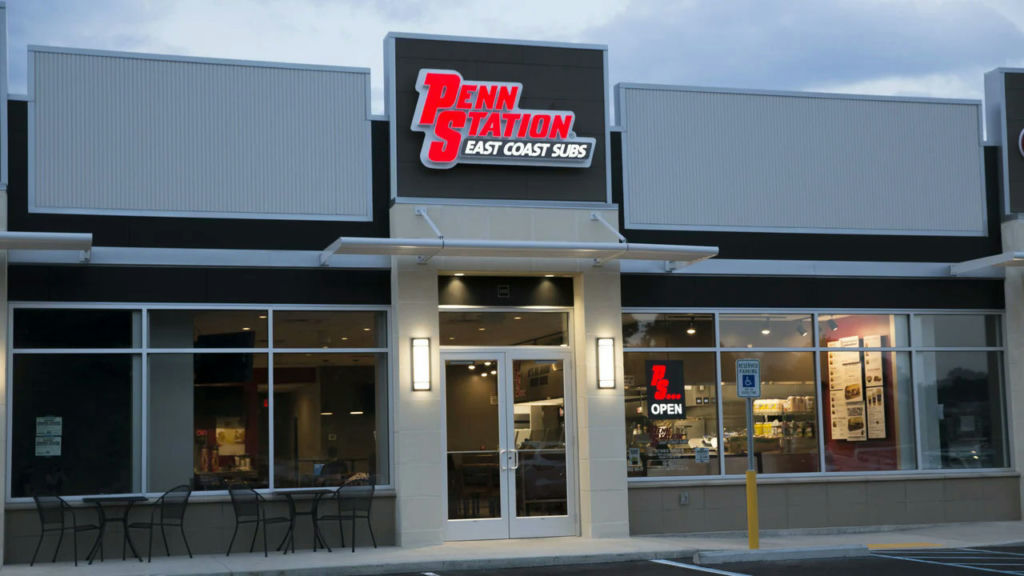
TL;DR
Penn Station focused on finding the right franchisees in 2017, streamlining its operational system, and growing to over 300 locations across 15 states. The brand has taken a slow, calculated approach to developing the brand, with a focus on attracting qualified and like-minded franchisees.
Since the first Penn Station restaurant opened in Cincinnati, Ohio over 30 years ago, the brand has continually worked to streamline its operational system, making their restaurants less complicated. For owners who intimately follow this streamlined system, this should provide greater opportunities to operate profitably and provide a consistent and satisfying experience for guests.
This strategy has helped the franchise grow to more than 300 locations and become a favorite for diners in 15 states across the U.S. However, Penn Station’s leadership is not content to grow the brand for growth’s sake alone, and in 2017 the development team expanded their efforts to attract the most qualified and like-minded franchisees to represent the brand.
- To achieve that goal, Penn Station utilized the skills and experience of long-standing operators, and Goddard believes that thorough review helped newer operators in the process.
Calculated growth approach
When it comes to growth, Penn Station has taken a slow, calculated approach to developing the brand. “We deliberately expand our system at a rate below our capacity for growth,” said Craig Dunaway, Penn Station’s minority owner and president.
Historically, Penn Station’s careful development strategy has been applied most directly in their location selection and franchisee selection processes. “We try to grow in concentric circles from our existing territories,” Dunaway said.
Attracting new franchisees
Last year, Penn Station made a concerted push to attract more of those franchisees who share their values and align with their model. Goddard said that push was defined largely by an effort to tell their story to investors.
- “We realized that we were underutilizing our best marketing tool, which is our operational system,” Goddard said. “Our operations are designed around unit-level economics. The same can’t be said for a lot of other franchise restaurants. Our existing franchisees know that, and they’ve been able to grow rapidly, but we realized we weren’t fully demonstrating that advantage to new candidates who would fit well in our system. We spent much of 2017 packaging the benefits of our system into a comprehensible narrative to show prospective franchisees.”
In addition to refocusing their message to franchisee prospects, in 2017 Penn Station rolled out an enhanced variable royalty program to add incentive to targeted candidates.
Royalties for Penn Station owners in their first five years with the brand new range from zero to eight percent, depending on unit volume. That means that newer franchisees with lower-volume restaurants may pay no royalties for the first five years. After five years, the scale adjusts to two to eight percent.
Furthermore, if a franchisee signs a lease in an underdeveloped market in 2018, that franchisee will receive a zero percent royalty abatement for the first 12 months the store is opened.
Goddard said the variable royalty program was developed as a dog-whistle to attract franchisee prospects with restaurant business acumen to see how the incentive played into the brand’s larger focus on unit-level economics.
- “We didn’t want to institute a royalty program that didn’t complement our model, and we didn’t want to attract candidates who are chasing a big incentive but aren’t interested in multi-unit ownership,” Goddard said. “The variable royalty program fits perfectly with our philosophy of unit level economics driving development.”
Franchise qualification process
According to Goddard, Penn Station’s development team is adamant about strengthening their franchise qualification process to assure they are choosing candidates who can learn their operational model quickly and apply them effectively.
Penn Station would rather teach experienced restaurant owners their model than teach someone with no experience how to operate a restaurant. Small business experience, intimate Profit and Loss understanding, and supervising an array of employees at different career stages are some of the key factors the development team assesses.
“The restaurant industry is very hands-on, and franchisees who take a passive approach, who rely on us for all help and support, tend to struggle,” Goddard added.
Dunaway cautioned that just because a brand has a great model, has operational simplicity and the customers love the food, success must come from the hard work of the franchisees.
- “We give them the tools, but if a franchisee isn’t willing to work hard every day, market their restaurant and develop a strong leadership team, even the best operating system can’t overcome such complacency.”
Successful franchisee qualities
“When we look at the most successful franchisees within our system, there are a number of qualities they share,” Goddard said.
- “They are focused on every detail of their business. They see how our model has been designed to have a smaller footprint, smaller staff and simple operations, and they know how to take advantage of those things. Business experience can mean a lot of different things to a lot of different people, so that’s not our main concern. What we want instead are people who see the value of our model and are passionate about applying it.”
After a year in which much of the development team’s efforts were dedicated to attracting the strongest pool of franchisee prospects, Penn Station is in a position to grow rapidly in 2018.
- “All of this leads to a big 2018 for Penn Station,” Goddard said. “We will continue to take a measured approach to our growth, establishing new restaurants only where we are confident they can flourish, and now we’ll move forward with some of the brightest and hungriest entrepreneurs in franchising."
In this story
This story was originally published in 1851 Franchise on March 6, 2018. Burnaze summarizes and links to the original reporting.
Read the full story at 1851 FranchiseLiked this? Get the week's franchise news, explained
- Sunday 8 AM ET weekly + a monthly deep dive
- Sections picked for the industries you follow
- Every claim linked to its source. Free.