TL;DR
Sen. Elizabeth Warren has called out private equity-funded restaurant chains, such as Jersey Mike's and Subway, for allegedly declining in quality due to cost-cutting measures. Warren's video criticizing private equity has gained traction and has been used to revive the Stop Wall Street Looting Act, which aims to regulate private equity firms.
Left-leaning politicians are always going after the Wall Street billionaires and large corporations — but tech companies like Meta, OpenAI, and Google are usually the target. Restaurant chains have historically stayed off their radar, and when Congress does target the foodservice industry, it's usually over how specific companies treat their workers, like Sen. Bernie Sanders fighting alongside Starbucks baristas for a union contract.
Rarely do politicians call out restaurants by name for bad food quality.
But Sen. Elizabeth Warren (D-Mass.) got real traction — 100,000 combined likes on Instagram and Facebook — for a recent video titled "Why Food Chains Taste Worse and Cost More," which blames private equity for an alleged decline in quality at many of America's top restaurant chains.
“Jersey Mike’s. Subway. Panera. TGI Friday’s,” she begins the video. “If you’ve ever … taken your first bite and thought, ‘Wow, this just doesn’t taste the same anymore,’ you’re not alone.”
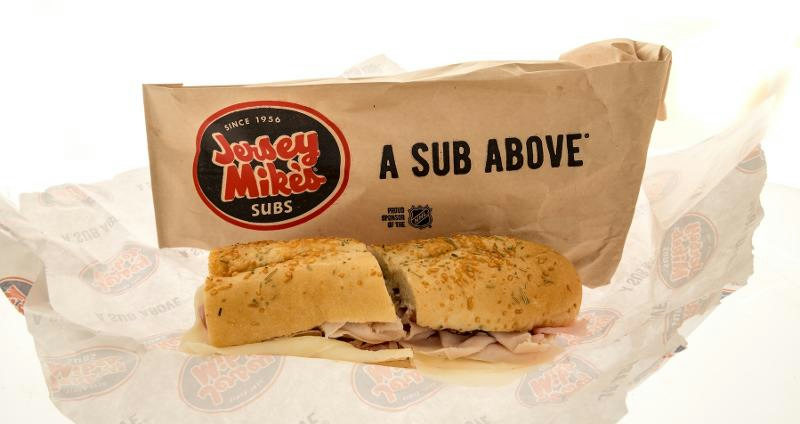
Warren specifically singles our Jersey Mike’s: After Blackstone bought the brand in 2024, she says, customers began complaining of smaller portions and lower-quality ingredients even as prices climbed. (Fact check: Jersey Mike's franchisees set their own prices, and CEO Charlie Morrison said in late 2025 that the company had made a "deliberate decision" to rely less on price increases.)
“That is the private equity playbook,” she continues. “They buy up a business, load it up with debt, cut costs, and give those profits to investors. When they cut costs, the quality of the product goes down.”
The video taps into a larger national conversation about private equity. Warren used it as a jumping-off point to revive the Stop Wall Street Looting Act: federal legislation first introduced in 2019 and reintroduced in September 2026 by Warren and a group of congressional allies. If passed, the bill would make private equity firms liable for the debt of the companies they acquire, close PE tax loopholes, and restrict firms' access to acquired companies' public funds, like 401(k)s, among other provisions.
The bill has drawn mixed reactions from the business community, but it's far from the only effort to rein in private equity's power. Other pieces of legislation target the housing and healthcare industries, seeking to narrow the scope of influence private equity has in those sectors too.
Within the restaurant industry, private equity's downsides are rarely discussed openly. When Peter Cancro sold Jersey Mike's to Blackstone, it was celebrated as a career-capping achievement — the culmination of decades spent perfecting and scaling the Jersey-style cold-cut sandwich.
It's not wise to generalize, but the pattern is hard to ignore. Red Lobster declared bankruptcy in part due to decisions made by former owner Golden Gate Capital. Friendly's filed twice under Sun Capital. Sprinkles Cupcakes closed for good 13 years after Candace Nelson sold the business to private equity.
Even companies that haven't gone bankrupt have undergone major cost-cutting under private equity. Under JAB Holding, for instance, Panera Bread stopped baking its bread from scratch in-house.
That’s the catch-22 of private equity: Restaurants need funding to survive and grow, but at what cost? Warren's video got our attention. If the Stop Wall Street Looting Act goes anywhere, it could offer the best of both worlds: reliable sources of funding that are regulated enough to keep sandwiches full-size, prices reasonable, and chains out of bankruptcy court.
In this story
This story was originally published in Restaurant Business on October 15, 2026. Burnaze summarizes and links to the original reporting.
Read the full story at Restaurant BusinessLiked this? Get the week's franchise news, explained
- Sunday 8 AM ET weekly + a monthly deep dive
- Sections picked for the industries you follow
- Every claim linked to its source. Free.