TL;DR
Carl's Jr. is transitioning its operational model to cook-to-order burgers across its system, marked by the launch of the Angus Maximus. The brand's parent company, CKE Restaurants, has been undergoing changes in leadership, with Joe Guith as CEO and Natalie Alter as brand president, who brought two-plus decades of burger experience to the title.
Naturally, this represents a consequential turn for a brand founded 85 years ago as a hot dog cart (a drive-in model opened four years later in Anaheim, California, with the “Jr.” version arriving in 1956 as a smaller, faster unit).
Burgers have been on the menu dating to 1946—the official start of the “Baby Boom” generation.
New cooking process
How Carl’s Jr. plans to ignite a “burger revolution” harkens back as well. It’s ditching pre-cooked patties, stepping away from hot-holding stations (Prince Castle), and cooking every burger to order.
When Alter was appointed brand president, she brought two-plus decades of burger experience to the title, having spent 13 years at Jack in Box, including two as CMO, before her tenure at Habit. She says Carl’s Jr’s began having conversations under new leadership. The brand’s parent company, CKE Restaurants (along with Hardee’s), tapped Joe Guith as CEO in March 2025, coming over from Church’s Texas Chicken and prior stops at GoTo Foods, McAlister’s Deli, Cinnabon, and Coca-Cola.
He was CKE’s third CEO since 2023, following Ned Lyerly and Max Wetzel, the latter of which now directs Tropical Smoothie Café.
As is often the case with any redirect of this scope, Alter says, Carl’s Jr. looked at how it could get back to the core of who it was as a brand. That’s felt different over the decades, she says, but one recurring thread was “being bold,” whether it’s flavor, branding, or design.
Secondly, though, how do you progress that into the present? “And think of how that boldness looks like?” she says.
Carl’s Jr. turned to social listening and survey tools to ask guests. The most-common response wasn’t a complex dilemma: customers wanted hot burgers, consistently. When done correctly, Carl’s Jr.’s char-broiled equity proved clear and its product held ground in the most-crowded QSR field there is. Carl’s Jr. ended 2025 with 992 stores and average-unit volumes of $1.422 million, good for 13th among the 14 burger brands in this year’s QSR 50 by systemwide sales ($1.425 billion).
Ahead of Carl’s Jr. was Shake Shack ($1.541 billion) and behind, Freddy’s ($1.04 billion).
So, what was the path to consistency? There weren’t going to be any shortcuts, Alter says. Carl’s Jr. needed to transform the entire near-1,000-unit system regarding how it delivered a hot patty. While the idea wasn’t convoluted (cook to order), it did present a material shift in production, execution, and mindset.
One note, Alter explains, is Carl’s Jr. was already here on other pieces. Stores chop lettuce and slice tomatoes and onions in-restaurant every day. “So, why not the patty?” Alter says. “And knowing the guests are looking for that. Knowing that yeah, the dollar now has to work so much harder because as I’m spending it, I want something that will satisfy the craving.”
Brand transformation
As Carl’s Jr. explored its brand premise, a mantra kept emerging: “Nobody craves a compromise.”
Although processes and equipment factored in, employees were the ones tasked with embracing that and making it happen, Alter says. Carl’s Jr. started by explaining internally why it was pushing toward cooked-to order. Pilots ran late last year and Carl’s Jr. polled team members on their personal takes. Would they want this if they walked in?
Then, Carl’s Jr.’s restaurant excellence team devised how back-of-house efforts would change in light of answering the question.
Alter says the staging process was the main impact addressed first. Next, it discussed how teams would communicate, look at screens, and view how to make products. Carl’s Jr. tried a small area test and included company operations and franchisees (the brand had 50 corporate units year-end 2025 and 942 franchised). District managers and operators got involved. “The magnitude of change needed to happen with them solving this with us together,” she says of franchisees.
Operators, like employees, believed the move made sense and was needed in today’s QSR climate. Again, Carl’s Jr. cooked this way in the past. Competing meant being the best version of itself, Alter says. And that was freshly made burgers.
Regarding early reactions, Carl’s Jr. conducted an area run where it didn’t mention the change or showcase it on point of purchase. It merely wanted to see if guests remarked. “And this is when the virtuous cycle started,” Alter says, “which is certainly something we hoped for but were happy when it actually happened.”
Guests wanted to know what changed. Employees tried to play coy, but Alter says the reaction was what Carl’s Jr. hoped for. Simply, people noticed.
The deployment since has happened over months, with tests expanding through geographies and the company implementing webinars and training materials. It took on a more direct manifestation Wednesday with the launch of Carl’s Jr.’s Angus Maximus, the first LTO and hero menu item launched to highlight the cooked-to-order approach.
Marketing strategy
It’s also going to be the focus of a new creative campaigning and start at $5.99 for participating spots. Carl’s Jr.
is incentivizing new rewards members with a free Angus Maximus with any purchase at sign-up. The limited-time deal, running through October 27, aims to introduce customers to the switch.
Alter recently returned from visiting stores in Palm Springs and kept hearing similar themes. Employees seemed motivated. Franchisees and store-level team members appreciated knowing they were doing something different and quality-centric.
Inside restaurants, Carl’s Jr. didn’t have to change much. Typical units have two grills—a flat top and char broiler. The former is used primarily for breakfast (eggs) and turns off after 10:30 a.m. It’s using the same char broiler to make cooked-to-order burgers.
In fact, this update produced a reverse equipment flip of sorts given Carl’s Jr., as shared, stepped away from a piece (the Prince Castle devices) instead of adding.
But this isn’t only a shift in style. Carl’s Jr. took the opportunity to improve other burger elements. It’s now buttering buns and seasoning patties with a proprietary blend to enhance the char-broiled flavor.
The company will start talking about being cooked-to-order through campaigns and with POP materials. Each location will feature messaging inside and at the drive-thru saying every burger is cooked fresh when you order it.
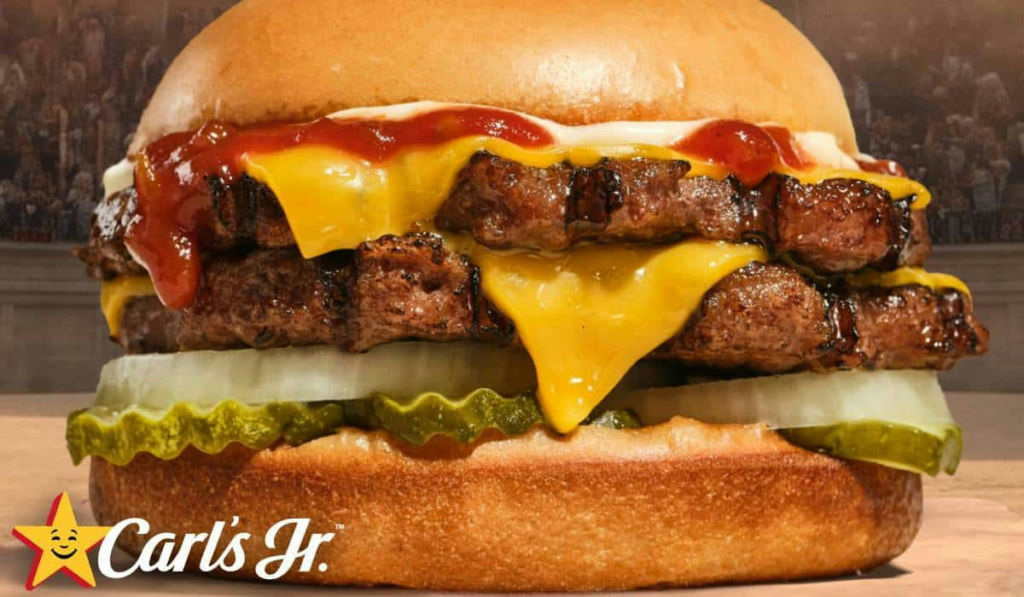
Additionally, Alter says, a “whole suite” of social content will launch where Carl’s Jr. showcases the preparation of a freshly cooked burger alongside that messaging. And Angus Maximus, which features two charbroiled, 100 percent Angus beef patties seasoned with Carl’s Jr.’s signature blend, melted American cheese, sliced onions, dill pickles, and special sauce, served on a buttery toasted brioche bun., will punctuate upgrades.
It’s a high-quality burger, Alter says, capable of telling multiple stories—both what makes this LTO unique and the larger cooked-to-order change.
The same way employees and franchisees bought in, Alter feels customers will trade-off the slightly longer wait needed to get better burgers. Employees will play a role in ensuring the difference is clear.
And importantly, Alter explains, this is just the foundation to introduce further innovation down the line, “where the flavors and maybe the buns, maybe the toppings, are going to show up as that next level of, yes, we are the burger authority.”
“… I see it as a great start to the rise of the brand again,” she says.
In this story
This story was originally published by Danny Klein in QSR Magazine on September 9, 2026. Burnaze summarizes and links to the original reporting.
Read the full story at QSR MagazineLiked this? Get the week's franchise news, explained
- Sunday 8 AM ET weekly + a monthly deep dive
- Sections picked for the industries you follow
- Every claim linked to its source. Free.