TL;DR
Brandon and Chantel Fiaschetti, experienced franchisees, founded Urban Bird Hot Chicken after operating multiple Wingstop locations. They have opened 24 Urban Bird restaurants across Texas and plan to open five more in the next few months.
Brandon Gawthorp and Chantel Fiaschetti are the founders of Urban Bird Hot Chicken, but before that, they were franchise operators for three different brands, including Wingstop, where they built their own network of 32 locations over 20 years.
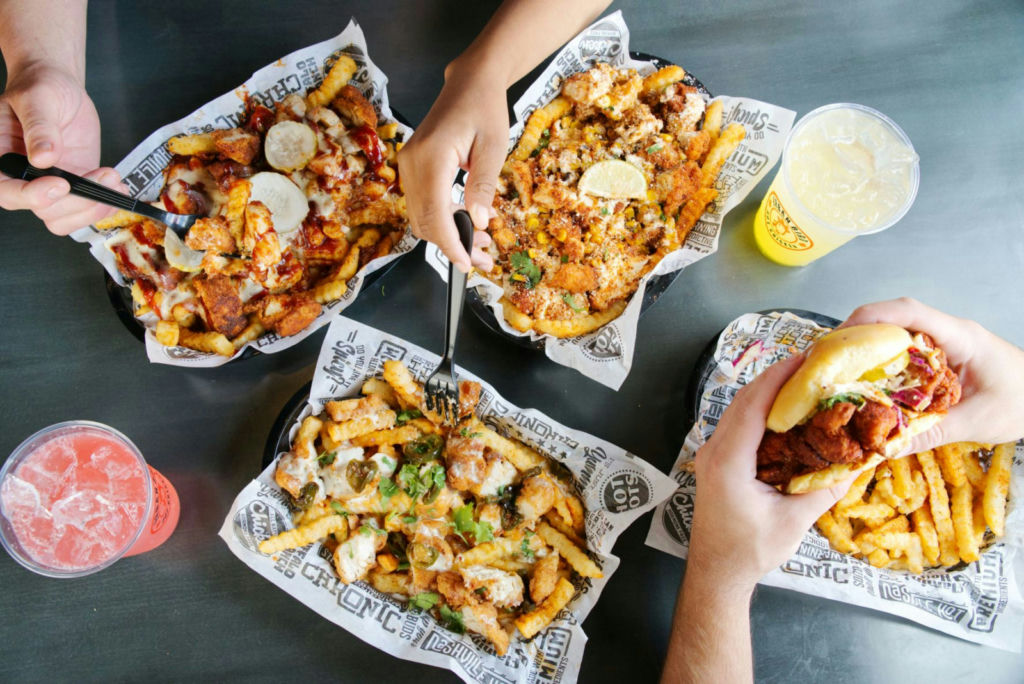
In 2023, Brandon and Chantel sold all their Wingstops and began focusing on their own concept, Urban Bird Hot Chicken. Over the last three years, they’ve opened 24 restaurants across Texas, which also serve as kitchens for their Chronic Fries and Bun Slut smashburger offerings.
Chantel Fiaschetti: My journey started in the restaurant business when I was 12 years old. My aunt and uncle allowed me to work in their pizza restaurant in the summers. They had a place called Pizza Patron, and that’s why I learned to love the restaurant business and the hospitality side and the food. I got to work there every single summer.
And then fast-forward, Brandon and I met in 1999, and then shortly after, we started waiting tables and going to school full time. We were at school one day, and there was a line out the door at this coffee place. And Brandon was saying, “Wow, what is that? That’s really cool.”
I could see that something kind of changed in him that day. He started inquiring about opening a Starbucks and realized quickly that you can’t franchise a Starbucks. From there, he started inquiring about different restaurant concepts. We ended up getting lots of denials, but one day, I was like, “Hey my uncle started this company called Wingstop.”
Brandon Gawthorp: At the time, Wingstop had about 20 locations. We opened our first one in 2002, and by 2023, we’d grown to 32 locations in three different states.
In 2017, we opened a MidiCi’s Pizza franchise, and then, they went out of business. We were sitting on the lease for that restaurant for over a year, and finally, we went to the landlord and asked if we could switch spaces and open up a hot chicken restaurant. Nobody knew what hot chicken was at the time; I had discovered it on vacation.
We had been paying rent on that closed pizza place in good faith, and because of that, the landlord took a chance on us. We opened the first Urban Bird in September of 2020, and it started doing well, so we expanded. We ultimately decided to sell Wingstop so we could focus on growing Urban Bird.
Since the end of 2023, we’ve been applying everything we know to build this brand. We’ve opened 23 locations with five more coming in the next few months.
BG: MidiCi is a great example of what we didn’t do. They had one location, which did well, and they sold 500 franchises before the second location – which was a franchise – had even opened. They hadn’t actually figured the concept out, and they certainly didn’t test the markets effectively.
To me, the idea of losing someone else’s money and going out of business is terrible. That’s why we’re very particular about markets and demographics. We’ve taken years to figure out the delivery system and rework everything to maintain profitability.
We’ve shut down a couple of stores in high-income areas – they just don’t work. We wanted to figure all that out before handing the brand off to somebody else and saying, “Good luck.”
We didn’t want to do that. We want this opportunity to be low-risk.
BG: From a menu perspective, I think we’re better than any other hot chicken place. A chicken tender basket and a chicken sandwich are pretty standard, but we added chicken and waffles. Then, I started to notice that easily 25% of the jumbo tenders we were getting from the supplier were small. That led to the creation of the Urban Fry, which started as a limited time special and grew into our number one seller.
During COVID, a lot of people were trying virtual restaurant concepts, just to survive. I started experimenting with some different flavor profiles, and that led to the creation of Chronic Fries. So every Urban Bird also has the Chronic Fries menu.
In late 2023, we also acquired the Bun Slut smashburger concept locally. Our College Station Urban Bird had lost half its sales during the summer when school as out, but when we added a Bun Slut virtual restaurant there, the location became profitable again.
We’ve developed that menu thoughtfully in a way where we feel like we have a really good offering now. We can configure our standard ingredients into 83 different concepts.
BG: We’ve been a part of three different franchise groups, so we’ve learned a lot. We were with Wingstop over 20 years, so we saw it start with very little systems and evolve over time. And we’ve been a part of two other pizza franchises that went out of business.
Even though MidiCi didn’t make it, we learned a lot of really good things from them. There were so many things in their system that they really nailed, like training. That was something Wingstop wasn’t as strong with at the time.
When we worked in those systems, we were also able to see the people that were a struggle for the franchisor to deal with. We were good franchisees, and we played by the rules and did what we needed to; but there were a lot that just didn’t, and seeing the headaches they created throughout the system was a real learning experience too. So, I learned that I want to avoid that as much as possible. You’ll never eliminate all the headaches, but we have a strong sense of what we want to filter out.
CF: We’ve seen people lose everything: their home, their college fund. We met a lot of excited people at those pizza brands and became close with them, thinking we were going to grow together, and it just didn’t work out. We were so lucky that we had Wingstop to carry us through those difficult times.
We want to provide economic growth for people. We do not want franchisees to fail. That’s why the fit is everything for us.
On the other hand, we’ve also seen people and wondered, “Oh my gosh, how did they get a franchise?” We’ve learned a lot from seeing other people try to take shortcuts – the frozen chicken, the dirty restaurants. We acquired several of our Wingstop stores from people who weren’t doing a very good job, and I actually think we learned the most from the folks who were showing us what not to do.
BG: Chantel always says it’s like a marriage. You’re going to be married to this person to the next seven or 15 years or whatever, and I think them passing the personality test is key. “Is this somebody we want to work with? Is this somebody we’re going to get along with?”
CF: When it comes to working with franchisees, we want to make sure we’re the right fit. That’s so critical for us. The franchisees need to have the same mindset that we do to protect the brand and culture. We’re creating an environment where people are happy and providing exceptional food and world-class service.
It’s a family. We need to be able to have a good relationship and get along and hold the same values. And then, when you protect the brand, I’m going to protect you. We don’t want to sell a franchise to someone who isn’t going to be a good fit because we plan on being around for a long time – that’s the foremost thing for us.
Our focus is on building a people-first culture, and the way that you do that is you work with your team, you’re in your stores. You can’t run a restaurant or your stores when you’re sitting behind a desk all day long. That’s very important. We want to make sure that we find people that are passionate about building a team and the culture by being in your stores. You have to provide a foundation of training for your team so they can have the tools to do what they need to do to run the store properly.
BG: It’s our goal to sign multi-unit agreements, and that requires somebody who has both financing and restaurant experience. I see a lot of candidates who’ve been in, say, IT for 20 years and want to open a restaurant because they’re trying to get out of corporate. With respect, that’s not who I’m looking for, because they’ve never mopped the floor at three in the morning because five people called out. We need people who really understand restaurants.
BG: I like to use the analogy of tapes. When I was a kid, someone would hear a song they liked on the radio and tape it. Then, one of their friends who also liked that song might make a copy off the tape. And so on and so on until someone had a tape where you could barely hear the song because it had been copied so many times. You’re replicating the song but losing what made it special very quickly. That degradation can happen in franchise restaurants too.
A good system provides support – and also guardrails – so that the proven model can be replicated each time without the need for reinvention.
We’re very proud of our video training platform. That’s another thing we took from our experience with Wingstop. Right now, Chantel is focused on working with the operations team to create a complete training platform that will have a checklist for every station and include every step that it takes to train somebody, from cooking fries to being a district manager.
Our goal is to build a platform where there are systems in place to train and enable and support as well as systems that hold managers accountable for using and enforcing the systems.
CF: Most franchisees have one or two stores they can learn from, we have more than 20, and we’ve been in this business a long time. Each one of our 23 locations has taught us something about what to do or not to do. We have so much information about our markets and demographics, and that’s information our franchisees can use to make sure they’re well aligned as they plan their restaurant.
If someone wants to open up a restaurant and they’re excited about it and passionate and want to work a lot, we can provide them with a wealth of information because our goal is for their restaurant to be perfect in terms of operations, quality, and market alignment. We’re very detail-oriented because, at the end of the day, details make the big picture.
Also, we know how to run a business in a way that saves people money. We’ve built this entire business using second generation spaces where we can go in and move things around and make the place our own. The lack of buildout is a big advantage we provide, and it’s going to help franchisees save a lot of money.
BG: Our goal for corporate growth would be to continue on a five store a year pace. We don’t want to overdo it like we did, and try to do 15 at one time or so, because then we won’t be able to focus on the franchise side. So, I think comfortably we can add five stores a year on the corporate side in Texas.
And then on the franchise side, the goal for this year was to try to sell five franchises, so we still have, six months to do so. Hopefully we can meet the right people and then sign on at least five. I think 5 this year, then 10, then 15 is realistic and doable.
We don’t wanna do it too fast either. We don’t wanna sell too many and, and we wanna do it right. We wanna grow.
We’re not really interested in growing. We’re more interested in growing right than we are interested in growing fast.
CF: We’re not desperate to sell franchises. We’re not in a hurry. My vision for the future is to open up as many stores and build our team, nationally and internationally, and continue to build the infrastructure to have, while making sure that our culture is being upheld in all of our stores.
In this story
This story was originally published by David Gibb in Franchise Magazine USA on June 16, 2026. Burnaze summarizes and links to the original reporting.
Read the full story at Franchise Magazine USALiked this? Get the week's franchise news, explained
- Sunday 8 AM ET weekly + a monthly deep dive
- Sections picked for the industries you follow
- Every claim linked to its source. Free.