TL;DR
Drive-thrus account for an average of 66.4 percent of revenue for quick-service restaurants, but many operators lack visibility into what happens before customers reach the menu board, resulting in lost sales. A report by Envysion found that an average of 5.7 cars abandon the drive-thru line each day, amounting to $32,850 in lost sales per year for a single location.
The pre-menu queue is one of the largest visibility gaps.
Drive-thrus are the primary revenue engine for quick-service restaurants, but many operators still lack visibility into what happens before customers reach the menu board.
That disconnect is a key theme in Envysion’s Accelerate 2026: Drive-Thru State of the Industry Report. Developed in partnership with TalkLP, the report surveyed more than 2,000 restaurant leaders and found that drive-thrus account for an average of 66.4 percent of revenue. Nearly half of operators say at least 70 percent of their sales come through the drive-thru. Yet operators may be missing customers before they ever place an order.
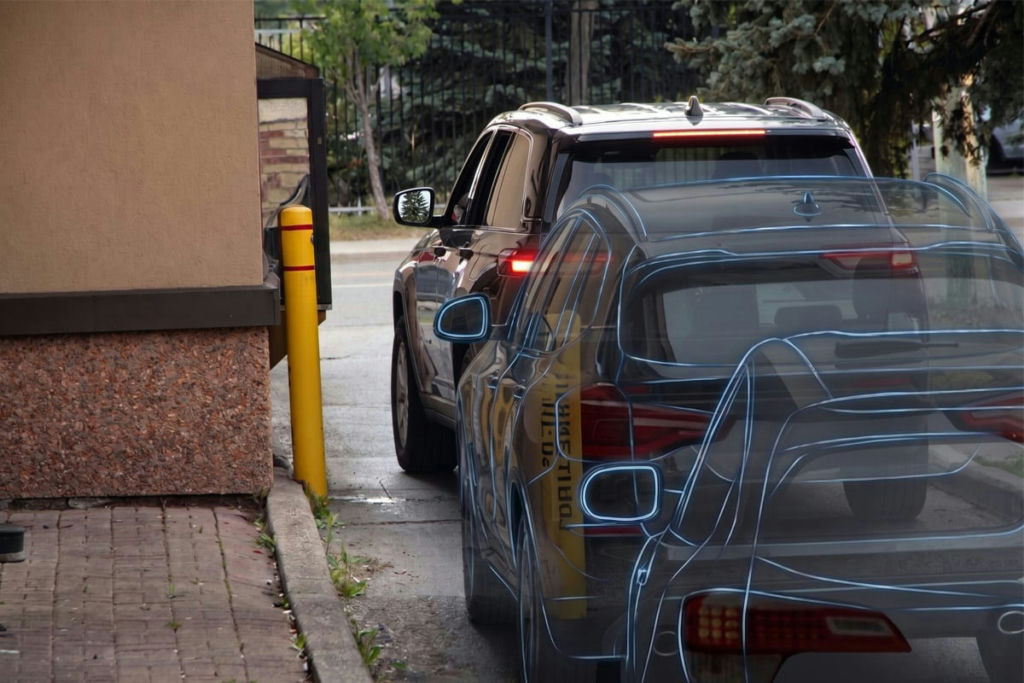
The research found that an average of 5.7 cars abandon the drive-thru line each day. At a $15 average check, losing six cars per day amounts to $32,850 in lost sales for a single location over the course of a year. Across 30 restaurants, that number approaches $1 million.
During a recent webinar examining the findings, Kaloeb Morris, asset protection manager at Tacala Companies, said operators often know abandonment occurs without understanding its financial impact.
“We can look at sales trends, transactions and even service times, but it’s difficult to quantify the customer who entered the line but left before they even started ordering,” Morris says.
The pre-menu queue is one of the largest visibility gaps. The report found that more than two-thirds of operators are completely in the dark about this portion of the customer journey, with fewer than 34 percent able to measure wait times before the menu board.
For customers, however, the experience has already started.
“A lot of drive-thrus have a ‘point of no return’ where you can’t exit the lane,” says Logan Alderson, loss prevention manager at Border Foods. “When a driver sees seven cars ahead of them before they’ve even reached the menu board, they have to decide if it’s worth staying to order.”
Traditional in-ground loop sensors offer only part of the picture because they register vehicles when they reach specific points in the lane. Kyle Vanderlinden, senior AI product manager at Envysion, a Motorola Solutions Company, said camera-based technology can provide greater context.
“Loop sensors measure a point; camera-based AI helps understand the flow,” Vanderlinden says. “If cars stack early, leave early or back into the parking lot, the timer may not show the full issue.”
That distinction can help operators move beyond knowing that service was slow to understanding why. A delay could stem from staffing, a kitchen backup, order complexity, or a sudden increase in demand.
“A timer can tell you the lane is moving slow, but it usually can’t explain why,” Vanderlinden says. “Multi-unit leaders need consistent visibility across stores and dayparts, so the goal is not more data, it’s actual visibility.”
Finding the cause matters because many drive-thru challenges involve people and processes. The report found that staffing and training were the largest operational roadblock, cited by 40.3 percent of operators. Yet, only 12.1 percent of operators who tried staffing adjustments successfully resolved their primary lane issues, compared with 55.4 percent who reported success using technology and AI.
Morris said greater visibility can give managers an opportunity to coach employees rather than simply flag mistakes.
“We’re here to support people, not be the police,” he says. Managers can use data to ask whether employees have sufficient training, whether staffing is appropriate during peak periods, and whether team members are working in positions where they can be most successful. For example, a drive-thru window cashier might be better suited for the prep line.
Vanderlinden described the goal as changing “the conversation from blame to diagnosis.”
More operators appear ready to make the shift to camera-based technology. The report found 51.8 percent plan to invest in AI and video analytics, more than any other technology measured in the survey.
As more operators invest in AI and video analytics, the focus is shifting from simply measuring drive-thru speed to understanding what is slowing it down. Better visibility gives operators a chance to find drive-thru problems earlier and fix them before customers leave the line. Identifying those bottlenecks earlier can mean fewer abandoned cars and more drive-thru sales.
To learn how to implement a roadmap for modernization, including pilot programs and real-time triggers, you can download the full report here.
In this story
This story was originally published by Davina Van Buren in QSR Magazine on August 24, 2026. Burnaze summarizes and links to the original reporting.
Read the full story at QSR MagazineLiked this? Get the week's franchise news, explained
- Sunday 8 AM ET weekly + a monthly deep dive
- Sections picked for the industries you follow
- Every claim linked to its source. Free.