TL;DR
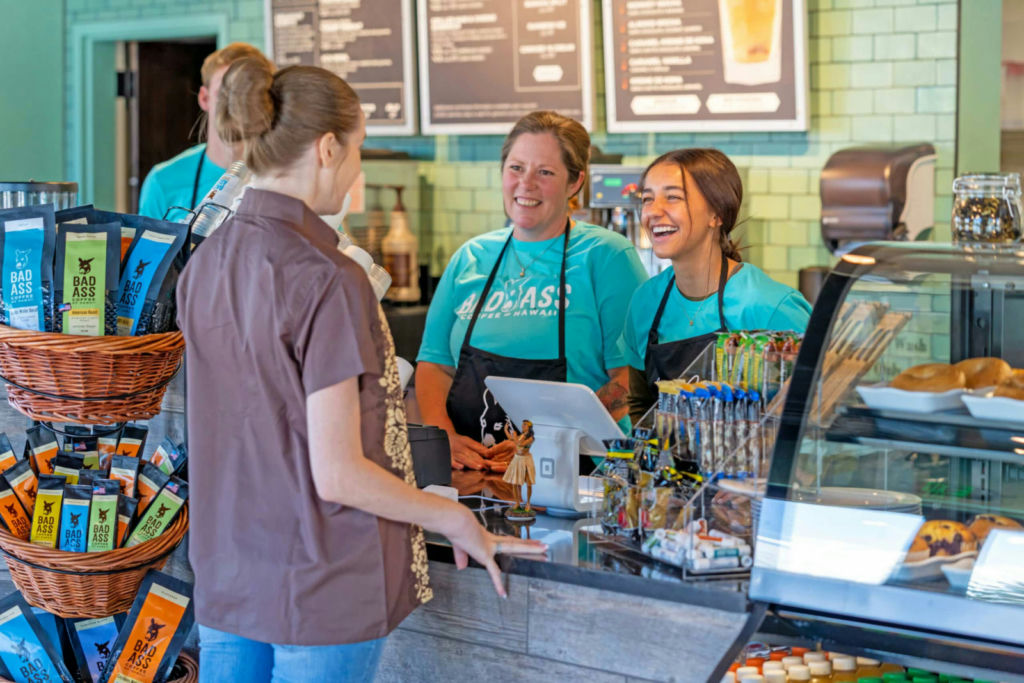
Bad Ass Coffee of Hawaii is a coffee franchise that offers a differentiated concept for multi-unit operators looking to expand beyond their core brand. The brand has invested heavily in creating a franchise system with distinctive products, operational support, and a recognizable identity.
A differentiated concept can unlock expansion when core-brand territory is limited.
For many experienced quick-service operators, growth isn’t limited by ambition. It’s limited by opportunity. Protected territories, saturated trade areas, and increasingly competitive real estate can make it difficult to keep expanding an existing brand, even when operators have the capital, leadership, and infrastructure to support additional locations.
Instead of waiting for another opportunity within their current system, many are exploring complementary concepts that allow them to leverage existing operational expertise while diversifying revenue. For Bad Ass Coffee of Hawaii, that’s where coffee enters the conversation.
“We’re a strong fit for existing multi-unit operators of other quick-service brands where expansion ability is limited by geography,” says Scott Snyder, founder and chief growth officer of Bad Ass Coffee of Hawaii. “With market knowledge and credibility already in hand, adding Bad Ass Coffee provides an accelerated market entry while also creating new career opportunities for existing team members.”
Coffee remains one of the country’s most established daily rituals, with 56 percent of consumers drinking coffee daily, according to Datassential. But for a brand to grow, it has to win over established drinkers. While loyalty is high, Datassential found that 71 percent of coffee drinkers regularly switch brands, suggesting a significant opening for concepts that offer something different.
With that, coffee may be one of the restaurant industry’s most competitive franchise segments, but Bad Ass Coffee believes differentiation extends beyond the beverage itself. Originally founded on Hawaii’s Big Island in 1989 and relaunched in 2020 under Royal Aloha Coffee Company, the brand has invested heavily in creating a franchise system built around distinctive products, operational support, and a recognizable identity.
“Our premium Hawaiian coffee collection delivers an unmatched taste experience,” Snyder says. “Beyond that, the brand has an authentic personality that’s playful, empowering, and memorable. Bad Ass Coffee is more than coffee—it’s an identity.”
Hawaiian influence extends throughout the guest experience, from store design and menu offerings to the hospitality culture rooted in aloha and ‘ohana.
“Our vision has always been to create an environment that takes guests back to their favorite Hawaiian vacation or lets them experience what they imagine Hawaii to be,” Snyder says. While many emerging brands focus first on unit development, Bad Ass Coffee spent much of the past several years investing behind the scenes.
Traditional cafés, drive thru-only models, tourist-focused locations, and non-traditional formats all give franchisees flexibility to pursue opportunities where larger competitors may not fit.
“I think the key to a successful real estate strategy is our ability to out-position the competition,” Snyder says. “It’s about understanding what each location requires and matching the right format to that opportunity.”
Since acquiring the brand’s assets in 2019, Royal Aloha Coffee Company has developed what Snyder describes as infrastructure built for a franchise system several times its current size. Rather than building systems for 50 locations, the company designed them with a 200-plus-unit organization in mind.
Those investments include integrated back-office technology, online ordering, loyalty, point-of-sale connectivity, inventory management, scheduling tools, gift cards, and “Aloha U,” the company’s online training and communications platform.
“The goal is to give franchisees the tools they need to know their numbers and an understanding of what success looks like,” Snyder says.
Operational focus continues with initiatives such as SKU optimization, centralized supply chain management, and ongoing investments designed to simplify execution while improving profitability.
Another point of differentiation comes from the business model itself. Beyond beverages and food, Bad Ass Coffee generates meaningful revenue through branded merchandise and packaged coffee sales. Retail products account for more than 15 percent of revenue across most locations and more than 25 percent at destination and tourist-focused stores. Snyder says the merchandise business both boosts average checks and gives loyal guests another way to engage with the brand, whether by wearing branded apparel, using logoed drinkware, or brewing Bad Ass Coffee at home.
That third revenue stream helps increase average check while requiring relatively little additional labor. “It drives top-line revenue while contributing to higher profitability with less labor,” Snyder says.
Coffee is often described as a habit business, but Snyder believes success requires first convincing guests to break an existing habit. “You’ve got to create new habits with consistency and frequency,” he says. That’s why guest experience plays such a central role in the brand’s strategy and culture.
“A customer’s first experience at a Bad Ass Coffee store should be as life-changing as their hundredth experience,” Snyder says. “It should become a critical start of their daily routine and give them the fuel they need to go out and crush their day.”
Bad Ass Coffee currently has 48 locations open and reported a 19 percent year-over-year increase in average net sales. Nearly 44 percent of existing franchise units exceeded the system’s average net sales, while the brand opened 17 new stores in 2025 and expects to add another 20–25 locations in 2026.
Development is focused primarily across the Southeast, Southwest, and the Eastern Seaboard, supported by multiple store formats that allow operators to match real estate strategies to local market conditions.
For experienced operators looking to continue growing, the opportunity may not be another burger, sandwich, or chicken concept. It may simply be a better cup of coffee.
In this story
This story was originally published by Drew Filipski in QSR Magazine on June 26, 2026. Burnaze summarizes and links to the original reporting.
Read the full story at QSR MagazineLiked this? Get the week's franchise news, explained
- Sunday 8 AM ET weekly + a monthly deep dive
- Sections picked for the industries you follow
- Every claim linked to its source. Free.