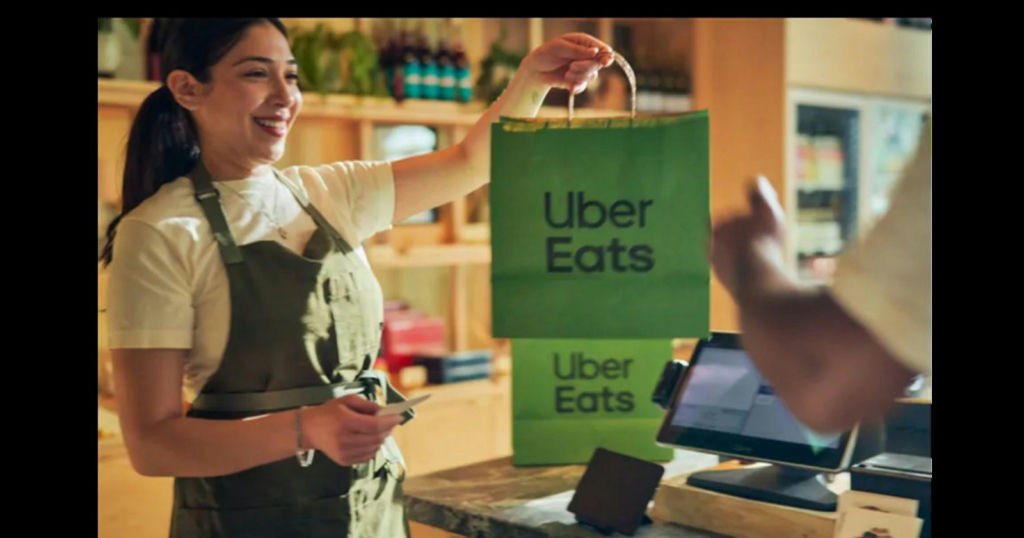
During the recent Restaurant Finance and Development Conference, several analysts pointed out the relatively new pressure of third-party delivery. One panelist said the P&L is more challenged than it’s ever been because of the confluence of rising prices and the delivery channel, “which didn’t really exist 10 years ago.”
Indeed, third-party delivery has come to be known as a necessary evil, with commission fees hovering around 30% and consumer usage sustaining in double digits. Operators know they have to exist on these platforms, and many of them are sprinting to adjust the business model to make it more palatable.
“We love our third-party providers, but with the rising commission rates, our franchise owners are dealing with that. The economics are a challenge,” Jersey Mike’s CEO Charlie Morrison said during a panel at RFDC. “And, effectively losing control of your customer is a challenge.”
Building first‑party channels
To manage such challenges, Jersey Mike’s is focused on building first-party occasions, but that requires massive tech investments, as well as marketing investments to give customers compelling reasons to visit through the chain’s own channels versus marketplaces, which have more meal options.
“Third-party delivery is something we have to work with, but at some point, we’ve got to pull that customer back and make sure they’re part of our brand,” Morrison said.
Burger King President Tom Curtis added that the topic of third-party delivery is what his company’s franchise owners ask the most about.
“It’s the hottest topic with our franchisees because you have to mark (pricing) up quite a bit to afford the commission rates, and then some of that gets put back into what I’ll call a pay-to-play model, where you get to discount your product and offer BOGOs and things like that to keep yourself in the mix among the many other competing opportunities,” Curtis said. “It’s just an odd space to be in. You don’t get to play offense, you’re always playing defense. I love it when our business can play offense and own the relationship and do our job.”
Curtis said Burger King is constantly looking for creative ways to navigate these added costs, and he has some optimism that more competition is entering the delivery market. (He didn’t mention Walmart by name, but that is one such delivery disruptor).
“But, it rests on us to make sure we’re bringing customers directly to us and then following them on their journeys,” he said. “It can be done and it can be done effectively through loyalty programs and the like.”
Digital loyalty and exclusive offers
El Pollo Loco is bolstering its own loyalty and digital programs accordingly. CEO Liz Williams said this is a huge opportunity for the company as it starts to accelerate franchise growth.
“We appreciate the third-party partners that we deliver through. It's even better when you can drive someone through your first party, and you can have that one-on-one relationship. We’re trying to nurture both of those,” she said. “We’ve got to understand the consumer and make it compelling for them to come through our app.”
El Pollo Loco is doing this through exclusive offers, for example, as well as gamification features. Value is what resonates the most for app-based customers. This is why the chain’s annual 12 Days of Pollo features a series of daily deals just for Loco Rewards members.
“Simplicity, gamification, making your digital experience something worth coming to is the best way to get there,” Curtis added. “In first party, you just need to be underpriced from third party so you can attract customers.”
Profitability and markup challenges
That said, third-party is “here to stay” the leaders agreed, and so it matters how much you mark up your product to enjoy those channels profitably.
“Franchise P&Ls are important to all of us. The lower you bring the markup down, the more active and growth you get through the channel. But at what cost? That’s our big challenge,” Morrison said.
Burger King is constantly evaluating the incrementality of third-party delivery, Curtis said, adding that the margins are lower and that there is some cannibalization over time.
“We need to find the most profitable way to do it as this channel grows,” he said. “That’s why this topic keeps getting hotter.”
“It goes back to the franchisees’ P&L, and all of our P&Ls,” Williams added. “This is where we have a big opportunity.”
Members help make our journalism possible. Become a Restaurant Business member today and unlock exclusive benefits, including unlimited access to all of our content. Sign up here.
This story was originally published by Alicia Kelso in Restaurant Business on November 23, 2026. Burnaze summarizes and links to the original reporting.
Read the full story at Restaurant BusinessLiked this? Get the week's franchise news, explained
- Sunday 8 AM ET weekly + a monthly deep dive
- Sections picked for the industries you follow
- Every claim linked to its source. Free.