TL;DR
Baljit Gill, a Southern California operator, shares his experience and strategic approach to diversifying a franchise portfolio, having developed over 30 units across Subway, Auntie Anne's, and Marco's Pizza. Gill emphasizes the importance of evaluating operational overlap, scalability, and support before expanding into new brands.
Typically, for multi-unit franchisees, scalability is not a question of if but rather a question of how. Once a strong foundation is built with a single brand, diversification often is the next logistical step. Though adding a second or third concept requires a much more disciplined strategic approach and is not simply a repeat of the first successful brand. The work is rewarding if you understand the balance between opportunity and operational reality.
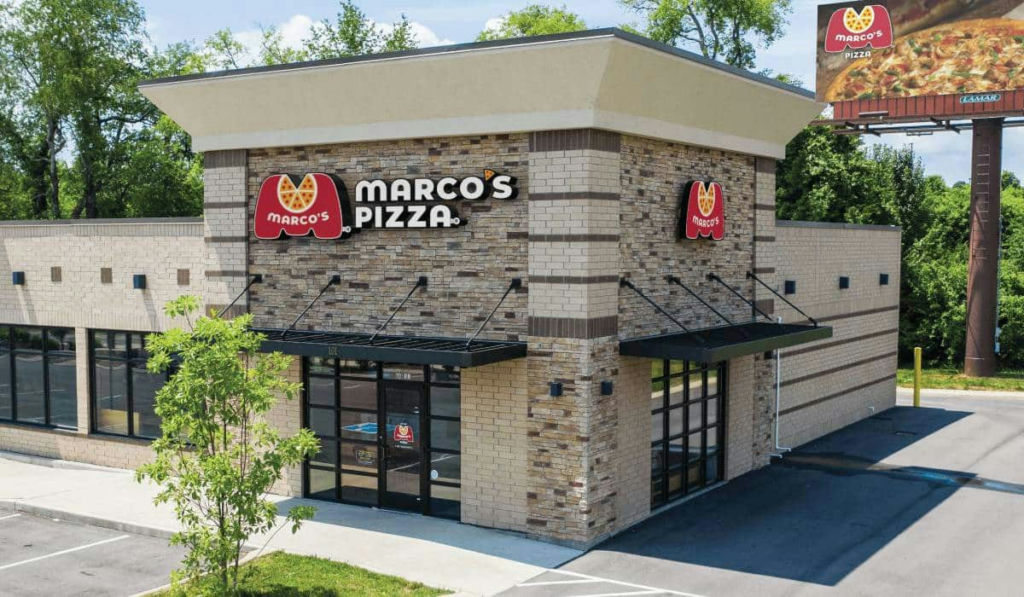
Over the past 25-plus years my family and I have developed over 30 units across a wide range of foodservice brands including Subway, Auntie Anne’s, and most recently Marco’s Pizza. With Marco’s Pizza, we knew it would complement our food industry portfolio, and the leadership team would support us as experienced multi-brand owners. There are many key factors we evaluated before jumping into a Marco’s Pizza such as:
Operational overlap vs. operational strain
Scalability beyond the first few units
Support that evolves with your portfolio
Durability over momentum
Operational Overlap
Operational Overlap versus Operational Strain
Operational alignment is crucial in diversifying your brand portfolio. When identifying potential concepts to partner with, you should always ask yourself: “How will this new concept fit into my existing operation?” If systems and processes fight against one another, friction grows, and sustainability is at risk.
Repeatable processes, similar tech stacks, and a buildout process that feels familiar all save operational time, reduce training learning curves, and help you open quicker. If overlap or similarities can be found in detail like labor models, hours of operation, supply chains and management requirements, the similarities will drastically help the addition of a new brand and reduce room for errors.
While any step toward expansion is going to require adaptation, finding synergies within industries reduces friction. As QSR owners, we were easily able to transition operations between sandwiches, snacks, and pizza.
Scalability Beyond
First and foremost, you need to identify if you and your team members are ready and capable of scaling while maintaining your current brand’s profitability and operational success. Be sure you are prepared to take on a whole new challenge and time commitment. Think about what KPIs you should be tracking before you’re ready to scale:
Is management strong enough for you to take a step back and focus on opening another brand?
Are systems operationally sound enough to be running on their own?
What else needs to be set before you embrace a new time commitment?
Second, you need to know if a brand has the infrastructure to support long-term growth before partnering as a franchisee. Ask questions like:
Does the franchisor have a development strategy in your target markets?
Are there processes for site selection?
Is field support consistent with system growth?
When we decided to invest in Marco’s Pizza, we were attracted to the robust support and infrastructure we would be gaining access to. Marco’s leadership prioritizes a development support system, including technology and tools to help identify territories for expansion, plus support in real estate, construction management, field operations, and information related to financing.
Support and Durability
Unlike early-stage franchisees who need mentors and clear guidance, seasoned operators need franchisors that act as partners who can take their portfolio to the next level. Having open communication with a franchisor is a key factor in sustaining growth, especially when scaling quickly.
As your portfolio builds, the importance of collaboration, trust, strategic input and flexibility grows. The best franchisors can recognize this and adapt to support accordingly.
How to evaluate the brand:
Engages experienced operators in decision-making conversations
Provides advanced operational insights beyond the basics
Treats franchisees as partners rather than just participants in a system
As trends continue to play a large role in brand development, operators should be on the lookout for brands that are built on consistency and stability.
In the food service industry, there are many brands that gain rapid virality built on novelty. Novelty eventually fades and will leave the operator in a cycle of gimmicks with no real loyal customer base; sacrificing long term credibility for a short-term spike.
Evaluate the fundamentals by looking beyond the current performance metrics:
Is the business idea resilient in different economic conditions?
Is the concept adaptable to different and evolving consumer preferences?
Is the brand set up for long term financial growth?
We chose Marco’s because it is a resilient brand that is expanding in new communities, has a strong DELCO model, and continues to tap into new culinary innovations to align with consumer preferences—all while prioritizing unit level economics. The goal of diversification should be to build a portfolio that will remain relevant and profitable for years to come.
A More Strategic Path to Growth
Diversifying your franchise portfolio is not a decision to take lightly. You can’t keep building on a shaky foundation; you need to build credibility as a franchisee before jumping into the next thing.
Step back, evaluate your existing operations, ensure that the new addition will strengthen and not complicate your overall business, and then make a choice.
In the end, growth isn’t just about adding more units. It’s about building a system that can support them and choosing brand partners who can grow with you.
Baljit Gill is a Southern California operator who, alongside his family, has developed over 30 units across Subway and Auntie Anne’s before diversifying with Marco’s Pizza in 2021. After initially signing a four-unit agreement, he recently expanded with an additional 12-unit commitment. Now, with over 25 locations across brands open and operating and additional units in development, Baljit can offer a practical guide for other multi-unit owners interested in diversifying their portfolios.
In this story
This story was originally published by Danny Klein in QSR Magazine on June 25, 2026. Burnaze summarizes and links to the original reporting.
Read the full story at QSR MagazineLiked this? Get the week's franchise news, explained
- Sunday 8 AM ET weekly + a monthly deep dive
- Sections picked for the industries you follow
- Every claim linked to its source. Free.