TL;DR
Sweetgreen is slowing growth for 2027 with a handful of closures.
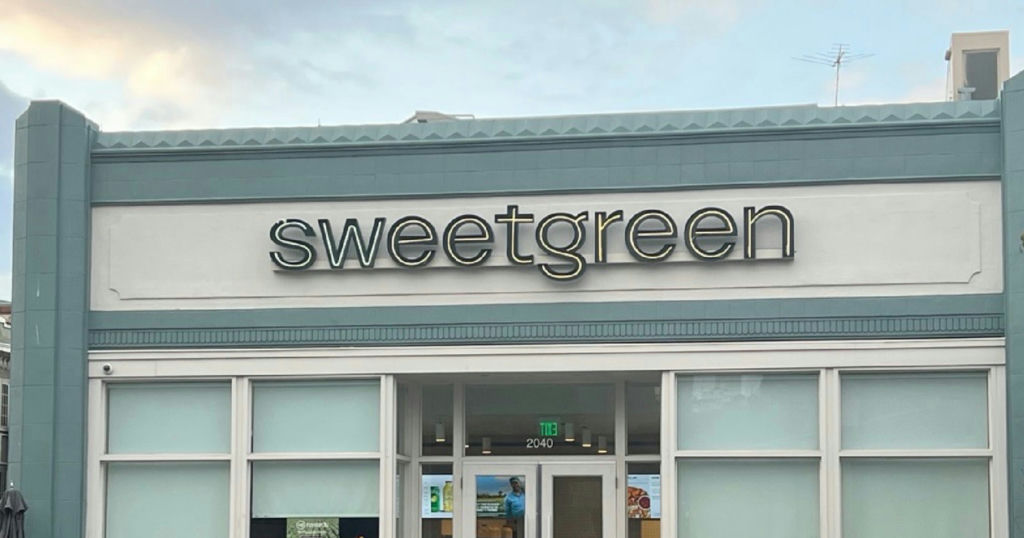
Sweetgreen is slowing growth for 2027 with a handful of closures. | Photo by Lisa Jennings
A little more than a year ago, things were not looking too good for Sweetgreen.
The fast-casual chain watched same-store sales plummet, ending the year down nearly 8% with traffic declining more than 13% in the fourth quarter. It got worse in the first quarter this year, as the chain reported its biggest same-store sales decline as a public company, down nearly 13%.
CEO Jonathan Neman had admitted about two-thirds of the chain’s then-260-units were operationally not up to par. There were layoffs on the support center team. A handful of restaurants closed, and the pace of growth was slowed.
And, perhaps worst of all, the once-pioneering concept was being pilloried in headlines and on social media for serving over-priced “slop bowls” at a time when consumers were increasingly choosy about where they spent their dollars.
And to add to that picture: Another year had passed for the chain that went public in 2021 and it had yet to make a profit.
Last year, Neman pledged to turn things around.
The company launched a Sweet Growth Transformation Plan designed to reset everything from operations and growth, to marketing and menu pricing.
And, in this final quarter of 2026, it looks like it might be working.
The third quarter was dampened by the cyclospora outbreak in July that scared consumers away from fresh produce. Sweetgreen was not implicated in the outbreak, but the concept attributed a 500-basis-point decline in traffic to that incident. Same-store sales were down 6.4% on a 4.9% decline in traffic in the third quarter.
However, in October, Sweetgreen’s same-store sales turned positive, growing 5%, including a 4% increase in traffic. The company is projecting same-store sales growth for the fourth quarter this year, which will mark the first positive result since the fourth quarter of 2024.
“There’s a lot more to do,” said Neman during the earnings call. “But the quarter offers meaningful encouragement that our strategic priorities are starting to translate to better performance.”
Is this the turning point for Sweetgreen?
The answer to that question remains to be seen, but the result certainly won’t be for lack of trying. Sweetgreen has been busy this past year on multiple fronts.
Fundamentally, Sweetgreen is attempting to move away from being a salad brand. The Millennials that fell in love with Sweetgreen when it was founded by three college friends in Washington, D.C. in 2007 have grown up. Now the brand hopes to better connect with Gen Z and younger diners looking for better-for-you fast food.
Here’s a look back at turnaround efforts over the past 18 months.
Rethinking pricing
Arguably more than anything else, Sweetgreen had a value perception problem.
An answer to that was to roll out a new menu category earlier this year: Wraps.
The tortilla-stuffed sandwiches debuted at prices under $15, with some starting at $10.95, even in markets like New York City.
The line was promoted with help from social media celebs like Molly Baz, who developed a pickle-inflected chicken salad wrap, for example. The top seller, however, has been the core Chicken Caesar, which Neman said has the highest rate of generating a return visit.
In Sweetgreen’s barbell pricing strategy, the wraps gave consumers a lower-priced entry point. It put more options on the menu under $15, and the sandwiches were seen as generous and good quality, though the lower-priced items dampened the chain’s average check.
“We’re seeing the best price-value perception we have seen in a few years,” said Neman during the third-quarter earnings call. “Complaints around both portion size and pricing are now at their lowest level in three years.”
Sweetgreen is also reworking pricing on the build-your-bowl option, though tests are ongoing. The goal is to bring more transparency to the process. Too many guests would build a bowl starting at an expected price, but find it gets much more expensive as toppings are added.
But a barbell strategy also includes higher-priced options. Sweetgreen this month rolled out revamped new Plates at a more premium price point.
Sweetgreen's new "rotisserie-style" chicken plates. | Photo courtesy of Sweetgreen
The new Plates feature a “rotisserie-seasoned” boneless chicken thigh meat (which is not cooked on a rotisserie), and more of it. The chicken portion is 50% larger than what is served in bowls, and it’s a hearty meal, with warm vegetables and sauces.
The Plates start at about $14.95 and run up to $19.95, depending on the market. A wrap version with the rotisserie-seasoned chicken starts at $13.95, up to $15.95.
The goal is to attract more customers at dinner, which now accounts for about one-third of Sweetgreen’s sales. A previous attempt at non-salad plates in 2023 did draw in more later-daypart guests, and the chain hopes to take that further.
“We’re putting Plates back in the spotlight and giving customers a compelling reason to choose Sweetgreen for dinner,” Neman said.
Magnifying marketing
The Plates, like the new wraps, will be supported with a big marketing campaign that focuses on the real cooking going on in Sweetgreen units.
On Nov. 20, the chain will showcase that cooking — literally — in a glass box in New York City.
For the wraps launch, Sweetgreen enlisted an army of micro-influencers, alongside bigger name collaborators, who helped the brand connect with Gen Z.
The message: Sweetgreen’s better-for-you ingredients, seed-free oils and made-from-scratch commitment is worth paying more for.
The loyalty program is also scheduled for a revamp next year, evolving it from an “earn-and-burn” program to a branded platform, built on experiences.
Neman wants Sweetgreen to become a lifestyle brand again, harkening back to early days when the brand hosted music festivals and made healthful eating cool.
This year that has meant collaborations with celebrities like Baz as a chef in residence. The marketing spend increased in the third quarter to about 3% of revenue and Neman said that will drop a bit for the fourth quarter as the chain focuses on what is showing the most return.
“You’ll see us do more things in real life, in events and activations, things like local marketing,” Neman said. “We’ll continue to invest heavily in social, but a little bit less on the bottom of the funnel, and just a much better, balanced media mix that is working for us.
“It’s much more in line with what we’ve done previously as a brand,” he added, “really telling more brand stories and less just around conversion.”
Polishing operations
After admitting that two-thirds of Sweetgreen units were operationally not up to par last year, Neman launched a Project One Best Way program to establish clear standards and accountability.
This month, Neman said the project has shown results with stronger culinary execution, better deployment and faster throughput.
“We are not yet where we want to be across the fleet,” he said, “but we have laid the foundation of repeatable, scalable processes.”
New cookies are baked in each restaurant. | Photo by Lisa Jennings
Neman pointed to a unit in the Wynwood neighborhood of Miami where the team knows regulars by name, new customers feel welcome and there is “real pride in the food and the restaurant.” The unit also outperforms its region across sales, throughput and margins.
Why is that restaurant performing better? Because of its head coach, or what Sweetgreen calls general managers.
Last month, Sweetgreen announced a new compensation structure that could bring total pay for head coaches to more than $200,000 per year through a combination of base salary, bonuses based on restaurant performance, and equity in the company.
“We want our head coaches to think and act like owners, build strong teams, earn customer loyalty, and grow a profitable business,” said Neman. “By tying their compensation more directly to performance, we give them a clear stake in the results they drive.”
The move is also designed to help the brand recruit top talent. At Sweetgreen, the strongest head coaches can become restaurateurs, who can earn $10,000 for every team member they develop into a head coach.
Slowing growth
Two years ago, Sweetgreen was chugging toward its goal of reaching 1,000 units by the end of the decade. In 2024, 25 restaurants opened, and that pace was expected to increase to 40 new restaurants in 2025.
But, struggling through 2025, the now 290-unit chain ended up adding a net of 35 restaurants that year. In 2026, the net will be 10 —reflecting the opening of 17 restaurants but the closure of seven as leases ended.
Next year, the chain has projected it will open 10 restaurants but net half as many, implying that another five will close, as the company shores up the economics of the existing base.
“We do expect to step that up in 2028, and, by 2029 get to our 10%” unit growth rate, Neman said.
But as it looks to ramp up that growth, Neman said the company will take a more disciplined approach to site selection, as well as restaurant design, construction costs and return on invested capital.
It will also give the chain more time to build the people pipeline to reach a goal of 90% of head coaches being promoted internally, Neman said.
Executive team investments
At the corporate level, Sweetgreen has brought in a lot of new blood.
First came Jason Cochran as chief operating officer in April 2025, the former CEO of Pizza Hut franchisee American West Restaurant Group and a former Chipotle VP of operations.
Later that year came Zipporah Allen, a former global chief digital officer at Taco Bell, as Sweetgreen’s new chief commercial officer.
Longtime CFO Mitch Reback was replaced by Jamie McConnell last September.
This year, Ryan Slemons, previously of Unleashed Brands, joined as chief development officer.
Cindy Olsen, the former head of investor relations and strategy at Chipotle, was named to the newly created position of SVP, chief strategy officer.
Lauren Crowley, formerly of Expedia and Starbucks, was named chief people officer in October.
And that month John Karangis became Sweetgreen’s new executive chef and SVP, culinary. He worked previously at Shake Shack.
But Sweetgreen also lost one of its co-founders, at least for the day-to-day business.
Sweetgreen is one of few public companies still led by its founders, including Neman, Nicolas Jammet and Nathaniel Ru, who were students at Georgetown University when they launched the brand in 2007.
In December, Ru stepped down, though he remains on the board. Ru served as chief brand officer and was a huge proponent of the farmers and local suppliers who provide Sweetgreen’s ingredients. In each restaurant, those local suppliers are listed on the wall as guests enter the makeline.
Sweetgreen expects a net of five new restaurants next year. Photo courtesy of Sweetgreen
Sweetgreen has a tough mountain yet to climb. Year to date, the chain’s stock price has increased more than 136%, but it remains down more than 75% since its promising IPO.
Still to come are more efforts on throughput, labor deployment and managing costs.
For the year, Sweetgreen now expects same-store sales to decline 5.5%, but that’s a vast improvement from the 7% to 8% decline projected earlier this year.
“I believe our best days are ahead of us,” said Neman. “Were getting back to what makes Sweetgreen special: incredible food, amazing people, and restaurants that our customers absolutely love. We’re bringing new energy to the menu, strengthening our execution, and building a business that can grow sustainably for many, many years to come.”
Lisa Jennings is a veteran restaurant industry reporter and editor who covers the fast-casual sector, independent restaurants and emerging chain concepts.
View All Articles by This Author
In this story
This story was originally published by Lisa Jennings in Restaurant Business on November 12, 2026. Burnaze summarizes and links to the original reporting.
Read the full story at Restaurant BusinessLiked this? Get the week's franchise news, explained
- Sunday 8 AM ET weekly + a monthly deep dive
- Sections picked for the industries you follow
- Every claim linked to its source. Free.