TL;DR
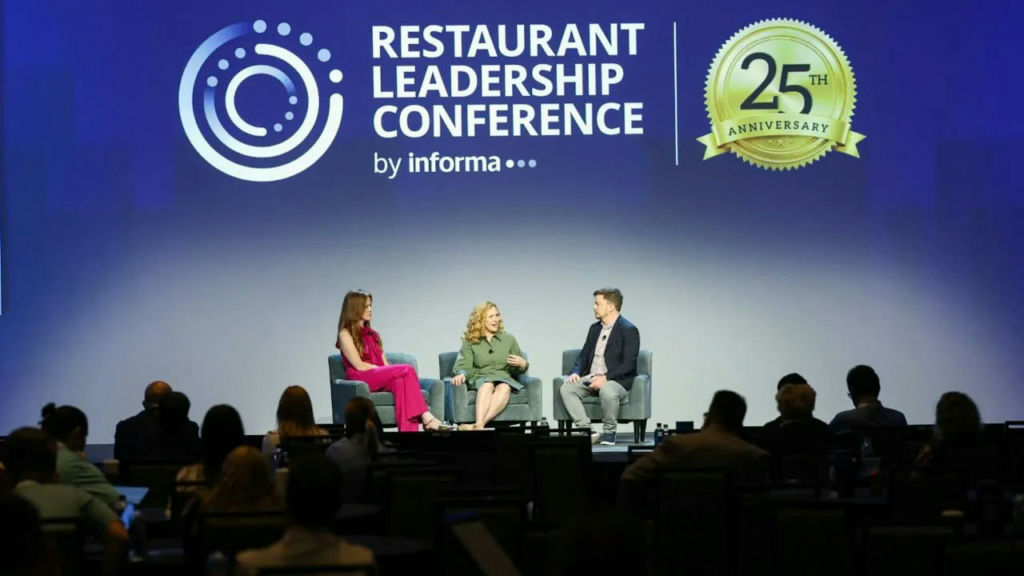
Kim Malek and Lauren Bailey, founders of Salt & Straw and Postino, respectively, shared their experiences and insights on navigating the challenges of leadership and building collaborative industry relationships during a panel discussion at the Restaurant Leadership Conference. They discussed overcoming 'founderitis', a conviction to do the right thing for the business, and the importance of seeking help, being open-minded, and building a strong leadership team.
Kim Malek and Lauren Bailey describe themselves as friends. Both certainly have a lot in common, as the founders of two exciting restaurant concepts in Salt & Straw and Postino/Upward Projects, respectively. Perhaps it’s no surprise that they lean on each other for advice and have even partnered together for a wine cream.
“We hit it off right away and built this relationship. Our industry is hard enough for us not to work together,” Bailey said during “The Founder’s Edge” panel with Malek on Wednesday during the Restaurant Leadership Conference in Phoenix. The conversation was moderated by Nation’s Restaurant News editor-in-chief Sam Oches. “Being a founder is lonely. You’ve got to stick with your peeps.”
Founders' visions
The founders opened the session describing the vision behind their concepts. Malek first envisioned Salt & Straw, which is opening its 55th store this week, in 1996. The first store, however, didn’t open until 2011.
“It was a long time in the making,” she said.
She had been working at Starbucks and liked the idea of a third place and wanted to create something similar, but different — with ice cream.
“It’s not your home, it’s not your work. But I could see community gathering taking place in front of my eyes and how magical that was,” she said. “Fast forward to today and I think that’s more important than ever.”
Salt & Straw’s first location was a cart in the Portland, Oregon, arts district. Malek funded the cart by cashing in her 401K, selling her house, hosting a garage sale — name it.
“I was just pulling together every dime I could to start this ice cream shop,” Malek said. “Now we have stores at the foot of the Eiffel Tower on the strip in Vegas. Our Disneyland store, they say, is the busiest ice cream store in the world.”
Bailey also wanted to create a third place and the vision for Postino presented itself after her business partner, Craig DeMarco, and his wife visited shops throughout Italy and wanted a similar experience here. She saved $30,000 from working as a bartender and partnered with DeMarco to bring the idea to fruition.
“We love for people to walk in, bring their dogs. Our (chief marketing officer) met her husband there on their first date, which we love,” she said. To add allure, they looked for old buildings, which she said are hard to find in Phoenix.
“You can look around, and most of our structures are relatively new. So, when we would find these old buildings, we would come up with a concept to fit into those and Federal Pizza is a great example,” Bailey said. Federal Pizza is part of the broader Upward Projects portfolio, alongside Postino, Windsor, Churn and Joyride.
Overcoming challenges
Postino first opened in 2001 and, as the company added more concepts and investments, Upward Projects was formalized in 2009, just two years before Salt & Straw was created. Both founders acknowledged that there were plenty of make-or-break moments during those early days. Malek, for example, had a close relationship with Starbucks founder Howard Schultz from her time with the coffee giant and when Salt & Straw was getting off the ground, they thought about selling the brand’s ice cream at the coffeehouses.
“Of course, that would be a huge boon for the company,” she said. “But as we thought about it, that would take up all our resources. We wouldn’t really have what we needed to tend to our goal and our mission and what we believed we wanted to be. It was probably one of the hardest things I ever did to go to this person who gave me my first shot in at my career and say no.”
Fast forward to now and Salt & Straw has established a relationship with Taco Bell. The two companies collaborated in 2024 and again last year to launch a Tacolate.
“Those moments really test you to stay true,” Malek said. “To say no to someone so important put us in a position to build the right company and do the right things that put us in a position to say yes later to bigger things that are more meaningful and game-changing.”
Bailey’s make-or-break moment came when she began running low on resources and needed to raise money. She hired a finance person, Amy Hwang, and pursued a private equity deal.
“I don't even think I know what that meant exactly, but she went for it,” Bailey said. “A lot of times, it's knowing we don't know and being able to ask for help with this amazing industry. I’ve never had someone say no when I asked for help.”
Asking for help hasn’t always been easy, however. Both women admitted they grapple with “founderitis,” which Bailey described as a conviction to do the right thing for the business. For example, changing an ingredient to save on costs might make sense on paper, but it’s wrong for the business.
“It’s this belief system that you need to touch everything. It’s just so inherent to your soul, but hiring people who know more than you, and being able to be wrong (is important).” Bailey said. “Take a moment and let your team do the things that you need to do. Understand that your investors have seen this movie before, and they may have a different mindset and being open-minded to things as you grow.”
She added that it’s important to make sure there are people around to tell you when something might feel wrong.
“When you’re a founder, especially in a sexy business like ours, everyone wants to tell you how great you are,” she said. “You have to seek out people to tell you your baby’s ugly. Create a space for your employees to question you, because the very thing that we're good at is creating followership and getting people to believe what we believe. So, it's counter to then creating space for your team to say, ‘Hey, I think we're off beat here a little bit.”
Malek added that there is another side to this philosophy, naming examples of brands (including her former employer, Starbucks) that didn’t stick to what they were founded on and now they’re trying to get back to those roots.
“There’s a balance. We as founders have to be willing and open to hearing all of those different sides, but also really clear about why you exist in the world and don't freaking compromise on that,” she said.
Leadership lessons
As part of this journey to overcome “founderitis,” both women had to learn to bring people and resources in to help with the business.
“I was in the swamp of being like, ‘I’m not a CEO, I’m a founder. I’m a visionary — all ideas, no execution,’” Bailey said. “That’s not what my team needed in my company. I had to come to terms with the fact that if I wanted to continue running my business, I would have to learn a different set of skills, and one of those is to identify when you need to level up an employee. I’m not a finance whiz, so I needed to hire people to do that and when it was time to push them to the next level.”
Malek added that leaning into the strategic part the people leadership and building key components of a leadership team was “a magical unlock.”
In addition to building the right team (and relinquishing some control in the process), Malek said it’s important for aspiring or fledgling founders to find investment partners that align with your values and that respect your point of view.
“I've never once had a conversation with an investor about compromising on our quality or trying to make up a few pennies on margin,” she said. “I've seen so many of my brethren as founders just live most of their life in conflict on that, and I think it can be so detrimental to the business.”
Bailey added that it’s also important to build relationships.
“Find out which vendor is the best and how this investor was, and call people,” she said. “Investing in those relationships is huge.”
Malek called out advice specifically for female founders.
“Don’t take advice,” she said. “Everybody wants to tell you what to do. There’s all these studies proving women want to be perfect before they bring something to the world, so for female founders, just put it out there and give it a chance. I think we’re robbing the world of a great voice by not bringing that forth earlier and often.”
Now that both Malek and Bailey have at least a decade and significant growth under their belts, they admit that staying inspired can be hard, but seeing their teams carry their vision forward keeps their fires lit.
“Stories exist constantly of people showing up and just going way above and beyond for this dream that I had,” Malek said. “I'm super inspired to make them proud.”
Bailey called herself a “student of the game,” which motivates her.
“I love the complexity of (the restaurant business),” she said. “There's something about walking into a restaurant when they're in full — the lighting is perfect, there’s a perfect amount of people, we're quoting the right times, there's no blinking red on the (kitchen display system). Making this symphony work is always inspiring to me.”
In this story
This story was originally published by Alicia Kelso in Nation's Restaurant News on April 23, 2026. Burnaze summarizes and links to the original reporting.
Read the full story at Nation's Restaurant NewsLiked this? Get the week's franchise news, explained
- Sunday 8 AM ET weekly + a monthly deep dive
- Sections picked for the industries you follow
- Every claim linked to its source. Free.