TL;DR
Yard House, a casual-dining chain owned by Darden Restaurants, has seen double-digit sales growth, with same-store sales rising over 10% recently. The chain is one of several full-service brands that have reported strong same-store sales, potentially indicating a comeback for the casual-dining industry.
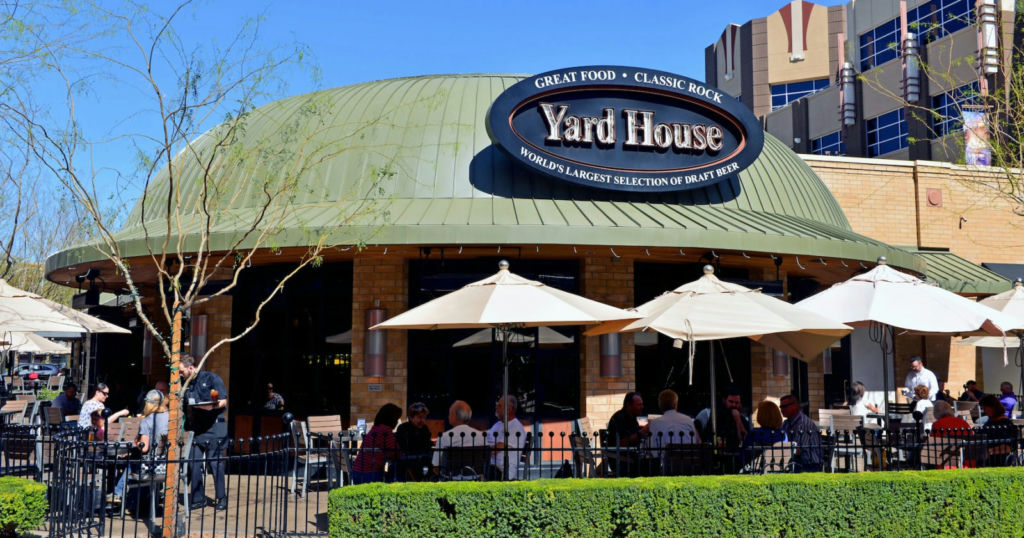
Darden Restaurants bought the casual-dining chain Yard House in 2012, and the brand has grown steadily in the years since then. But it’s unlikely the brand has had quite the quarter it did recently, when same-store sales rose more than 10%.
That prompted Darden CEO Rick Cardenas to call the chain “a high-potential growth brand,” according to a transcript of the company’s most recent earnings call on the financial services site AlphaSense. The chain’s system sales now top $1 billion.
“We’re really pleased with the performance,” he said. “Yard House has made a huge focus on their food ... providing a great gross value, and improving service.”
The chain is hardly alone, however. Eleven publicly traded full-service chains reported same-store sales of at least 3.8% last quarter. Bonefish Grill (8.1%), BJ’s Restaurants (6.5%), Texas Roadhouse (6.2%), LongHorn Steakhouse (6.2%), Cheesecake Factory (5.8%), and Chili’s (5.6%) all reported results of at least 5% in the period, in addition to Yard House.
Median same-store sales for publicly traded full-service chains last quarter was 1.6% last quarter, compared with 0.75% for limited-service brands.
One quarter does not a comeback make. But full-service brands were roughly equal to their limited-service cousins in the first quarter.
The reasoning may be relatively simple. Consumers in general are questioning the value they get from fast-food brands. As they’ve done so, and more social media discourse keeps pounding that home, that may have created a trading-up scenario, in which consumers opt for fewer fast-food meals but more casual-dining meals.
Lower-income consumers, meanwhile, continue to cut back. According to the data firm Numerator, low-income consumers have shifted $10 billion of their budget from discretionary categories to essentials like groceries. Higher-income households, on the other hand, have shifted $21 billion worth of spending to discretionary goods.
That lower $10 billion in spending has likely cost the fast-food world some visits, as lower-income consumers overindex for fast food.
Yet fast-food chains coming out of the pandemic have developed as aggressively as ever. McDonald’s, to name one, has opened more units domestically than any time in at least a quarter century.
Full-service brands, on the other hand, went through a lot of that already. The sector has been in decline for some two decades. Three major full-service chains, Red Lobster, TGI Fridays, and Hooters, have all filed for bankruptcy in recent years, each of which is among the biggest bankruptcies in industry history.
At some point, they were bound to hit bottom, and at least based on results from the publicly traded brands.
With higher-income folks spending more while questioning the prices at fast-food chains, that is creating an environment that could be friendlier for full-service brands in the coming years.
In this story
This story was originally published in Restaurant Business on October 8, 2026. Burnaze summarizes and links to the original reporting.
Read the full story at Restaurant BusinessLiked this? Get the week's franchise news, explained
- Sunday 8 AM ET weekly + a monthly deep dive
- Sections picked for the industries you follow
- Every claim linked to its source. Free.