TL;DR
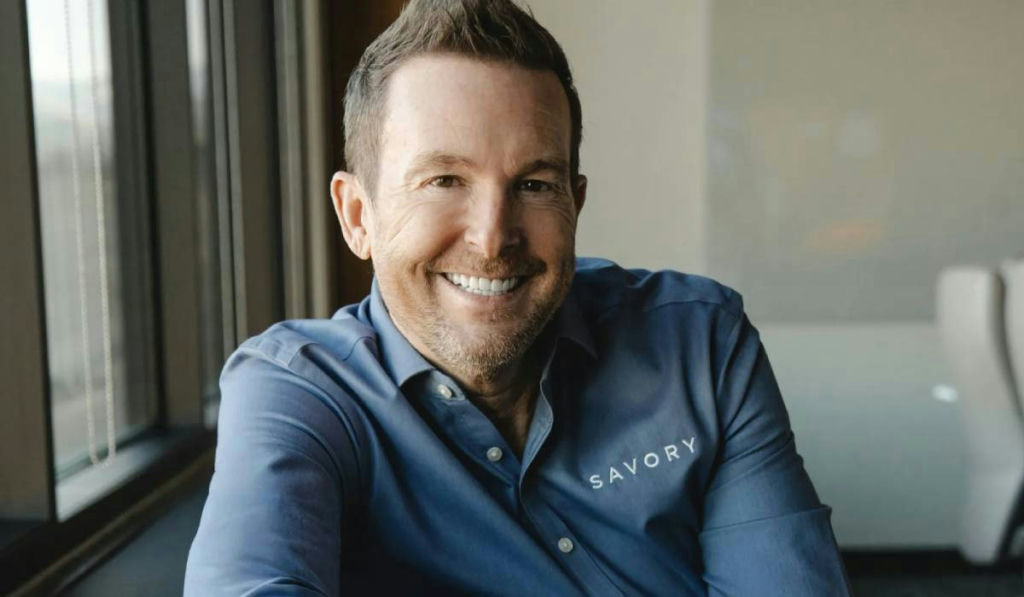
Savory Fund CEO Clay Dover discusses the impact of AI on the restaurant industry and the importance of human connections with consumers. Dover highlights the benefits of AI in streamlining tasks, but also notes the need for human oversight to ensure accuracy.
Like last year, I headed to the National Restaurant Association Show with three questions. I prefer taking this umbrella approach over crafting different interviews because I begin to see trends develop over the course of conversations. You’ll notice in the stories ahead, it became apparent what’s on operators’ minds (AI) and how there’s not a lot of agreement beyond the buzz. Some leaders view the same solutions from sideways spectrums.
My points this go-around were: one, outline an innovation making a difference; two, share one you think isn’t quite ready yet (I kind of expected these to blur together, and they did); and three, let’s spin forward a year. Eventually, my lookahead question became GLP-1 related as people kept answering along those lines and I wanted to get deeper.
Here was our conversation. And keep the debates flowing at our QSR Evolution Conference in Atlanta. Registration is now open here.
Give us one innovation that’s actually making a difference for restaurants right now?
It has to be AI. That’s the easy answer, but I’ll tell you why I think so. I think implementation with AI is now making tasks quicker. We are seeing and hearing about AI at the restaurant level. Whether it’s prep sheets. Whether it’s putting together scheduling. Whether it’s analyzing food costs. Tasks that were taking hours are now taking minutes.
And so, all of the talk leading up to this, in the past, let’s say six months, have started to come to fruition. We’re opening restaurants in a shorter amount of time. We’re training people quicker. What used to take weeks—maybe a couple of weeks—to put together, like inventory lists, prep lists, or training materials, now we’re walking around a restaurant talking into a phone and spitting out prep recipes and training materials.
We still have to proof them. But the period of time is growing shorter.
On the flip side, analyzing restaurant leases, oh my gosh, it’s a game-changer.
Again, I don’t want to state the obvious; that’s the buzzword going on right now. But now we’re actually seeing it in action and it’s amazing.
OK, turned around, what’s an innovation you’re skeptical about?
That is the answer to everything. You can’t just let it run. The easy answer is to say, it’s the answer. But if you let it go without fact checking it you’re going to have issues. There still has to be a person involved. AI is not going to take people’s jobs automatically.
What I tell people, as a CEO over multiple brands, is people who just ignore it and put their hand in the sand—yeah, it’s going to be a concern. You have to understand and you have to learn. You have to be able to fact check it. If there is one little error, it gets amplified and magnified, and repeated over and over again.
So, you’ve got to be able to see and vet it, proof it, look at it, watch it. Because if you don’t catch an error, it’s going to make mistakes. Look, I’ve seen it where it gets cranked out and multiplied it and it becomes, how did we get from this beginning point to the end, and we’re now way off base? Because one little change gets multiped 10X and it’s a copy of a copy of a copy and when you get to the end, it’s not right.
And it’s not even code; it’s some instructions at the beginning that got misinterpreted. So, I’m skeptical that it’s the answer to everything. There still must be humans. I still want my trainer. I still want my opening team to review all the procedures that went into that opening checklist.
I still want my training team to review what went into it. It just means someone didn’t have to sit there and type it out for 10 hours. It got cranked out. But someone has to read it. I’m skeptical that it’s the end-all be-all answer when someone tells me that.
Right, because you can train it incorrectly.
You totally can. AI will print it all out and give it to you. If you say thank you, turn around, and say train this without reviewing it, it can be completely wrong. Or maybe it’s 50 percent wrong because something in the startup was wrong. What I’m skeptical about is the same thing I’m amazed about, which is that it’s the answer to everything. It’s not.
Same thing with lease reviews. If you ask it to do something differently and you don’t ask AI to check a certain thing, it won’t look for it, and you might completely miss a lease term or some sort of an assignment. If you don’t ask, it’s not going to look for it. It won’t do all the thinking for you unless you tell it to do so.
On one hand, it’s amazing. We’re seeing it put into work now. On the same hand, there has to be some sort of human thinking involved.
Final question: Next year, what do you think we’ll be talking about that maybe we’re not talking about today?
I think we’ll be talking more about the importance of brand connections with consumers. Right now, we’re doing a lot of talking about convenience, to-go, third-party delivery, technology. We just spent a few minutes talking about AI. There always has to be a human connection with consumers. That will continually be more important.
A year from now, we will realize the importance of connecting brands and consumers. The brands today that are winning and will continue to win will be more important with guests. Why do you go to the places that you go? The connection with each brand and that personal tie will be talked about more.
We’re going to use this technology to understand why consumers are choosing us; why people are coming to the restaurants. And those brands will continue to win.
So, I think that will be a conversation point. We as restaurateurs will realize that it’s more important to understand our consumers and we’ll continue to dive deeper and deeper and we’ll use this technology to get inside the minds of consumers.
Convenience will always be important. But I think it will be even more important to understand, why do I go to that restaurant? Why do I go to a Sicilian Butcher? What is that emotional connection? Why does Danny go to that restaurant that’s in his neighborhood three times a week versus some restaurant that he goes to once a month?
And it will be more and more important for us as restaurateurs to understand that data. We’re going to use that to make that connection. Not just the data, but that connection.
I feel like we’re seeing this already with how pricey menus are and the case studies of brands who are clear in their value proposition. Usually a human reality, not a tech one.
Absolutely. Why are those brands winning? It’s because of that connection. My kids love Texas Roadhouse. They love the rolls. They love the interaction. They love the ambiance. There’s something magical about that brand.
They’re a great brand. It’s a great experience. But there’s all these little cues that they tie into and capture those things. They’ve got the meat displays in the front. There’s all these concepts. I would only go and visit them; I wouldn’t order them to-go because it’s an experience connection. Their staff is one of the best-trained. So, look, I have no connection with Texas Roadhouse, but I love that concept. They do a great job. And I appreciate what they do from a brand standpoint.
Everyone has the reasons why they connect with restaurants. It’s important that we understand that. First Watch is another great brand where they’ve connected with the diner. Why do you go there versus all the other places?
We have a brand in Arizona, Hash Kitchen, which is a breakfast brand. Why do you want to go to those restaurants? There’s a personal connection.
You’ve got them in your neighborhood you go to. Whether it’s that server who knows your name. A specific item. I think that’s what’s going to continue to break through. It’s harder and harder to spend the money that we have as discretionary income.
You’re going to be choosier and it’s not just convenience. It’s not just third-party where I’m going to spend extra dollars to get it sent to my house. It’s I’m going to be choosier.
What’s that connection? It’s that nostalgia. That personal point. Why am I going to drive 30 minutes and make that investment? Something has to push you over the edge.
In this story
This story was originally published by Danny Klein in QSR Magazine on May 26, 2026. Burnaze summarizes and links to the original reporting.
Read the full story at QSR MagazineLiked this? Get the week's franchise news, explained
- Sunday 8 AM ET weekly + a monthly deep dive
- Sections picked for the industries you follow
- Every claim linked to its source. Free.