TL;DR
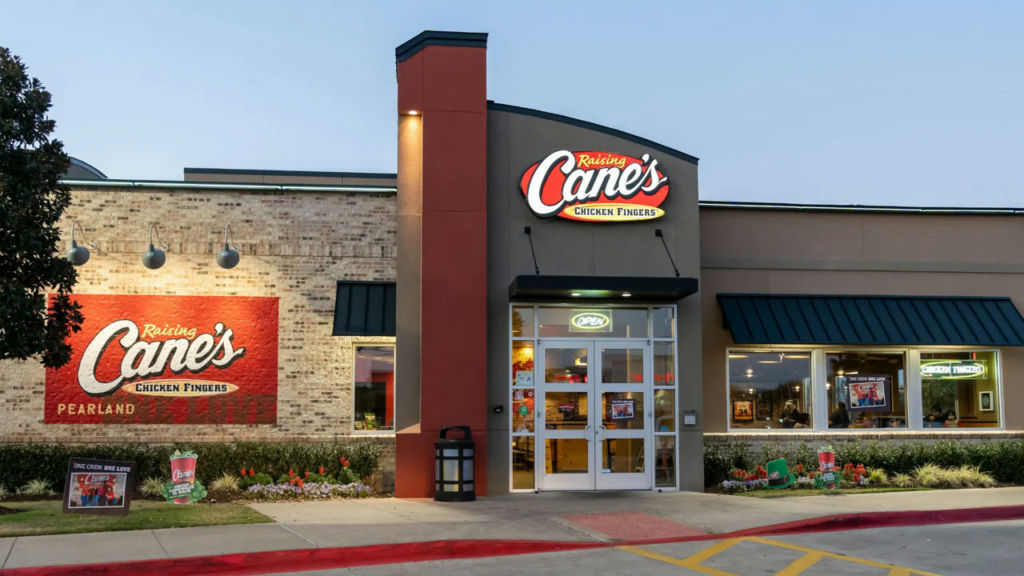
Raising Cane's, a chicken fingers quick service chain, is not currently available for franchising, but has several franchise-owned restaurants operated by long-time partners. The brand is focusing on expanding corporate-owned stores, particularly on the East Coast.
Raising Cane's, the chicken fingers quick service chain with over 730 locations and a strong cult-following, is a franchise, but is not currently available for franchising.
Raising Cane’s has several franchise-owned restaurants open, operated by partners who have been with the system since the original program was started over a decade ago.
Raising Cane’s story began in 1996, when the first location opened in Baton Rouge, Louisiana. At that time, the concept of a restaurant exclusively serving chicken fingers seemed unconventional. Todd Graves, the founder, had a vision of creating a restaurant dedicated solely to chicken finger meals and, despite facing skepticism, he was determined to turn his idea into reality.
Graves faced initial challenges as his business plan received low marks from his college professor, and numerous bankers rejected his idea. Undeterred, he saved up money by working in various challenging jobs, including at an oil refinery in California and fishing for sockeye salmon in Alaska. With the funds he accumulated, Graves returned to Louisiana, took out an SBA loan, and finally opened the first Raising Cane's location.
Originally named "Sockeye's Chicken Fingers" after the type of fish Graves used to catch, a friend suggested a more personal name. The restaurant was then named "Raising Cane" after Graves' dog. The first location, known as "The Mothership," opened on Highland Road in Baton Rouge, and during its reconstruction, a mural on the wall inspired the iconic Raising Cane's logo.
Despite initial doubts, Raising Cane's was an instant hit. The Mothership opened its doors on August 28, 1996; business was so good that Graves kept the restaurant open until 3:30 a.m. that first day. In 2000, the brand began franchising.
In a strategic move, the brand has opted to redirect its focus away from seeking new franchises. Instead, Raising Cane's primary objective lies in the expansion of corporate-owned stores, particularly on the East Coast.
“Currently, we are focused on the rapid development of company-affiliated restaurants in a very specific geography, while continuing to support our existing franchise business partners,” the brand states on its website. “Unfortunately, we are not entertaining franchise or development opportunities anywhere at this time. But if you have a recommendation for a location, please Contact Us.”
So, will Raising Cane's open its doors to franchising in the future? While the current stance is clear — no franchise opportunities are available — the brand's past financials provide a glimpse into potential future investment levels. Historically the brand had a franchise fee of up to $45,000, with a total initial investment range of $768,100 to $1,937,500, according to franchisegrade.com.
Whether the future holds new opportunities for franchisees or not, it’s clear Raising Cane's remains positioned for growth.
Layne’s Chicken Fingers has built a reputation for quality, consistency and a commitment to franchisee success. Since its founding in 1994 in College Station, Texas, Layne’s has grown from a local legend into a rapidly expanding franchise, known for its signature chicken fingers, secret sauce and warm hospitality. As the brand expands, it seeks experienced multi-unit operators looking to diversify their portfolios with a high-growth chicken concept. Layne’s provides comprehensive support, from marketing and operations to supply chain management, ensuring franchisees are set up for success.
In this story
This story was originally published in 1851 Franchise on March 11, 2024. Burnaze summarizes and links to the original reporting.
Read the full story at 1851 FranchiseLiked this? Get the week's franchise news, explained
- Sunday 8 AM ET weekly + a monthly deep dive
- Sections picked for the industries you follow
- Every claim linked to its source. Free.