TL;DR
McDonald's and Taco Bell have launched new energy drinks, with McDonald's partnering with Red Bull and Taco Bell introducing three new energy refresher drinks. The two chains are competing in the beverage market, with a goal of increasing their sales and market share.
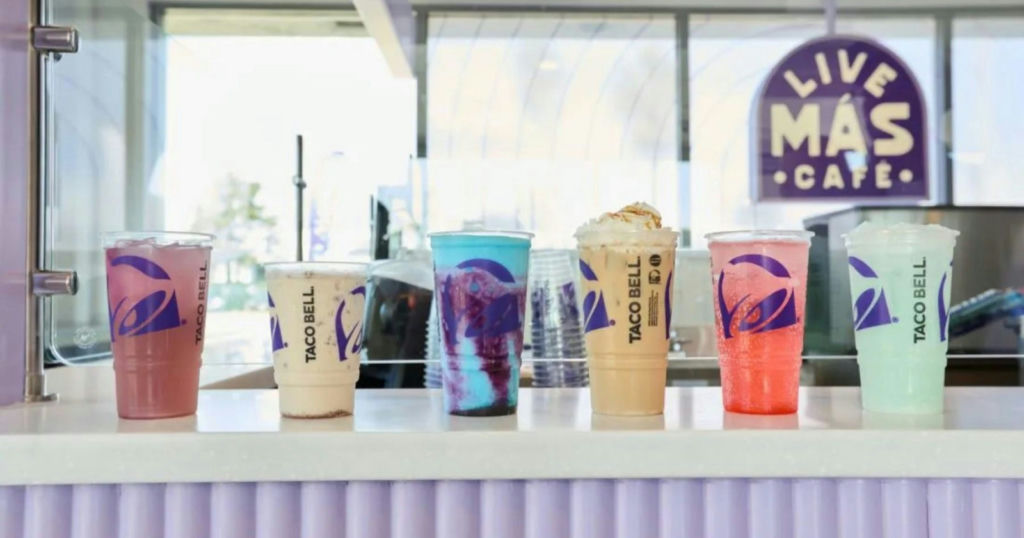
McDonald’s launched an energy drink in partnership with Red Bull (the Red Bull Dragonberry Energizer) on Aug. 17. A few days later, Taco Bell announced three new energy refresher drinks, including pineapple citrus, strawberry tropics, and pineapple citrus freeze flavors.
The proximity of these launches is fitting, given the two legacy chains’ intensifying focus on beverages.
Indeed, this beverage competition between the No. 1 and No. 4 restaurant chains by sales has been neck-and-neck for quite some time now. McDonald’s launched a learning lab of sorts called CosMc’s in late 2023, which grew to a handful of locations near Chicago and in Texas. The point was to test consumer preferences for drink innovations as more beverage specialists started growing their sales and footprints by double and triple digits.
In May 2025, CEO Chris Kempczinski acknowledged the company’s plan was to incorporate learnings from that concept into its core business. By June, CosMc’s was shuttered, but less than a year later, the company implemented those learnings and started selling refresher beverages and crafted sodas, followed by the recent Red Bull launch.
Meanwhile, Taco Bell began testing its beverage concept, Live Más Café, in a single restaurant in San Diego in late 2024. This concept is integrated within existing Taco Bell restaurants versus a standalone concept, like McDonald’s CosMc’s experiment. The company set a goal to have 30 open by the end of 2025 and ended the year with 31 in California, Las Vegas, and Texas. The long-term goal is to get a Live Más Café in every restaurant in the U.S.
Both chains seem to like what they see so far from these heavy investments. During its second quarter earnings call last month, Kempczinski said McDonald’s new beverage platform has so far exceeded expectations, driving higher average check by about 50% and new occasions, as well as generating strong food attachment. Beverages were a bright spot amid an otherwise ho-hum report for the chain.
For Taco Bell, Chris Turner, CEO of parent company Yum Brands, has said that Live Más Café is one of the drivers of the chain’s long-term growth plan.
McDonald’s has said that beverages are a $100 billion opportunity globally and it wants a piece of that. Taco Bell has zoomed in a bit closer with a stated goal of reaching $5 billion in beverage sales. For context, the company finished 2025 with about $17.2 billion in domestic systemwide sales. If its beverage sales eventually make up $5 billion on their own, it would nearly match the systemwide sales of chains like Wingstop and Pizza Hut.
In other words, the opportunity for both chains is massive given their ubiquity and brand equity. But their need to fortress themselves is also critical as chains like Dutch Bros, 7 Brew, Scooter’s, Ziggi’s, Swig, HTeaO, and more are meeting the moment. 7 Brew opened an astounding 283 net new locations last year alone, for instance, while bolstering its average unit volumes by 33%, according to Technomic data.
Scenarios of a customer driving past a McDonald’s or a Taco Bell to get a signature afternoon pick-me-up at the 7 Brew that just opened up next door is becoming less hypothetical, in other words.
Perhaps the question then is what are McDonald’s and Taco Bell’s advantages, and which one is better positioned to insulate itself amid a remarkably competitive category? McDonald’s wins on footprint, with 13,700-plus restaurants versus Taco Bell’s 7,700-plus. Afternoon beverage breaks are driven in large part by impulse and convenience, and therefore having a big footprint matters a lot.
But what about distinctiveness, which also carries a significant amount of weight for consumers, particularly amid a noisier-than-ever environment? Industry titan Greg Creed, who led Taco Bell and then Yum Brands for years, posed this question to his LinkedIn profile following McDonald’s Red Bull/Energizer launch.
“What’s distinctively McDonald’s about these drinks … I can’t think of anything that is,” he wrote.
Conversely, Taco Bell has its signature Baja Blast, which has been available since 2004. Last year, Taco Bell added its first iteration to the permanent menu in Baja Blast Midnight. Just this week, it added another one in collaboration with Grammy Award-winning singer/songwriter Olivia Rodrigo with its You Seem Pretty Pink for a Baja Blast — a nod to Rodrigo’s new “You Seem Pretty Sad for a Girl So In Love” album.
Of course, Creed wrote the timeless “R.E.D.” framework (relevant, easy, distinctive) over a decade ago, so this question and opinion fit his overall philosophy. But the point remains the same — McDonald’s and Taco Bell may be well positioned to play in the beverage category, but they still need to stand out from the growing number of sexy new upstarts.
It’s worth noting that Dunkin’, Starbucks, Panera, Wendy’s, and others have introduced their own versions of refreshers, while Sonic Drive-In, Jack in the Box, Tim Hortons, Scooter’s Coffee, and others already have a partnership with Red Bull. Meanwhile, the Baja Blast (and its iterations whether permanent or limited) is available exclusively at Taco Bell.
In this story
This story was originally published in Restaurant Business on August 27, 2026. Burnaze summarizes and links to the original reporting.
Read the full story at Restaurant BusinessLiked this? Get the week's franchise news, explained
- Sunday 8 AM ET weekly + a monthly deep dive
- Sections picked for the industries you follow
- Every claim linked to its source. Free.